Best High Power Tube Amplifier Solutions for Hi-Fi Enthusiasts
Answering the buyer’s search, these high‑power tube amplifiers deliver powerful, clean output with the warmth and presence classic tubes are known for. This guide helps buyers choose the right option for larger rooms, power-hungry speakers, or vinyl lovers seeking tube preamp character. The top picks include integrated tube designs and hybrids that pair tube warmth with solid‑state punch. The brief table below highlights the five selected products and who they are best for.
The HTA200 blends tube warmth with solid‑state reliability in a stylish chassis. It delivers 100 watts RMS per channel and uses a tube preamp to impart musical character without sacrificing power. This is best for buyers who want a robust integrated option that can drive moderately efficient speakers and support multiple inputs for modern sources.
Who it’s best for: listeners who value classic tube sweetness in a powerful, all‑in‑one package. It suits vinyl fans and digital listeners alike, thanks to RCA, Optical, Bluetooth, USB DAC, and Phono preamp options.
Selected for: strong listening rooms and hybrid designs that balance warmth with clean headroom. Caution: tube warmth is audible; consider speaker pairing to avoid overly warm or bass‑heavy results with certain coarsely implemented speakers.
The Yaqin MC‑84L is a budget‑friendly audiophile tube amplifier with a push‑pull output that aims to minimize distortion while maximizing tonal purity. Its full Class A presentation in a practical price range makes it a strong candidate for listeners who want a robust tube cadence without a premium price tag.
Who it’s best for: vinyl enthusiasts and small to mid‑sized listening spaces seeking high‑fidelity tube sound without extensive setup. Why selected: reputable tubes and transformers contribute to a refined, slightly warm midrange and clear highs.
Caution: the design emphasizes warmth and musicality; listeners seeking ultra‑neutral accuracy or extremely loud volumes may prefer a different topology or power level for headroom.
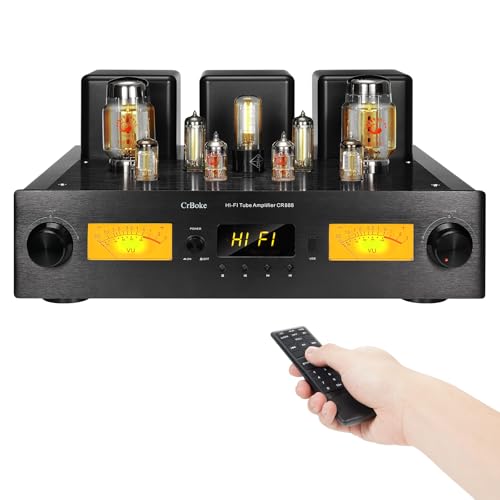
The CR888 uses KT88 tubes and three high‑power toroidal transformers to deliver robust bass and clear highs, suitable for large bookshelf or floorstanding speakers. Built to a high standard with APTX‑HD Bluetooth and active subwoofer output, it supports modern setups while preserving classic tube performance.
Who it’s best for: listeners who want a high‑power tube option capable of dynamic orchestral and vocal performance. Why selected: a strong combination of power, tube warmth, and flexible inputs for home theater or hi‑fi systems.
Limitation: integrated features are modernized, but buyers should verify compatibility with their exact speaker impedance and room acoustics to ensure optimal headroom.
This hand‑wired, single‑ended Class A amplifier delivers a warm, intimate sound stage with 10W per channel. It emphasizes sonic purity and craftsmanship, featuring premium components and hand‑assembled construction for a purist listening experience.
Who it’s best for: audiophiles who prize the classic SE Class A sound and meticulous build quality over raw volume. Why selected: the SE topology yields lush mids and articulate highs suitable for jazz and acoustic material.
Caution: 10W per channel may be underpowered for large rooms or inefficient speakers; pairing with smaller, efficient loudspeakers is advised.
The TB10D uses a high‑efficiency Class D design with a strong 600W total output and a compact footprint. It is an accessible option for powering bookshelf speakers, bass shakers, or multi‑purpose media setups where space and budget are considerations. It also supports source flexibility with built‑in tone controls and multiple inputs.
Who it’s best for: budget‑conscious buyers needing substantial power in a small package, or those adding a powered sub or bass shifter. Why selected: offers high power output with flexible integration for a variety of systems. Caution: Class D may deliver different tonal character than tube‑based amps; some listeners prefer true tube warmth for certain genres.
Buying Guide
Speaker compatibility: match amplifier power with speaker sensitivity and impedance. Tube amps can deliver warm distortions at high levels; ensure your speakers handle the output cleanly.
Topology and sound: decide between integrated tube/hybrid designs (more warmth and ease of use) and pure tube or Class A/AB builds (often purer tone but potentially more maintenance).
Source and inputs: consider what you’ll connect most—vinyl, streaming, turntables with built‑in phonostages, or home theater. Look for multiple inputs and a built‑in DAC if needed.
Room size and listening goals: larger rooms or inefficient speakers benefit from higher wattage. For intimate spaces, a high‑quality 10–40W class A/SE can excel in tonal richness.
Build quality and maintenance: hand‑wired, point‑to‑point layouts can reduce signal path interference but may require more care. Hybrid designs can offer a pragmatic balance.
Future flexibility: consider potential upgrades to speakers or adding subwoofers. An output with subwoofer routing or pre‑out options adds resonance control.
FAQ
What is the main difference between a tube amp and a solid‑state amp?
Tube amps use vacuum tubes for amplification, delivering warmth and smoother high frequencies. Solid‑state amps use transistors and generally offer more headroom and lower maintenance, but can sound harsher to some listeners.
Is a higher wattage always better for tube amplifiers?
Not always. The speaker load, room size, and the amplifier’s design determine whether extra wattage improves headroom or simply adds unwanted volume. Pair power with speakers that match the amp’s output.
Can I use a tube amp with my modern digital sources?
Yes. Look for models with multiple digital inputs or a built‑in DAC to simplify connections from computers, TVs, or streaming devices.
What should I consider for vinyl playback?
Look for a built‑in phono preamp or the option to add one. Tube preamps can add desirable warmth to vinyl playback, but ensure your cartridge and turntable are compatible with the phono stage.
Are hand‑wired amps worth the extra cost?
Hand wiring often reduces signal path interference and can improve sonic purity, but the benefit depends on build quality and overall design. It’s a factor to consider for long‑term reliability and sonic preferences.
Answering the search for new noise cancelling headphones, this guide presents five recent-model options that excel at blocking noise while delivering clear sound and long battery life. These headphones are ideal for frequent travelers, remote workers, students, and anyone who wants focused listening in noisy environments. Each pick highlights who it’s best for, plus practical…
When you search for 13 gauge strings, you want reliable, bright, and consistent performance. This guide highlights five top options that cover bass and electric guitar needs, focusing on durability, tone, and playability. The buyers who benefit most are players seeking strong tension, clear fundamentals, and easy intonation for varied playing styles—from rock to jazz….
Looking for a compact USB 4-channel mixer that fits a home studio or podcasting setup? This guide highlights five reliable options, each chosen for clear balance between input options, phantom power, and ease of use. Ideal buyers include podcasters needing hub-like USB connectivity, content creators requiring Bluetooth streaming, and small venues seeking portable multi-channel control….
If you’re searching for a record player with AUX input, you want clear, reliable playback that works with or without Bluetooth. The top picks below are current options that include AUX-in and often Bluetooth or built‑in speakers. They’re suited for different buyers: beginners who want simple setup, casual listeners who crave portability, and vinyl enthusiasts…
Best rough-in speaker brackets make ceiling installs faster, cleaner, and more secure. This guide highlights five solid options that fit 6.5″ and 8″ ceiling speakers, helping buyers choose based on mounting flexibility, durability, and installation needs. Whether you’re remodeling or building new, these brackets are designed to simplify cutouts, alignment, and wire management for common…
The best 3.5mm female to 2 RCA male cables connect mobile devices, laptops, or media players with a 3.5mm output to speakers, receivers, or amplifiers with RCA inputs. This guide highlights five top options, explaining who each product is best for, and why it stands out. Whether you’re pairing a phone with a home theater…