
Best Home Audio Subwoofer Boxes for Deep, Room-Filling Bass
Answering the search for the right home audio subwoofer box, this guide highlights five well-rounded options that balance deep bass, build quality, and room adaptability. Each pick suits different spaces and user needs, from compact living rooms to larger home theaters. Best for small-to-mid rooms, budget-friendly setups, or DIY enthusiasts building from the ground up, these options help you choose the right enclosure without sacrificing clarity or impact.
Summary table of selected products:
| Product | Best For |
|---|---|
| Polk Audio PSW10 10″ Subwoofer | Small-to-mid rooms; balanced, punchy bass |
| Dayton Audio Classic CS1000 – 10″ | Clean design; strong low end with compact footprint |
| Rockville Rock Shaker 10″ | Movie lovers; adjustable bass and crossover |
| Skar Audio AR2X12V Dual 12″ | High-output, low-frequency extension |
| QPower QBASS Dual 12″ | Two-sub configuration; big bass in trucks or cars |
Polk Audio PSW10 10″ Subwoofer
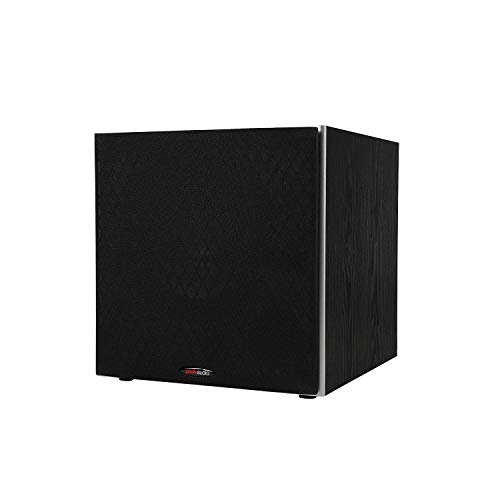
- Powered subwoofer with a built-in 50-watt RMS amplifier delivering up to 100 watts peak power.
- 10-inch Dynamic Balance woofer and a directed port for accurate bass depth.
- Designed to blend easily with most speakers and maintain clarity at high volumes.
- Best for small-to-mid sized rooms where punchy, musical bass is preferred over sheer SPL.
Best for: Listeners who want a compact, easy-to-integrate sub that adds solid low-end without overpowering a room. Caution: The enclosure is small, so very large, deep bass in oversized rooms may require a larger sub for impact at distance.
Dayton Audio Classic CS1000 – 10″ 180W

- 180W Class-D amplifier paired with a rigid, braced cabinet for tight, accurate low end.
- Available in wood grain with a swappable grille to match décor; gray grille included.
- Designed to pair with any speaker system to add deep bass without distortion.
Best for: Home theater and music setups where a subtle, clean aesthetic is desired along with strong bass foundation. Caution: Wood-grain finish may not suit every interior; additional décor considerations may be needed.
Rockville Rock Shaker 10″ Subwoofer

- 600W peak / 300W RMS output with a 10″ woofer delivering a strong low end.
- Built-in class-D amplifier matched to the enclosure for clean, distortion-free sound.
- Adjustable volume, crossover frequency, and phase controls for customization.
Best for: Users seeking a tunable, high-output sub for movies, gaming, or music in mid-sized rooms. Caution: Larger size and power mean it needs proper placement to avoid overpowering a compact space.
Skar Audio AR2X12V Dual 12″ Enclosure

- Dual 12″ armor-coated ported enclosure with a 3.70 ft³ gross internal air space.
- Kerf port design tuned for high output and deep bass extension.
- Engineered to deliver very loud, low-end performance in a universal fit box.
Best for: Users building a high-output system where deep bass performance is the priority. Caution: Requires compatible subwoofers and appropriate amp to unlock full potential.
QPower QBASS Dual 12″ Box
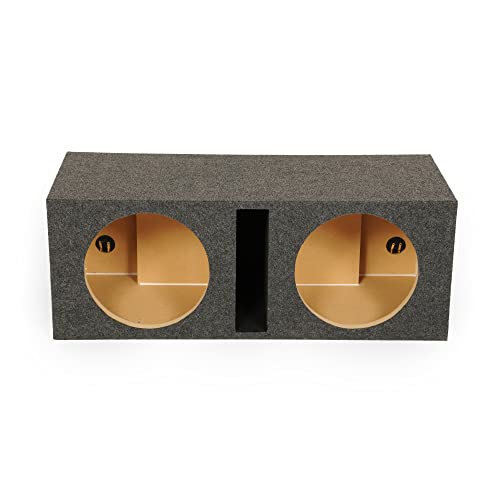
- Dual 12″ car audio subwoofer box with two separate chambers for deep, even bass response.
- Single slot port vent helps regulate heat and air movement for extended listening sessions.
- Solid MDF construction designed to withstand continuous bass pressure in mobile setups.
Best for: Car or small truck audio systems requiring strong, low-end output across two subs. Caution: Not ideal for users needing a single-sub compact enclosure due to dual-chamber design.
BSETISAN Subwoofer 8” Compact
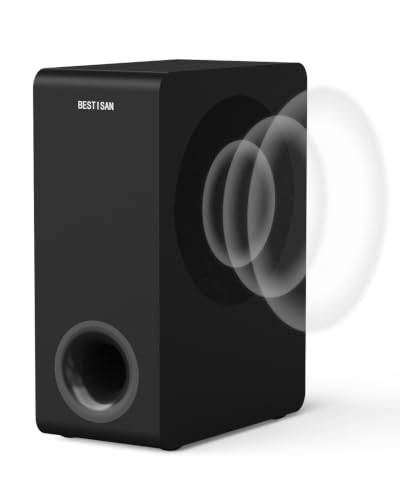
- 8” high-excursion driver for tight, articulate bass in a small footprint.
- Side-firing design to reduce mechanical noise and allow flexible placement.
- Auto-off and auto-save features; includes a subwoofer cable for quick setup.
Best for: Space-constrained rooms or desks where you still want solid bass without sacrificing room aesthetics. Caution: Smaller driver size may limit very deep bass compared to larger enclosures.
Buying Guide: Subwoofer Enclosures For Home Audio
How to choose: Consider room size, listening preferences, and existing speaker setup. A larger room benefits from bigger internal volume and more powerful amplification, while a compact space benefits from a smaller footprint and integrated amp.
- Box type matters: Ported enclosures boost bass output and efficiency at the cost of potential boomy response in smaller rooms. Sealed enclosures are quieter and tighter but may require a larger amp for the same bass level.
- Power matching: Ensure the sub’s amplifier power aligns with your main speakers to avoid muddy or overpowering bass.
- Placement and acoustics: Corners and walls boost bass, but placement can alter timing and localization. Consider using adjustable phase and crossover controls to tailor the response.
- Compatibility: Confirm the enclosure fits your subwoofers (size, mounting depth) and your receiver’s bass management features.
- Finish and design: Wood grains, grille styles, and colors help the sub integrate with room decor while maintaining performance.
FAQ
- What does a ported subwoofer enclosure do better than a sealed one? Ported boxes use a vented design to extend bass response efficiently, producing deeper bass with less amplifier power in many cases.
- How big should a subwoofer box be for my room? Larger rooms typically benefit from bigger internal volumes and higher-powered amps, while smaller rooms do well with compact, well-tuned enclosures to avoid overpowering space.
- Do I need a separate amp for my subwoofer? Some enclosures include built-in amps (powered subwoofers); others require an external amplifier. Choose based on available power and space.
- Is placement important for bass quality? Yes. Corner placement can boost bass, but positioning near listening chairs and avoiding phase mismatch improves overall clarity.
- What should I pair with a sub for best sound? A compatible main speaker system or stereo pair, plus a receiver with bass management, helps integrate low frequencies with the rest of the signal chain.
- Are dual-sub setups worth it? Dual subs can provide more even bass across seating positions and better room coverage, especially in larger or irregular rooms.