
Best Home Recording Vocal Microphone Solutions for a Pro-Level Home Studio
If you’re building a home vocal setup, you want gear that delivers clean, studio-quality sound without complicated setups. This guide highlights five top USB/XLR microphone options ideal for singers, podcasters, and content creators. Each pick is evaluated for who it’s best for, its standout features, and practical limitations, helping you choose what fits your space and workflow.
Below is a quick buying snapshot to compare key choices at a glance. The table lists each product with its primary strengths and best-use scenario.
| Product | Best For | Key Strength | Limitation |
|---|---|---|---|
| Dejasound Upgraded Studio Recording Microphone | Beginners; on-the-go creators | USB plug‑and‑play; built-in shield and pop filter | USB, not XLR |
| RØDE NT1 Signature | Voiceover and music vocalists | Whisper-quiet operation; classic studio voicing | Requires audio interface for XLR use |
| FIFINE T669 | Starter home studios; podcasting | All-in-one USB kit with boom arm and two filters | USB only |
| Audio-Technica AT2020 | Project/home studios seeking versatility | Wide dynamic range; reliable classic condenser | Requires audio interface for best use |
| MAONO PM320S | Budget-conscious creators needing pro sound | XLR with included accessories; low-noise design | Requires phantom power |
Dejasound Upgraded Studio Recording Microphone

- Type: USB condenser microphone with built-in isolation shield and pop filter for immediate use with PC, smartphone, or laptop.
- Sound: Cardioid pattern, 16mm diaphragm, 192kHz/24Bit, 30Hz–16kHz response; designed for clean vocal capture in podcasts and music production.
- Controls: 3.5mm headphone monitoring, volume adjustment, echo control, mute button for quick on/off and monitoring.
Best for: Beginners and creators who want a compact, all-in-one setup without external audio interfaces. Choose this if you want a ready-to-record package that minimizes extra gear and cables. A potential limitation is its USB-only design, which may not suit users needing professional XLR connectivity for future upgrades.
RØDE NT1 Signature Series Studio Condenser Microphone
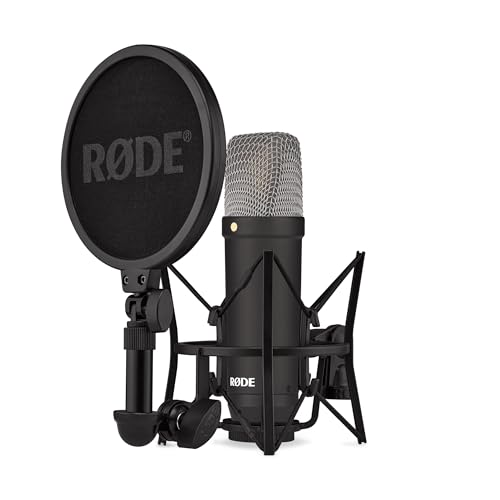
- Signature large-diaphragm condenser with a long-standing studio reputation for vocal clarity.
- Includes shock mount, pop filter, and XLR cable; suitable for use with an audio interface.
- Remarkably low self-noise for quiet recordings and high-fidelity results.
Best for: Voiceover artists and vocalists seeking a timeless studio sound with minimal coloration. Better to pair with a quality audio interface for maximum headroom and a complete recording chain. Limitation: needs external interface and phantom power to realize its full potential.
FIFINE T669 Studio Condenser USB Microphone

- Bundle: USB microphone with desktop boom arm stand, 8.2-foot USB cable, and double pop filter for reduced plosives.
- Sound capture: Wide frequency response with cardioid pattern; good for vocals and streaming voice work.
- Ease of use: Plug-and-play USB setup; compatible with PCs and laptops; not Xbox compatible.
Best for: Those starting a home studio who want a complete, easy-to-use USB package. Choose this if you value an all-in-one kit over configuring multiple components. Limitation: USB-only design means no XLR upgrade path without replacing the mic.
Audio-Technica AT2020 Cardioid Condenser
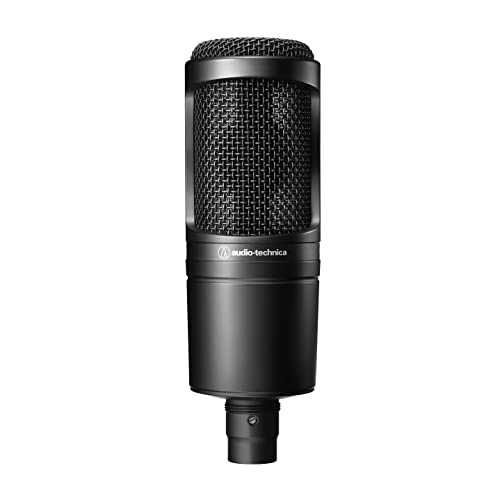
- Classic project/home-studio condenser with solid all-around performance.
- High SPL handling and wide dynamic range for versatile vocal and instrument miking.
- Requires an audio interface or mixer for phantom power and to optimize performance.
Best for: Users seeking a reliable, long-standing option for home recording with strong versatility. Choose this if you already own or plan to get an interface; avoid if you need immediate USB operation without extra gear.
MAONO PM320S Condenser Microphone Kit

- XLR condenser microphone with 48V phantom power requirement; includes XLR cable and boom arm; pop filter and windscreen.
- Studio-grade capsule with extended frequency response and robust transient detail for broadcast-quality sound.
- Low-noise cardioid design minimizes off-axis noise in untreated spaces.
Best for: Creators who want professional sound on a budget with included accessories. Choose this if you can provide phantom power via an interface or mixer. Limitation: Requires external power and equipment, which adds to the upfront cost and setup.
TroyStudio Portable Vocal Booth

- Foldable isolation shield with dense acoustic foam to reduce reflections and room bleed.
- Interior space designed to fit various mic stands; lightweight and portable for on-the-go recording.
- Substantial reduction in room reverb for clearer vocal take in home studios or desksides.
Best for: Podcasters and vocalists who need a compact, portable way to improve room acoustics without building a dedicated booth. Choose this if you record in small rooms or apartments. Limitation: Not a full studio; performance depends on room acoustics and mic placement.
ZealSound Podcast Microphone K66

- USB microphone with gain, volume control, mute, monitoring, and echo features.
- Wide compatibility: works with PC, Mac, iPhone, iPad, Android, and tablets via USB-C/Lightning adapters.
- Noise reduction mode helps reduce ambient distractions during recordings.
Best for: Creators who need flexible device compatibility and built-in features to tailor vocal tone in real time. Choose this if you record across devices, but be aware of USB-only operation and the need to manage software settings for best results.
Buying Guide: Key Considerations for Home Recording Microphones
What matters most when selecting a home recording vocal microphone?
- Connection type: USB mics are easiest for beginners and immediate use; XLR mics offer greater flexibility and sound quality when paired with an interface or mixer.
- Polar pattern: Cardioid mics focus on your voice while reducing room noise; multi-pattern mics are more versatile but often require more calibration.
- Self-noise and dynamic range: Lower self-noise yields cleaner recordings, especially in quiet spaces; wide dynamic range handles vocal dynamics and loud passages without distortion.
- Accessories: Integrated pop filter, shock mount, and boom arms add convenience and improve sound isolation.
- Phantom power: XLR mics typically require phantom power (48V); ensure your interface or mixer can supply it.
- Room treatment: Isolation shields and portable booths help reduce reflections but do not replace proper acoustic treatment of a recording space.
Frequently Asked Questions
- What is the difference between USB and XLR microphones?
USB mics are plug-and-play and ideal for beginners; XLR mics offer higher potential quality and driver-based control when used with an interface. - Do I need phantom power for most USB microphones?
No. USB mics typically power from the USB port; XLR mics often require external phantom power from an interface or mixer. - Is a pop filter essential for vocal recording?
Yes, it helps reduce plosives and air blasts that can cause distortion and inconsistent levels. - Can a portable vocal booth improve sound in a small room?
Yes, it reduces reflections and echoes, but it doesn’t replace room treatment for optimal acoustics. - Which mic is best for podcasting on a budget?
USB-only kits with built-in accessories are typically the most cost-effective and quickest to set up for podcasts. - Should I buy a mic with many features or one with pure voice clarity?
Prioritize mic clarity and dynamic range, then consider features like mute, pad, or monitoring if they fit your workflow.