
Best Home Stereo Power Amp for Clear, Powerful Audio
If you want room-filling, clear stereo sound from passive speakers, a dedicated home stereo power amplifier is a strong choice. This guide focuses on five value-driven options that suit different use cases—from classic two-channel listening to compact living rooms and multimedia setups. Each product is evaluated for who it’s best for, what it delivers, and potential limitations to consider before you buy.
Summary of selected products:
| Product | Brand | Best For |
|---|---|---|
| Sony STR-DH190 | Sony | Two-channel listening with built-in phono and Bluetooth |
| Fosi Audio BT20A Pro | Fosi Audio | Compact, high-efficiency stereo for passive speakers |
| YAMAHA R-S202BL | Yamaha | Reliable two-system speaker setup with Bluetooth |
| Pyle PDA77BU | Pyle | Budget-friendly Bluetooth amp with karaoke features |
| WiiM Amp | WiiM | Smart streaming amp with HDMI ARC for TV-based setups |
Sony STR-DH190 2-Channel Receiver

The Sony STR-DH190 is a two-channel receiver ideal for traditional two-speaker setups with a built-in phono stage and Bluetooth. It provides up to 100 watts per channel at 8 ohms and supports multiple inputs including 4 stereo RCA inputs and a 3.5 mm jack. Best for: budget-conscious listeners who want simple power, a phono option for vinyl, and wireless streaming without a separate preamp. Limitation: Bluetooth audio quality can be adequate but not premium; best when used with reliable wired sources for higher fidelity.
Fosi Audio BT20A Pro Bluetooth 5.0 Amplifier
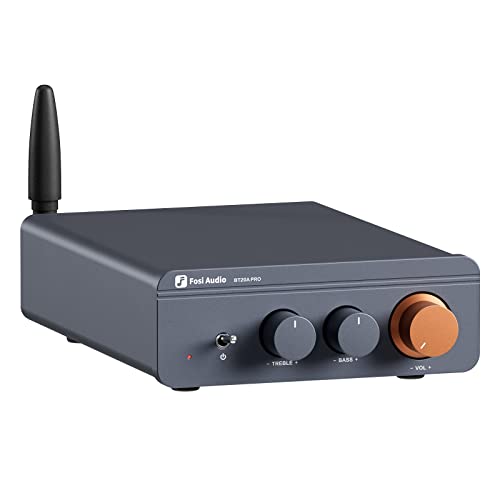
The Fosi BT20A Pro delivers 300W x 2 into compatible speakers using the TI TPA3255 chip, with high efficiency and a low idle power draw. It supports Bluetooth 5.0 and emphasizes customization, including plug-in Op-Amps to tailor sound characteristics. Best for: audio enthusiasts who want a compact, efficient stereo amp with upgrade flexibility. Limitation: Requires careful matching of speakers to avoid overpowering small rooms; ensure proper heat management in enclosed spaces.
Pyle Home Bluetooth Stereo Receiver PDA77BU

The Pyle PDA77BU offers 800W peak power in a Bluetooth-enabled 4-channel arrangement with USB MP3 playback, mic inputs for karaoke, and included karaoke features with reverb and delay. Best for: home entertainment setups that blend music playback with karaoke or party features on a budget. Limitation: The device emphasizes karaoke features, which may complicate pure hi-fi listening; audio fidelity may be more variable at higher volumes.
WiiM Amp Streaming Amplifier

The WiiM Amp focuses on turning passive speakers into smart audio hubs. It provides 60W per channel at 8 ohms and 120W at 4 ohms, with HDMI ARC for TV audio and app-based control for multi-room setups. Best for: rooms where you want TV audio to blend with music playback and voice assistant control. Limitation: Compact power means it’s best for smaller to mid-size spaces or as a TV-audio adapter rather than a high-power main amp for large rooms.
Yamaha R-S202BL Stereo Receiver
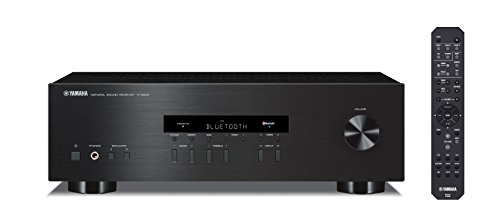
The Yamaha R-S202BL provides robust two-system support with Bluetooth, FM/AM presets, and a broad frequency response. It is designed for reliable two-channel listening with selectable speaker terminals for two systems. Best for: users who want a dependable, feature-rich two-channel setup with wireless streaming. Limitation: It may be overkill if you only need a compact, single-room amplifier with basic Bluetooth.
Donner MAMP6

Note: This entry is included for comparison purposes to help gauge compact multi-channel options. The Donner MAMP6 offers a 6-channel layout with Bluetooth 5.3 and multiple inputs, suitable for immersive home theater or karaoke-style setups. Best for: households that want more speaker channels and input versatility in a single unit. Limitation: Higher channel count can complicate setup and may draw more space than simpler two-channel amps.
Buying Guide: Key Considerations For Your Purchase
- Power needs: Match amplifier wattage to your speaker ratings. Higher wattage can handle dynamic peaks but may be unnecessary for small rooms.
- Inputs and compatibility: Ensure the amp has the right inputs for your sources (Bluetooth, USB, optical, RCA). Phono inputs are a bonus for vinyl lovers.
- Speaker compatibility: Check impedance (ohms) and whether the amp supports two systems or multi-room configurations.
- Connectivity features: Bluetooth version, HDMI ARC, and app control affect ease of use and integration with TVs and streaming services.
- Size and cooling: Consider room placement and whether the unit requires ventilation to prevent thermal throttling during extended use.
Frequently Asked Questions
- What is a home stereo power amp best for? – It powers traditional passive speakers with clean, controlled amplification, often paired with a source like a turntable or streamer.
- Do I need a receiver or a separate power amp? – If you want built-in radio tuners or all-in-one controls, a receiver helps. For cleaner, flexible setups or vinyl-centric systems, a separate power amp may be preferable.
- Is Bluetooth enough for high-fidelity listening? – Bluetooth is convenient but may not match wired connections. For critical listening, use RCA or optical connections when possible.
- Can I use a power amp with passive speakers and a preamp? – Yes. A preamp or integrated amp with a fixed line output can feed a dedicated power amp for system flexibility.
- What’s the advantage of HDMI ARC on a stereo amp? – HDMI ARC enables TV audio to be processed by your stereo system without extra cables, simplifying a living room setup.
- How do I pick the right impedance? – Most home speakers use 4–8 ohms. Match the amp’s supported impedance to your speakers to avoid impedance mismatches.