
Best in-Ear Transmitter and Receiver Systems for Live Monitoring
Discover the best in-ear transmitter and receiver systems for clear, local monitoring on stage or in the studio. This guide highlights five reliable options, each suited to different performance needs—from solo practice to multi-performer setups. Ideal buyers include beginners seeking easy pairing, solo performers needing compact gear, and bands requiring multiple receivers. The overview table below helps you compare core details at a glance.
| Product | Frequency/Band | Best For | Latency |
|---|---|---|---|
| JOYO JW-07 | 2.4 GHz | Solo practice and small gigs | <5 ms |
| Xvive U45 | 5.8 GHz | Stages with interference concerns | Near 0 ms |
| LEKATO MS-02 | 2.4 GHz | Small to mid bands | ~<4.5 ms |
| LEKATO MS-1 | 2.4 GHz | Auto-pairing, multi-user gigs | Low (auto-pairing) |
| Xvive U4 | 2.4 GHz | Studio and rehearsal bands | <5 ms |
Note: All products are in-ear monitoring systems designed to transmit audio to wireless beltpack receivers. Latency figures are approximate in typical use and can vary with environment and number of connected devices.
JOYO JW-07 2.4G Wireless IEM System

The JOYO JW-07 is a compact 2.4 GHz wireless IEM system featuring automatic pairing and low latency under 5 ms, aimed at guitar players, DJs, and live performers. It emphasizes clear audio with 48kHz/16-bit fidelity and stable transmission through frequency hopping to minimize interference. Best for beginners and solo performers who need quick setup and reliable on-stage monitoring.
Best for: Solo practitioners, small gigs, and practice rooms where quick pairing and real-time feedback matter.
Caution: Transmission performance can degrade in extremely crowded RF environments; ensure a clean band selection during setup.
Xvive U45 Wireless IEM System

The Xvive U45 uses 5.8 GHz for true diversity reliability, with a strong 100 ft/30.5 m range. It features Channel Scan Mode to select the best channel automatically, matching transmitter and receiver channels for stable performance. The audio range spans 20 Hz to 20 kHz with 24-bit/48 kHz resolution and a high SNR of 110 dB, delivering crisp, detailed sound for on-stage monitoring.
Best for: Performers needing robust on-stage stability and an easy channel selection workflow.
Caution: 5.8 GHz can still pick up interference in very busy RF venues; allow time for initial channel scanning to avoid dropouts.
LEKATO MS-02 Wireless IEM System

The LEKATO MS-02 offers upgraded ultra-low latency under 4.5 ms and supports One TX to Many RX connections, enabling multiple receivers (up to four) from a single transmitter. It uses 24-bit/48 kHz high sampling rate for clear sound and includes a simple pairing method that suits small to medium stage setups. Battery life is optimized for longer practice and performances, with a straightforward user experience.
Best for: Small to mid-sized bands and practice sessions with multiple performers needing synchronized monitoring.
Caution: The multi-receiver pairing requires careful channel management to avoid cross-channel interference in complex environments.
LEKATO MS-1 Wireless IEM System
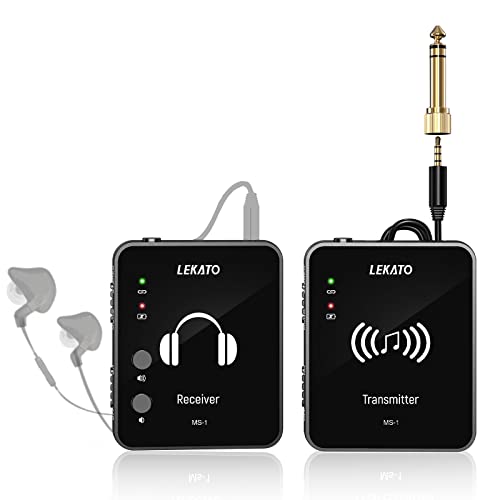
LEKATO MS-1 emphasizes Auto-Pairing and One TX to Many RX support, ideal for busy rehearsal spaces or small venues with multiple performers. It transmits true stereo audio and allows quick switching between stereo and mono input. The system is designed for straightforward setup and reliable multi-user monitoring, making it a practical choice for bands, churches, or small studios.
Best for: Small to medium stage gigs and daily band practice where fast setup and stereo clarity matter.
Caution: Auto-pairing is convenient, but confirm channel alignment after initial power-up to prevent misalignment with other gear.
Xvive U45 (Black) 5.8GHz IEM System
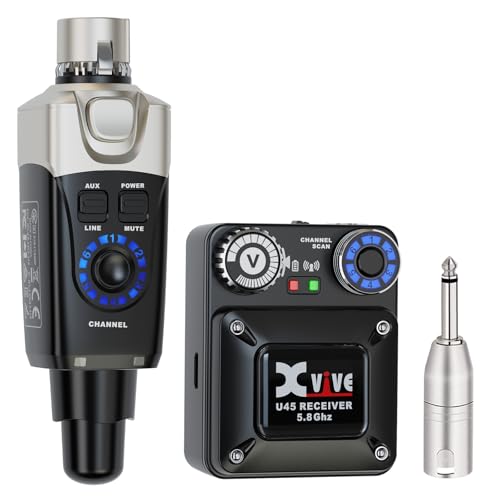
This variant of the Xvive U45 leverages the 5.8 GHz band for stable wireless monitoring. It includes auto channel scanning to find optimal frequency quickly and features a low-latency path for clean stage performance. It is suitable for performers who want minimal configuration and robust performance in moderately busy RF environments.
Best for: Musicians who value automatic channel optimization and a compact, reliable IEM system.
Caution: As with all 5.8 GHz devices, performance can vary with nearby 5.8 GHz devices; perform a channel scan before important shows.
POGOLAB UHF 7-Channel IEM System

The POGOLAB UHF system offers seven selectable channels, 1 ms ultra-low latency, and 48kHz/24-bit hi-fi audio with a wide 164 ft range. It includes a professional XLR input on the transmitter plus an AUX/LINE switch for versatile connections. This makes it a strong choice for live performances, worship teams, and touring setups where minimal latency and reliable range are critical.
Best for: Stage bands and worship teams needing stable, low-latency performance across multiple channels.
Caution: UHF systems can require more careful frequency management in large RF venues; confirm channel compatibility with other gear before use.
Buying Guide
Key considerations for selecting an in-ear transmitter and receiver system:
- Frequency band and interference: 2.4 GHz systems are common and affordable but can be crowded; 5.8 GHz and UHF options often offer better stability in busy venues.
- Latency: Look for sub-5 ms latency for real-time monitoring, especially for live performance and feeding back accurate timing to musicians.
- Channel capacity: If you need multiple receivers, choose models that support One TX to Many RX or multi-channel pairing with clear visual indicators.
- Battery life and usability: Longer battery life reduces mid-show interruptions. Auto-pairing and simple setup save time during soundchecks.
- Inputs and outputs: Transmitters with XLR or AUX/LINE inputs provide flexibility when connecting mixers or playback devices.
- Portability and form factor: Clip-on receivers and compact transmitters improve stage mobility and ease of use for performers.
- Audio quality: Target systems offering 24-bit/48 kHz or better to ensure clean, detailed monitoring across the audible range.
Frequently Asked Questions
- What is the main difference between 2.4 GHz and 5.8 GHz IEM systems?
2.4 GHz systems are typically more affordable and widely compatible, but can be crowded in busy venues. 5.8 GHz often provides greater stability and less interference at the cost of fewer compatible devices in certain regions. - Do I need auto-pairing, or should I manually pair receivers?
Auto-pairing offers quick setup and is convenient for beginners. Manual pairing can give you more control in environments with many wireless devices. - How many receivers can a single transmitter support?
It varies by model. Some systems support up to four or more receivers simultaneously, so check the product specs before purchase. - Is ultra-low latency essential for all performers?
Ultra-low latency is most beneficial for real-time monitoring and performers who rely on precise timing. For casual practice, standard latency may suffice. - What kind of battery life is typical for IEM systems?
Most handheld or beltpack receivers offer several hours of use per charge; many kits include charging docks or cases to extend overall use time. - Can I use these systems with my smartphone or mixer?
Many transmitters offer AUX/LINE inputs or XLR connections suitable for mixers. Some models also support OTG or USB connections for direct playback from smartphones.