Best Indoor FM Antennas for Stereo Receivers: Clear Picks for Home Audio Clarity
If you’re looking to improve FM radio reception for your stereo receiver, these indoor antennas are designed to boost signal quality and reduce static. They’re best for listeners who want better local FM stations without external outdoor installation. The top options cover popular receiver brands and offer easy, plug-and-play setups for living rooms, home theaters, and studios. Below, you’ll find five strong contenders with practical use cases and clear pros and cons.
| Product | Best For | Notes |
|---|---|---|
| Bingfu FM Dipole Antenna (B08HHXFH98) | Music lovers seeking wide compatibility | Includes 10 ft coax and multiple adapters |
| CHHLIUT FM Antenna (B0F3WSK9VC) | Home theater setups with metal surfaces | Magnetic base and retractable mast |
| Ancable 300 Ohm T Shape Dipole (B07BGY21GZ) | Tabletop stereo receivers | Flexible placement with 300 Ohm twin leads |
| Superbat FM Antenna Replacement (B0G419S7Q1) | Portable and versatile installs | Magnetic base, supports Bluetooth systems |
| Bingfu FM Dipole 300 Ohm Twin Lead (B07MG2XYR6) | Indoor HD/analog radio users | 2-pin bare-wire design for easy wiring |
For quick reference, the table highlights the best-use scenarios and what makes each option stand out. The following sections detail each product with practical, buyer-focused comparisons to help you pick the right antenna for your setup.
Bingfu FM Radio Dipole Antenna for Stereo Receiver Indoor

Best for wide compatibility and easy upgrade. This 75 ohm UNBAL FM dipole antenna includes a 10-foot coaxial extension and multiple connector adapters, such as an F-type plug and TV adapters. It works with many popular brands—Yamaha, Onkyo, Pioneer, Denon, Bose, and more—making it a solid all-around choice for most indoor stereo receivers. The plug-and-play design helps you place the antenna for optimal reception close to windows or on a shelf. Caution: ensure your receiver’s input matches the 75 ohm UNBAL standard to avoid signal loss.
CHHLIUT FM Antenna with Magnetic Base

Best for users who want stable placement on metal surfaces. The CHHLIUT antenna features a strong magnetic base and a long 16-foot (5 m) coaxial cable with a retractable mast for flexible positioning. Ideal for home theaters or cabinets where a fixed, reliable signal improves clarity across a range of FM stations. Limitation: magnetic bases may interfere with some metal-rich furniture or electronics if placed too close. Position away from large metal panels if possible to avoid reception drop.
Ancable 300 Ohm T Shape Dipole Antenna
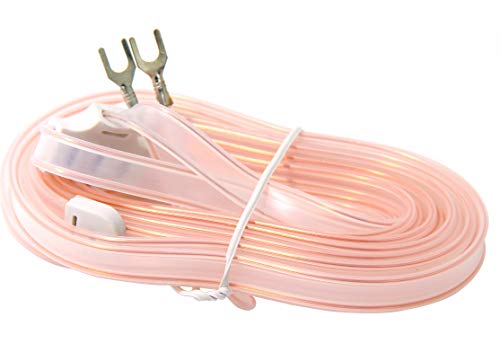
Best for tabletop setups and budget-conscious buyers. The 300 Ohm T-shaped dipole uses 5.9 feet of coax and includes a 300 Ohm twin-lead design to help improve FM reception for Yamaha, Sharp, JVC, Denon, and Marantz tuners. It’s easy to install on a shelf or table and can be extended away from the receiver for better signal. Caution: keep the antenna and receiver at a reasonable distance from each other to avoid interference from nearby electronics.
Superbat FM Antenna Replacement for Home Stereo

Best for portable or multi-location use. The Superbat antenna features a portable magnetic base and a long cable that supports easy relocation around a room or different rooms. It is compatible with a range of Pioneer, Onkyo, Yamaha, Marantz, Sherwood, Bose, and other stereo receivers. The set-up includes multiple adapters for various connectors, making it suitable for desktop or shelf installations. Limitation: the magnetic base may not cling well to non-metallic surfaces, limiting placement options in some spaces.
Bingfu FM Dipole Antenna 300 Ohm Twin Lead
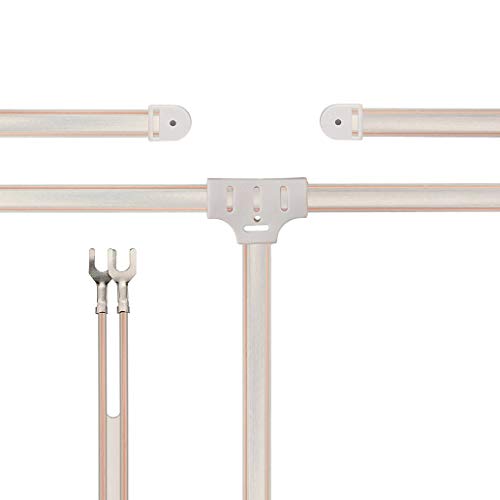
Best for 300 Ohm twin-lead compatibility and easier wiring. This antenna uses a 2-pin bare-wire design and is designed to provide a simple replacement for older stereo receivers and table-top setups. It’s especially suitable for environments where a direct 300 Ohm feed is already present. Consider this option if your receiver’s FM input uses a 2-pin lead and you prefer a straightforward connection. Caution: ensure the bare-wire connection is securely insulated to avoid shorting.
Bingfu Strong Magnetic Base FM Radio Antenna

Best for flexible mounting and longer cable reach. This magnetic-base antenna comes with a 10-foot coax and F-type connector, plus adapters to fit multiple inputs. The magnetic base helps with quick repositioning on metal surfaces, making it convenient for temporary setups or mobile use in a home theater. Limitation: metal furniture or devices with strong magnetic fields may affect signal strength if placed too close to the receiver.
Buying Guide: Key Considerations for Indoor FM Antennas
- Receiver compatibility: Check whether your stereo receiver uses 75-ohm UNBAL, 300-ohm twin-lead, or F-type connectors. Pick an antenna that matches the input type or includes adapters.
- Placement and mounting: Magnetic bases help with quick setup on metal surfaces; retractable poles and long coax cables aid in optimal positioning near windows or away from obstacles.
- Cable length: Longer cables can improve reception by enabling better placement. Assess whether the included length meets your room layout.
- Grounded vs. ungrounded: Many indoor FM antennas are ungrounded; ensure proper electrical safety and avoid wiring near moisture or heat sources.
- Multipurpose use: If you need AM/FM reception or compatibility with digital HD radios, consider antennas marketed as multi-band or with amplifier features.
- Aesthetics and interference: Slim, low-profile designs blend with living spaces. Place antennas away from routers, microwaves, and other strong RF sources to minimize interference.
FAQ
- Do these antennas require external power? Most indoor FM antennas do not require external power; only some amplifier models might.
- Will these work with any stereo receiver? They are designed for common FM inputs; verify your receiver’s connector type and impedance before buying.
- Can I place the antenna behind a TV or near a window? Yes, placing near a window often improves FM reception; avoid placing behind dense furniture that blocks signals.
- What’s the difference between 75-ohm UNBAL and 300-ohm twin-lead? 75-ohm UNBAL is common for modern receivers and coax runs; 300-ohm twin-lead is older and used by some vintage systems.
- Is amplification necessary for weak signals? Amplified antennas can help in weak-signal areas, but may also amplify noise. Start with a passive antenna and only add amplification if needed.