
Best Iso Box for Guitar Amp: 5 Top DI and Isolation Box Picks
When choosing an iso box for a guitar amp, look for clean signal isolation, impedance matching, and reliable ground protection. This guide highlights five DI/iso boxes that are well-suited for guitarists and live rigs, helping you minimize hum and preserve tone. The top picks cover standalone DI boxes, passive options, and amp-friendly signal paths. Ideal buyers include studio players needing quiet direct boxes, live performers seeking reliable ground lift, and pedalboard users who want clean amp direct options.
| Product | Best For | Notes | |
|---|---|---|---|
| Suhr ISO LINE-OUT Box | Studio and stage players needing phase control | Line Output, Speaker Through, Ground Reference switch, Phase switch | High-quality tone isolation for line-level paths |
| OnStage DB2150 Passive Stereo USB DI Box | Live rigs with USB/DI needs | 3.5mm headphone output, Mono sum switch, Ground lift switch | Versatile for monitoring and DI tasks |
| Yovus Passive Direct Box | Guitar/bass direct connections | 1/4″ in and through, XLR output | Simple, robust passive design |
| Donner Special-Ⅰ Passive DI-Box | Stage and studio DI with hum elimination | High sound quality, transformer-based hum elimination | Ultra-flat response for clean direct signal |
| Pegcabac Passive Direct Box | Two-input DI with merge capability | Passive DI, ground lift, signal attenuation | Good for multi-source pedalboards |
Suhr ISO LINE-OUT Box W/ Phase Ground Switch Pedal

The Suhr ISO LINE-OUT Box provides direct line output with a ground reference switch and a phase switch. This makes it suitable for live stages where ground hum can jeopardize tone. Best for players who need precise phase control and clean DI from a high-end guitar rig. A potential limitation is that it is a premium unit, which may be more than needed for basic DI tasks.
OnStage DB2150 Passive Stereo USB DI Box
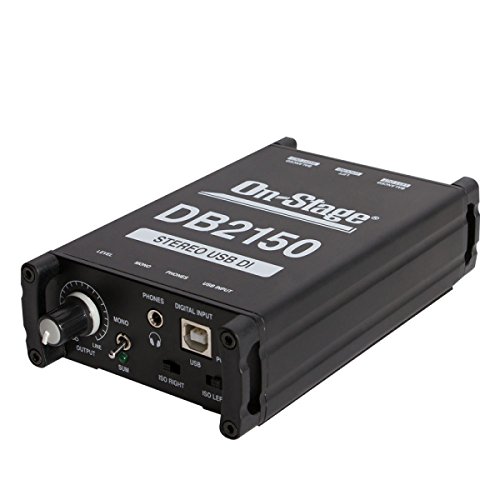
The OnStage DB2150 is a versatile passive DI box with USB and stereo capabilities. It includes a 3.5mm headphone output, mono sum switch, and ground lift switch. This box is best for performers who need a portable DI with monitoring options for on-stage or studio use. Caution: USB capabilities may depend on compatible interfaces and drivers; verify compatibility for your setup.
Yovus Passive Direct Box

The Yovus Passive Direct Box is a straightforward passive DI with 1/4″ inputs and XLR outputs. It’s best for players who want a simple, robust solution for sending guitar or bass signals to a mixer or interface with minimal components. Limitation: As a passive unit, it relies on adequate gain from the preceding stage; ensure your instrument level is sufficient.
Donner Special-Ⅰ Passive DI-Box

The Donner Special-Ⅰ DI-Box offers high sound quality and a transformer-based design that helps eliminate hum from ground loops. It provides impedance matching for direct connections to mixers and amplifiers and maintains a very flat frequency response. Choose this if you need a reliable, studio-grade DI for stage use. Caution: As with most passive DI boxes, level matching is crucial to avoid undersized signals.
Donner Amp Attenuator Pedal

The Donner Amp Attenuator Pedal functions as a signal converter and amp controller with a mute footswitch. Best for players who want to push the amp’s front end at lower volumes and still capture natural dynamics. The device is practical for studio and stage setups where volume management is essential. Limitation: It’s a pedal-style device, so pedalboard space and power requirements should be considered.
EX Pedalboard Junction Box
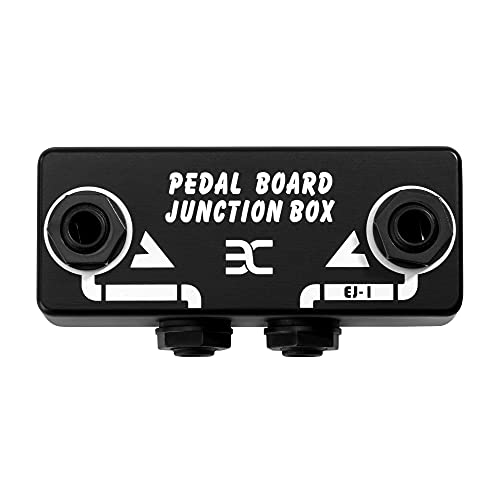
The EX Pedalboard Junction Box consolidates inputs and outputs, streamlining pedalboard setup and saving space. It helps protect jacks and simplifies changes to pedalboard routing on stage or in the studio. Best for players running multiple effects with a clean DI path. Limitation: May add another component to the signal chain, which could introduce extra cable management considerations.
Buying Guide
What should you consider when selecting an iso box for guitar amp tones?
- Type: Decide between passive DI, active DI, or isolation boxes with ground lifts. Passive DI boxes are simple and rugged, while active designs offer better headroom in some setups.
- Impedance and matching: Ensure the device matches your guitar’s high impedance output to the mixer or interface’s low impedance input for minimal signal loss.
- Ground loop handling: Ground lift switches and isolation transformers help reduce hum. Use them when multiple devices are grounded to avoid buzz.
- Path flexibility: Look for options with loop-throughs, speaker outs, or USB DI capabilities if you need monitoring or multi-track recording.
- Portability: For live use, choose compact, rugged units with straightforward controls and reliable connectors.
- Compatibility: Check outputs (XLR, 1/4″ TS/TRS) and whether the box supports the required balanced/unbalanced configurations for your setup.
FAQ
- What is an iso box used for with a guitar amp? An iso box provides impedance matching, isolation, and potential hum reduction so direct signals to a mixer or interface are clean.
- Do passive DI boxes work well for guitar amps? Yes, especially when you have adequate headroom and high-impedance instrument outputs. They’re simple and reliable.
- When should I use a ground lift switch? Use it if you experience hum caused by ground loops between devices in the signal chain.
- Is phase control important for guitar DI boxes? Phase control helps align signals in complex rigs or stereo setups to prevent cancellations or phase issues.
- Do I need a USB DI box for live performances? USB DI boxes can aid on-stage monitoring or direct recording, but aren’t always necessary for standard live DI tasks.
- Can an amp attenuator be used with DI boxes? Yes, but attenuation devices and DI boxes serve different purposes; use each where appropriate for tone shaping and signal integrity.