
Finding The Right Subwoofer Isolation Pad can help reduce floor-borne vibration, improve bass definition, and reduce neighbor complaints. Below is a concise summary table of the most relevant isolation pads and platforms selected for different room sizes and subwoofer types.
| Product | Type | Best For |
|---|---|---|
| SVS SoundPath Subwoofer Isolation System, 4-Pack | Isolation Feet | Threaded-foot subs / apartments |
| IsoAcoustics Iso-200Sub Subwoofer Isolation Stand (Single) | Isolation Stand | High-performance isolation / studios |
| Auralex SubDude-II Subwoofer Isolation Platform | Foam Platform | Home theaters / simple decoupling |
| Sound Addicted VibeBoss P10 – Acoustic Isolation Platform | Foam + MDF Riser | 8–10″ subs / home studios |
| AlloverPower 2-Pack 3-Layer Acoustic Stand Foam (15.5″ x 13″) | 3-Layer Foam Riser | 8–10″ studio monitors and small subs |
SVS SoundPath Subwoofer Isolation System, 4-Pack

Design And Compatibility: Four individual isolation feet intended as an affordable, discreet alternative to large platforms and risers. Works with subwoofers that accept screw-in feet; where threaded inserts are absent, double-sided tape or non-abrasive adhesive pads can be used.
Performance: Decouples the cabinet from the floor to reduce transmitted vibration, which can help decrease structural-borne bass complaints in apartments and townhouses. The modular feet allow height and contact-point adjustments for uneven floors.
Use Cases: Best suited for users wanting minimal visual impact and those with subs that accept screw-in feet. Helps reduce neighbor complaints while retaining bass energy in listening area.
IsoAcoustics Iso-200Sub Subwoofer Isolation Stand (Single)
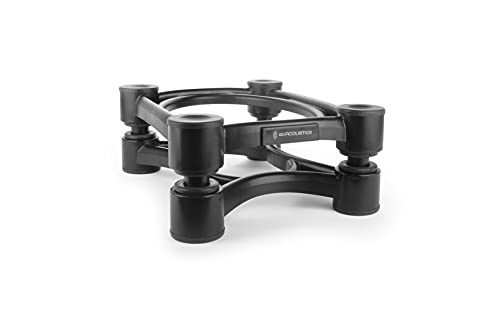
Design And Specs: Single precision-engineered stand measuring 7.8″ x 10″ x 3.5″ with a 75 lb capacity. Patented isolation geometry tested at independent labs provides measured decoupling performance.
Performance: The isolators manage energy transfer to reduce vibrations radiating through supporting surfaces, which minimizes dissonant sounds in adjacent rooms. Offers superior, tested isolation compared with basic foam pads.
Use Cases: Ideal for serious listening rooms and small studio setups where measured isolation and consistent results are preferred. Single-stand form factor suits larger subs placed on one platform.
Auralex Acoustics SubDude-II Subwoofer Acoustic Isolation Platform

Design And Materials: A flat foam platform sized for many subwoofers that decouples the sub from the floor. Constructed to diminish structural vibrations and reduce coloration and muddiness.
Performance: Effective at reducing floor coupling and improving tightness and clarity of low frequencies. Its simple platform design provides broad surface support and easy placement under sub cabinets.
Use Cases: Common choice for home theaters and media rooms where a straightforward, proven foam isolation solution is needed. Useful for those seeking reduced coloration without complex stands.
Sound Addicted VibeBoss P10 – Acoustic Isolation Platform
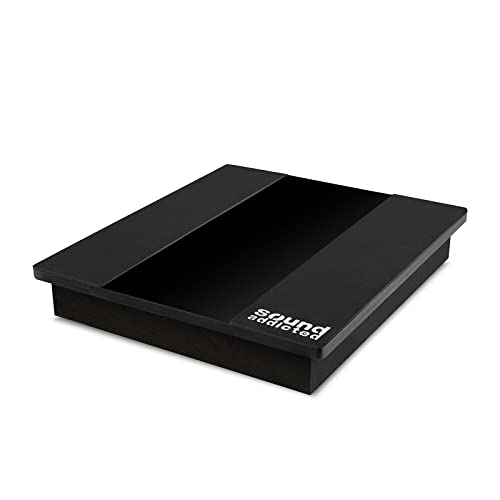
Design And Build: Thick high-density foam (EVA) combined with an MDF board provides stable support and heavy-duty damping. Sized for 8–10″ subwoofers and studio monitors.
Performance: The multi-material construction improves isolation by combining resilient foam with a stiff platform to distribute load and absorb vibrations. Helps tighten bass and reduce floor transmission.
Use Cases: Suited to small studios and home setups using 8–10″ subs. Useful for users wanting a balance between isolation performance and platform stability.
2-Pack 3-Layer Acoustic Stand Foam For 8–10″ Speakers

Design And Materials: A 3-layer construction consisting of shock-absorbent rubber sponge, damping material, and a non-slip fibreboard base. Sized for 8–10″ monitors and smaller subwoofers (15.5″ x 13″).
Performance: Layered dampening reduces vibration transmission and improves clarity. The non-slip base adds stability while the foam layers absorb resonance and protect the supporting surface.
Use Cases: Appropriate for desktop studios, small subwoofers, and users needing an economical multi-layer foam riser solution. Two-pack allows use for both left/right monitors or stereo setups.
Buying Guide: How To Choose The Best Subwoofer Isolation Pad
Isolation Method: Feet/Pods vs. Platform vs. Stand. Feet/pods (SVS, subPods) decouple at contact points and reduce point-transmitted vibration. Platforms and foam pads (Auralex, Pyle, VibeBoss) distribute weight and provide broad decoupling. Engineered stands (IsoAcoustics) use mechanical isolators for measured performance.
Subwoofer Size And Weight Capacity: Check pad or stand load capacity and footprint. Small foam pads suit 8–10″ subs; larger single stands or platforms are needed for heavier enclosures.
Floor Type And Room Construction: Hardwood and tile transmit vibration more readily than carpet. For apartments and multi-level homes, select solutions with proven decoupling (IsoAcoustics or multi-point feet) to minimize neighbor complaints.
Compatibility And Installation: Threaded feet require compatible inserts; pads that use adhesive or non-slip bases work universally. Consider ease of placement and whether you need adjustable height or leveling.
Material And Durability: High-density EVA or engineered foam resists compression over time better than cheap sponge. MDF-backed pads add rigidity for even load distribution.
Sound Goals: If the goal is to tighten low-frequency response and reduce muddiness, choose decoupling products that address structural vibration. For measured studio reproduction, consider tested isolation stands.
Room-Based Adjustments: Isolation solves floor coupling but not room modes. Combine isolation with room positioning, bass traps, and equalization for best results in clarity and low-frequency control.
Multiple Perspectives: – Cost vs. Performance: Basic foam pads are affordable and effective for many rooms; precision-engineered isolators offer superior, tested isolation for critical listening.
– Flexibility: Feet/pods are modular and discreet; platforms are simpler to position and can support multiple driver layouts.
– Longevity: Higher-density materials and engineered isolators resist long-term compression and maintain isolation properties.