
Find sturdy, tall, and stable floor speaker stands to lift bookshelf and satellite speakers to ear level. Below is a quick comparison of the selected stands to help you scan options before reading full reviews.
| Product | Height (Approx.) | Weight Capacity | Top Plate / Base |
|---|---|---|---|
| PERLESMITH 26 Inch Universal Floor Speaker Stands (Pair) | 26″ | 22 lbs | 7.8″ Glass Top / 11.81″ Glass Base |
| Rfiver 28 Inch 45° Swivel Speaker Stands (Pair) | 28″ | 22 lbs | Glass Top Plate / 11.81″ Glass Base |
| PERLESMITH Height Adjustable Floor Speaker Stands PSSS2 (Pair) | 33.3″–45.1″ | 11 lbs | Adjustable Mount / Wide Base |
| Perlegear 28 Inch Bookshelf Speaker Stands PGSS6 (Pair) | 27.5″ | 22 lbs | 7.79″ Top Plate / 11.8″ Square Base |
| PEGZONE 30.1 Inch Heavy Duty Speaker Stands (Pair) | 30.1″ | 55 lbs | Large 11.8″ x 11.8″ Tempered Glass Base |
PERLESMITH Universal Floor Speaker Stands 26 Inch (1 Pair)
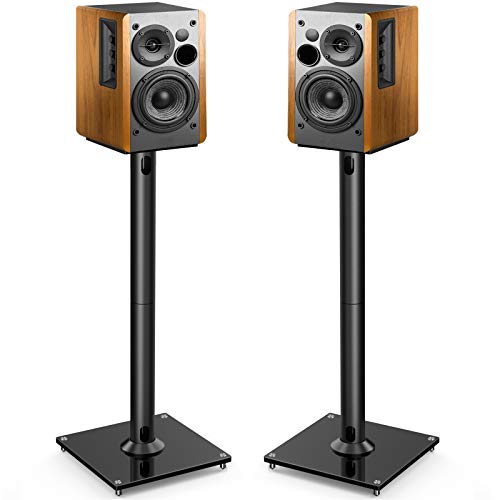
This PERLESMITH pair is built for stability and acoustic positioning. The square glass top plate rotates up to 45° allowing precise speaker direction. Rubber isolation pads on the top plate reduce vibration and unwanted resonance. Each stand supports up to 22 lbs, and the 11.81″ glass base anchors the stand on carpets or hard floors using included rubber or metal feet options. The metal construction aims to balance sturdiness with a sleek look for living rooms and home theater setups.
Rfiver Upgraded 45° Swivel Speaker Stands Pair 28 Inch

Rfiver’s upgraded stands highlight a 45° adjustable glass top plate to fine-tune soundstage and direction. The 27–28″ pole features built-in cable management holes for cleaner runs. The one-piece molded glass base is large and intended for appearance and stability. Rated for 22 lbs per stand, the alloy steel construction and internal cable routing make these stands suitable for home theaters where wire concealment and tilt adjustments are desired.
PERLESMITH Adjustable Height Floor Speaker Stands PSSS2 (Pair)

This PERLESMITH model focuses on height customization, extending from 33.3″ to 45.1″ to place speakers at ear level for seated or standing listeners. A twist-lock mechanism enables tool-free adjustments. The design supports most small bookshelf and satellite speakers up to 11 lbs, with an adjustable width to fit rectangular enclosures. Solid steel construction and non-slip foot pads aim to deliver a secure mounting base for small studio monitors and surround channels.
Perlegear Universal Speaker Stands 28 Inch PGSS6 (Pair)
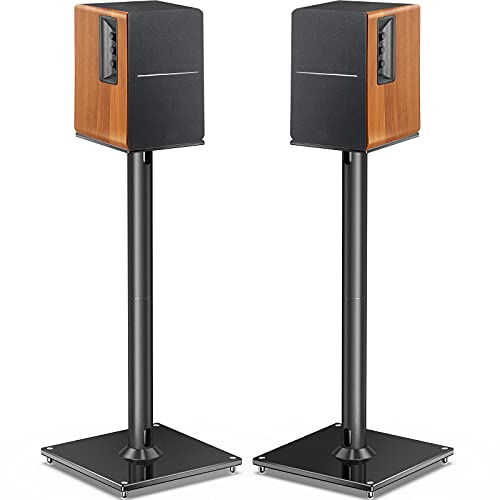
Perlegear’s stands offer a wide top plate (7.79 x 7.79″) with anti-slip rubber pads to secure speakers and reduce vibration. At roughly 27.5″ tall, this pair positions speakers close to seated ear height. The 11.8″ square base provides a broad footprint for stability. Rated at 22 lbs, the stands are presented as multi-functional for TV, gaming, studio use, or musical instruments. Four rubber pads are included to customize grip and damping per speaker base size.
PEGZONE Speaker Stands Pair 30.1 Inch, 55 Lbs Capacity

PEGZONE emphasizes load capacity and a large base. Each stand supports up to 55 lbs, making them suitable for heavier bookshelf speakers or small floor monitors. The integrated cable management keeps runs hidden inside the pole. At 30.1″ height, these stands are designed to position drivers near ear level. The 11.8″ x 11.8″ tempered glass base aims to combine aesthetics with a stable footprint for den or home theater installations.
Buying Guide: How To Choose Large Floor Speaker Stands
Selecting the right floor stands affects sound quality, safety, and room aesthetics. Use these key factors when comparing stands.
Weight Capacity And Speaker Size
Check the weight rating against your speaker’s weight including any removable grills or mounts. For heavier bookshelf speakers, prefer stands rated well above the speaker weight to allow margin for stability.
Height And Listening Position
Match stand height to listener ear level for the main seating position. Typical seated ear height is 30–36″; adjustable stands or different model heights let you place tweeters at the optimal vertical point.
Top Plate Size And Shape
Top plate dimensions and shape determine how well your speaker sits. Wider or square plates support more speaker footprints. Look for included rubber pads or anti-slip material to avoid movement and reduce resonance.
Base Size And Material
Larger bases (tempered glass, steel, or weighted plates) provide more stability. Glass bases offer a sleek look; heavy metal bases may resist tipping better in active or child-pet environments. Consider carpet anchors or spikes if placed on rugs.
Vibration Control And Isolation
Features like rubber isolation pads, spikes, or decoupling feet reduce vibration transfer to floors and improve clarity. For studio use, more isolation can lead to tighter bass and clearer imaging.
Adjustability And Tilt
Swiveling or tilting top plates (e.g., 45°) let you angle speakers toward listening positions, improving imaging without moving the whole stand. Height adjustability is useful for different rooms or flexible listening setups.
Cable Management
Integrated internal channels or holes keep cable runs tidy and protected. If appearance matters, choose stands with hidden-wire features to maintain a clean setup.
Compatibility And Mounting Options
Confirm that the stand’s top plate or mounting configuration fits your speaker’s base. Some stands accept rectangular or flat-bottom speakers, while others may not be suitable for rounded or irregular bottoms.
Room Use And Safety
Consider stand footprint vs. traffic patterns and child or pet activity. Heavier bases, wider footprints, or anchored stands reduce tipping risk. Use floor-protecting pads for hardwood to avoid scratching.
Comparison Perspectives
- Home Theater: Focus on height, tilt, and cable routing for rear/surround channels.
- Music Listening/Studio: Prioritize isolation pads, rigid construction, and precise height alignment.
- Heavy Speakers: Choose stands with higher weight ratings and broad bases like PEGZONE.
- Compact Speakers: Adjustable-height stands with narrower top plates (e.g., PERLESMITH PSSS2) may fit better.
Assess speaker dimensions, required height, and expected use cases before selecting stands. Each model above lists features aimed at stability, acoustic control, or aesthetics, allowing you to match a stand to your system and room layout.