
Best LED Sound Level Meters for Accurate Noise Monitoring
Looking for a reliable LED sound level meter to measure noise levels accurately at home, school, or the office? This guide highlights five top options that combine bright LED displays with precise readings and practical features. Each entry notes who it’s best for, why it’s selected, and a potential caveat to consider. Use this to compare display size, calibration features, and alarm indicators before purchasing.
| Product | Display Size | Best For | Key Benefit |
|---|---|---|---|
| DANOPLUS 11″ Wall Mount | 11 inch | Classrooms, studios, homes | Clear alarm icons and adjustable brightness |
| DANOPLUS 13″ Display | 13 inch | Large spaces | Extensive readout with time and humidity |
| COOLOUS 5-in-1 | 11 inch | Wall-mounted installations | Comprehensive data: decibels, temp, humidity |
| TopTes TS-501B | 2.25 inch LCD | Home, neighborhood monitoring | Portable and backlit display with A/C weighting |
| Yacker Tracker | LED indicators | Classrooms and busy spaces | Traffic-light visual signals for quick readings |
DANOPLUS Decibel Meter With 11-Inch LED Display

The DANOPLUS wall-hanging decibel meter uses a large 11-inch LED display to show real-time decibel levels, temperature, and humidity with brightness that can be adjusted. This model features face-icons alarm indicators that switch based on noise levels, with color cues: Green for under 60dB, Yellow for 60–75dB, Orange for 75–85dB, and Red for over 85dB. It supports a wide measurement range of 30–130dB and offers calibration functionality for long-term accuracy. This unit is best for classrooms and studios where a visible, ever-refreshing readout and simple visual alerts are priorities. Caution: calibration requires following the included procedure to ensure readings stay accurate over time.
DANOPLUS 13-Inch LED Sound Meter With Alarm

This model expands the display size to 13 inches, offering a broader readout that also shows time, temperature in Celsius or Fahrenheit, and humidity. It includes a buzzer alarm with an adjustable threshold and the familiar face-icon indicators to provide an at-a-glance assessment of room noise. The range remains 30–130dB with similar +/-1.5dB accuracy. The larger screen makes it well-suited for open-plan spaces or classrooms where multiple people need to monitor noise simultaneously. Limitation: the buzzer is adjustable, but some users may prefer a silent alert in sensitive environments.
COOLOUS 5-in-1 Decibel Meter

The COOLOUS device combines an 11-inch LED display with measurement of decibels, temperature, humidity, and time—packaged for wall mounting or desktop use. The same face-icon alarm system provides clear alerts for noise levels, backed by a high-accuracy range of 30–130dB and +/-1.5dB. It’s ideal for labs, classrooms, and offices where space is limited but a broad data set is needed. Choose this if you want a single unit that tracks environmental conditions alongside sound. Caution: wall mounting requires proper anchoring to ensure stable readings.
Yacker Tracker Noise Level Monitor
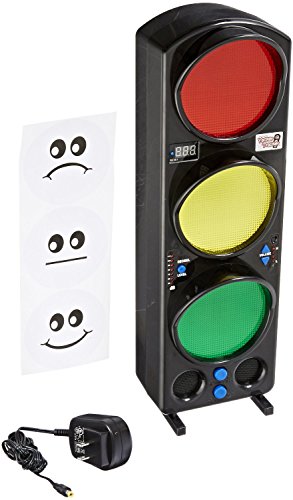
The Yacker Tracker uses LED-based traffic-light signals to indicate room noise levels, providing a simple, intuitive visual cue for classrooms, cafeterias, and gyms. It’s designed to be pre-set by teachers or adults to a comfortable noise level, making it easy for students or participants to adjust behavior in real time. Best for quick, non-technical monitoring where immediate visual feedback matters more than precise numerical data. Limitation: this model emphasizes visuals over numeric detail, which may not satisfy users needing exact decibel measurements.
TopTes TS-501B Portable Decibel Meter

The TopTes TS-501B is a compact, portable decibel meter with a 2.25-inch backlit LCD screen and dual weighting options (A and C). It measures 30–130 dB with about 1.5 dB accuracy. Features include MAX/MIN readings and a data-hold function, letting users capture peak levels or stable values over time. This model is better for field use, quick checks around noise sources, or temporary monitoring in offices and neighborhoods. Caution: smaller display may require closer viewing in dim environments, even with backlight enabled.
Buying Guide: Key Considerations For LED Sound Level Meters
- Display size and readability: Larger screens improve visibility in busy spaces; backlighting helps in dim rooms.
- Measurement range and accuracy: Most meters cover 30–130dB with +/-1.5dB accuracy; confirm if you need higher precision for professional use.
- Weighting options: A-weighting is standard for human-heard noise; C-weighting captures a broader frequency range for more technical assessments.
- Alarms and indicators: Face icons or buzzer alerts help non-technical users react quickly to changes in noise levels.
- Environmental data: Some meters also display temperature and humidity, useful for labs and classrooms.
- Power and portability: Wall-mountable units save space; handheld meters offer flexibility for on-the-go measurements.
- Calibration: Look for devices with calibration capability to maintain accuracy over time.
Practical Buying Questions
- Do I need a wall-mountable meter or a portable handheld device? Consider space and how often you move the meter.
- Is it important to see environmental data (temperature and humidity) alongside sound levels? If yes, choose 5-in-1 or larger display units.
- Should I prioritize a visual alarm system or a audible buzzer? Visual indicators are great for classrooms; a buzzer can trigger immediate alerts in louder environments.
- Will you need a long-term calibration option? Calibratable meters help maintain accuracy after installation or changes in surroundings.
- Do you require a large, bright display for easy reading from a distance? Large-format meters are better for open areas and teaching spaces.
Frequently Asked Questions
- What is a decibel meter used for? It measures sound pressure levels to assess noise exposure in various environments.
- What does a face-icon alarm indicate? It provides a quick visual cue about current noise levels without needing to read numbers.
- What is A-weighting? It’s a frequency weighting that reflects human hearing sensitivity for environmental noise assessments.
- Can these meters be used for classroom management? Yes, several models offer clear alerts and large displays suitable for educators.
- Do I need humidity and temperature readings? If your environment requires monitoring of ambient conditions along with sound, choose 5-in-1 or larger displays.
- How important is calibration for accuracy? Regular calibration helps maintain precision, especially in long-term monitoring setups.