
Best Left-Handed Basses for 8-String Enthusiasts and Beginners
Answer: This guide showcases left-handed basses that suit players exploring extended-range or beginner experiences, with five solid choices and a buying guide to help compare features. Best for: beginners seeking affordable entry points, intermediate players needing reliable tone, and left-handed players seeking comfortable necks and adjustable setups. The top picks include four-string and five-string options that resemble the feel of an 8-string approach, plus a model suited for those who want electric-acoustic capabilities.
| Product | Type | Strings | Best For |
|---|---|---|---|
| Tario Left-handed 4 String Bass | Electric Bass | 4 | Budget learners and basic practice |
| GLARRY Left Hand 4 String Kit | Electric Bass Kit | 4 | Complete starter set |
| Gstyle Left-Handed 8 String Electric Guitar | Electric Guitar | 8 | Extended range guitar players (note: not a bass) |
| Harmonia Left-handed 4 String Bass | Electric Acoustic Bass | 4 | Acoustic feel with amplification |
| Ibanez GSRM20BKL Left Handed Bass | Electric Bass | 4 | Compact, portable practice |
Overview: The selection prioritizes left-handed designs, solid build, and practical playability for a range of budgets. This article highlights when each model is a best fit and what to watch for in setup and tone potential.
Tario Left-Handed 4 String Electric Bass

Features include a left-handed 4-string configuration, poplar wood body, bolt-on maple neck, composite ebony fingerboard, matt black finish, die-cast black machine head, 24 frets, and two strap hangers. Best for: budget-conscious players who want a straightforward, compact option with reliable basic tone. Choose this if you prioritize affordability and a simple setup. Limitation: not a full-featured professional instrument; potential adjustments may improve intonation for advanced players.
GLARRY Left Hand 4 String Electric Bass Kit

Features include basswood body, rosewood bridge and fingerboard, ergonomic cut for comfort, and a split single-coil pickup with two volume knobs. Best for: beginners who benefit from an all-in-one starter kit with included cable, strap, and accessories. Choose this if you want a complete setup from day one. Limitation: may require setup adjustments for precise action and intonation on some units.
Gstyle Left-Handed 8 String Model

Features include a burl poplar veneer top, Okoume body, maple neck, composite ebony fingerboard, and 25 1/2″ scale with 24 frets. Best for: players seeking an extended-range feel in a left-handed design. Better for: those who want a bold, unique appearance and a wide tonal palette. Limitation: this model is a guitar, not a bass, so its use-case differs from traditional bass players seeking low-end authority.
Harmonia Left-Handed 4 String Electric Acoustic Bass

Specifications note a laminated spruce top with laminated mahogany back and sides, rosewood fingerboard and bridge saddle, and a 34″ scale length. Best for: players who want acoustic resonance with electric amplification. Choose this if you need natural wood tone and portability. Limitation: laminated construction may not deliver the same resonance as solid tops in some settings.
Ibanez GSRM20BKL Left-Handed 4-String

Features include fast, slim maple neck, compact lightweight body, and a Dynamix P pickup. Best for: players seeking portability and comfortable play on a tight budget. Choose this if you prefer a compact neck profile and easy weight, with reliable basic tone. Limitation: 4-string format may be limiting for players seeking extended range options.
Ibanez TMB-100 Talman Bass Left-Handed
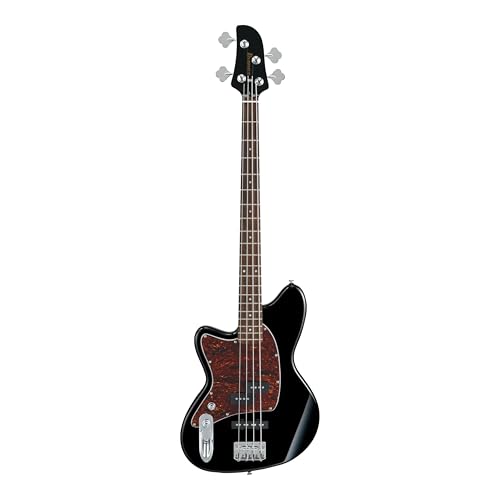
Features include a 4-string bass with a poplar body, a distinctive red tortoiseshell pickguard on black, and a Jatoba fretboard. Best for: players seeking a stylistic look with a traditional bass tone. Choose this if you want a recognizable Ibanez feel with a unique visual. Limitation: the design prioritizes looks and feel, which may not suit players seeking modern pickups or advanced electronics.
TARIO Left-handed Fretless 5 String Bass

Features a left-handed fretless 5-string configuration, bolt-on maple neck, basswood body, and soap bar pickups with two volume and two tone controls. Best for: players exploring subtle fretless tones and extended-range practice. Choose this if you want the fretless versatility. Limitation: fretless setup can require precise intonation and technique to avoid dead spots or intonation drift.
Buying Guide: Key Purchase Considerations
- Purpose and style: Decide if you want a traditional fretted bass, a fretless option, or an extended-range feel. Left-handed builds are less common, so confirm available models.
- Body and neck material: Common choices include poplar, maple, basswood, and Okoume. Materials influence tone, weight, and sustain.
- Electronics and pickups: Split single-coil, Dynamix, or soap bar pickups affect tone profile. For beginners, simpler setups offer easier control.
- Scale length and neck feel: Shorter scales are easier for beginners; longer scales can provide richer tone and tension for experienced players.
- Setup and playability: Action height, truss rod adjustment, and nut width impact comfort. Some models allow neck adjustments to tailor feel.
- Portability and kit contents: Some left-handed bass kits include straps, cables, and bags—handy for new players.
- Longevity and support: Consider brands with accessible parts and replacement options to maintain basses over time.
FAQ
- Q: Are there many left-handed 8-string basses available?
- A: Left-handed 8-string basses are rare; most options shown are 4- or 5-string models. Look for extended-range or fretless 5-string options if you need more range.
- Q: What should a beginner look for in a left-handed bass?
- A: A comfortable neck, manageable string tension, reliable pickups, and a complete starter kit can help beginners practice more effectively.
- Q: Do electric-acoustic basses differ significantly from solid-body basses?
- A: Yes. Electric-acoustic basses rely on a resonant body and onboard electronics for amplified volume, offering more natural acoustic vibe when unplugged and a broader tonal palette when amplified.
- Q: Is a fretless bass appropriate for beginners?
- A: Fretless adds tonal nuance but demands precise intonation and technique; beginners may prefer fretted models to build basics first.
- Q: How important is a kit vs. a single instrument?
- A: Kits are advantageous for new players seeking all-in-one value, while a single instrument lets you customize after initial practice.
- Q: Can a left-handed model be converted for right-handed use?
- A: Some models are not easily convertible due to pickups and routing; check with the seller or a tech before buying for conversion feasibility.