
Best Lightweight Bass Amp for Gigging: Top Picks for on-the-Go Players
Answering the needs of gigging bassists who require portability without sacrificing tone, these models offer compact sizes, manageable weights, and stage-ready features. The list highlights amps best for small to midsize venues, rehearsals, and travel-friendly setups. Buyers should consider weight, wattage, speaker size, and input/output options to match gigs and practice needs. Below is a quick comparison of five strong options.
| Product | Power | Speaker | Weight (approx.) | Best For |
|---|---|---|---|---|
| Fender Rumble 15 V3 | 15 W | 8″ | ~18.4 lb | Acoustic gigs, small venues, practice |
| Peavey Max 100 | 100 W | 1×12″ (style varies) | — | Small band gigs, rehearsal |
| Fender Rumble 25 V3 | 25 W | 8″ | — | Compact gigs, practice with more headroom |
| JOYO Vibe Cube BA-30 | 30 W | 4″ | — | Travel-lite practice and small gigs with Bluetooth |
| JOYO MA-10B | 10 W | — | Very light | Practice, silent practice, lightweight transport |
Fender Rumble 15 V3 Bass Amp Combo

The Fender Rumble 15 V3 is a lightweight 15-watt bass combo designed for gigging at small venues and rehearsals. It features an 8″ Fender Special Design speaker for punchy low-end response and a top-mounted control panel with Ivory knobs for easy tone shaping. Best for solo bassists or small ensembles seeking portability without sacrificing Fender tone. A potential limitation is its lower wattage, which may be insufficient for larger stages or loud bands.
Peavey Max 100 Bass Amp Combo
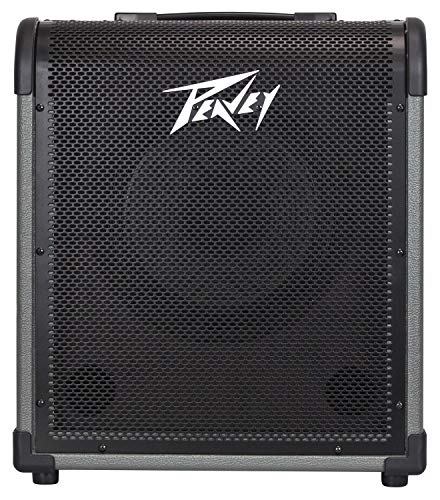
The Peavey Max 100 delivers robust power with three-band EQ, overdrive, contour, and a variety of switches to sculpt tone. It provides 1/8″ aux input and headphone output for silent practice or direct jams. The cabinet design focuses on high-frequency dispersion in tight spaces, making it a solid choice for small gigs where clarity and presence matter. Caution: larger venues may require more headroom than this model offers.
Fender Rumble 40 V3 Bass Amp

The Fender Rumble 40 V3 offers 40 watts of power with a 10″ Fender Special Design speaker, suitable for small-to-medium gigs. It weighs more than the 15-watt model but remains portable for a compact rig. A built-in overdrive circuit can be controlled via a footswitch for hands-free tonal changes, which is helpful for dynamic sets. Better for players needing more stage volume than the 15-watt option.
Fender Rumble 25 V3 Bass Amp

The 25-watt Rumble V3 increases headroom compared to the 15-watt model while maintaining a compact footprint. This model features a switchable overdrive and mid-scoop contour to tailor tone for modern slap and groove styles. Choose this if you need more volume than the 15-watt version but still want easy transport for gigging and rehearsal.
JOYO Vibe Cube BA-30 30W Bass Amp

The JOYO BA-30 is a versatile 30W portable bass amp with a 4″ speaker and Bluetooth 5.1 plus OTG direct recording. It features a 3-band EQ with a dedicated mid-frequency control, and an onboard compressor for smoother attack. Best for players who want built-in wireless streaming, practice with backing tracks, and easy recording options. Limitation: smaller speaker size may limit low-end punch at larger venues.
JOYO MA-10B Mini Bass Practice Amp

The JOYO MA-10B is a compact, very lightweight practice amp with two channels (Normal/Drive) and headphone/aux inputs. It’s ideal for silent practice, travel, and quick jams where portability is the priority. Best for beginners or casual players who want ultra-portable gear without sacrificing basic tone shaping. Caution: its low wattage makes it less suitable for live band performances without amplification support.
Buying Guide: Key Purchase Considerations
- Portability vs. power: For gigging, you want a balance between weight and headroom. If you play loud bands or larger rooms, lean toward 25–100 W options, but for coffee-house gigs or rehearsals, 15–30 W can suffice.
- Speaker size and enclosure: Larger drivers deliver deeper bass and better projection. Ported enclosures often provide more volume per watt than sealed cabs.
- Tone shaping: Look for a three-band EQ, mid-frequency control, and overdrive options if you use slap or crunchy tones. A mid-scoop contour helps modern bass flavors.
- Inputs and outputs: An aux input for backing tracks, headphone out for silent practice, and DI or line-out options help integrate with PA systems or recording setups.
- Weight and build: Lightweight plywood or molded cabinets reduce fatigue during set changes. Consider models with comfortable handles or compact footprints for travel.
- Built-in features: Bluetooth or USB recording can simplify practice and demos. A footswitchable drive or contour can enable hands-free tone changes during performances.
FAQ
- What wattage is best for gigging small venues? – For small venues, 15–40 W with a capable 8–10″ speaker often provides enough volume and tone for most stages without a large rig.
- Should I choose a combo or separate head and cabinet? – For portability and simplicity, a compact combo is usually best for gigging solo or in small groups. Separate heads are heavier and require cabinets.
- Is a built-in overdrive important? – It can reduce the need for extra pedals and offer quick tonal changes between songs or sections, which can be helpful for live sets.
- Do I need Bluetooth or recording features? – Bluetooth enables wireless backing tracks and practice playback. OTG or USB recording helps capture demos or performances directly from the amp.
- What should I avoid when buying a lightweight bass amp? – Avoid underpowered options for your typical gig size; ensure the cabinet design supports clear, loud projection in your venue type.
- How important is weight when traveling for gigs? – Very important. Lighter amps save on transport time and reduce fatigue during load-in and load-out, especially for solo performers or small bands.