
Best Line Level Audio Cables for Clear DSLR and Car Audio
The right line level audio cable makes it easier to capture clean, distortion-free sound with cameras, recorders, and car stereos. This guide highlights five top options that balance signal integrity, build quality, and practical use. Ideal buyers include videographers who connect external recorders to DSLRs, content creators seeking reliable mic-level results, and car audio enthusiasts upgrading stock systems. The table below summarizes the picks and their primary strengths.
| Product | Best For | Why It Stands Out |
|---|---|---|
| Movo MV-RC100 | DSLRs & Field Recording | -35 dB attenuation for mic-level compatibility; gold-plated connectors for reduced interference |
| LSYRIA 3.5mm Line-In Cable | Direct mic input for DSLRs | Low-noise path with shielding and gold-plated plugs |
| CableFair 8” TRRS Cable | Smartphone/DSLR hybrids | Line-to-mic level conversion with reliable TRRS connectors |
| Amazon Basics Toslink Cable | Home theater & game systems | Digital optical with gold-plated connectors for clear multi-channel audio |
| NuIth RCA Converter | Car stereos & amplifiers | Converts speaker-level to RCA outputs with adjustable gain |
Movo MV-RC100 3.5mm Line-In To Microphone Attenuator Cable
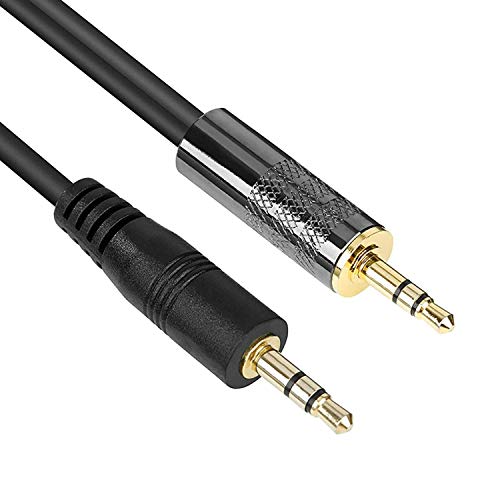
Best for DSLR users needing mic-level input from line-level sources. The MV-RC100 connects line input devices such as recorders or other mics to a DSLR or camcorder, providing a controlled -35 dB attenuation to align recorder outputs with mic-level inputs. Gold-plated TRS connectors and shielding minimize RF noise, improving signal integrity in busy shooting environments. Choose this if you require reliable mic-level performance without extra adapters. A limitation is that it focuses on attenuation rather than full-line-level versatility; ensure your source can be safely reduced to mic level before use.
3.5mm Male Line-in To Male Microphone Cable, LSYRIA

Best for creators who connect line-output devices directly to a DSLR microphone input. This cable safely lowers line-level signals to mic-level inputs, preventing distortion and protecting your camera’s audio circuitry. The gold-plated connectors and shielding help preserve signal quality by reducing corrosion and RF interference. Choose this if you need a straightforward line-to-mic solution with solid build quality; beware that very long runs may still pick up noise in challenging environments.
CableFair 8” TRRS Line-In To Mic-Level Cable

Best for content creators who need a compact, reliable adapter between line outputs and mic-level inputs. This cable converts line-level to mic-level signals while preserving audio clarity, making it suitable for DSLR or HDSLR applications and field recording on the go. It uses premium gold-plated TRS/TRRS connectors and shielding to minimize interference. Consider this option if you value a short, sturdy cable with trusted connectors; it may be less ideal for very long cable runs where signal loss could occur.
Amazon Basics Toslink Optical Cable

Best for digital audio setups such as home theater, sound bars, or game consoles. This optical Toslink cable transmits multi-channel digital audio with clear signal transfer and includes corrosion-resistant gold-plated connectors. Note that this is a digital, not analog, line-level connection; it is best used when your source and destination both support optical audio. The end caps should be removed before use for proper connection.
NuIth Car Audio RCA Line Output Converter

Best for upgrading car audio with an amplifier or subwoofer. This two-channel high-to-low RCA converter transforms speaker-level signals into RCA line outputs, enabling a clean connection to external amplifiers. It includes a level gain adjustment to tailor bass response without stopping to adjust your amp while driving. Choose this if you need to integrate factory or aftermarket systems; avoid if your car stereo already provides line-level outputs without amplification.
Buying Guide: Key Considerations For Line Level Cables
- Source and destination compatibility: Ensure the cable matches your device inputs (line-in, mic-level, TRS vs TRRS, optical vs analog).
- Attenuation and gain: Attenuation needs depend on whether you’re feeding a mic input or line input. Use dedicated line-to-mic solutions when necessary.
- Connector quality: Gold plating and shielding reduce corrosion and RF noise for clearer signals in noisy environments.
- Cable length: Shorter cables minimize signal loss; longer runs require higher quality shielding and conductors to preserve fidelity.
- Durability and form factor: For field work, choose cables with robust connectors and suitable ends (straight vs right-angle) for your setup.
- Digital vs analog: Optical Toslink cables carry digital audio; they are not interchangeable with analog line-level cables and require compatible equipment.
FAQ
- What is line-level audio?
Answer: Line-level refers to standard reference signal levels used to interconnect audio equipment, typically higher than mic-level and lower than speaker-level. - When should I use a mic-level attenuator cable?
Answer: Use it when your source outputs line-level signals that would overload a mic input, causing distortion. - Are gold-plated connectors important?
Answer: They can improve conductivity and corrosion resistance, reducing potential signal degradation over time. - Is Toslink a good choice for all setups?
Answer: Toslink is ideal for digital multi-channel audio setups; it’s not suitable for analog line-level connections. - Can I mix line-level and mic-level devices on one setup?
Answer: Yes, but ensure proper attenuation or adapters are used to prevent clipping and noise.