Best Line to Mic Attenuator: 5 Top Picks for Clear DSLR Audio
Looking to safely convert line-level outputs to mic-level inputs for DSLR cameras, recorders, or laptops? This guide highlights five reliable line-to-mic attenuators, each chosen for specific use cases such as portable rigs, studio setups, or on-camera recording. Best for creators who need clean, distortion-free audio without extra gear. The table below compares key details to help you choose quickly.
| Product | Attenuation | Best For | Notes |
|---|---|---|---|
| Cubilux 3.5mm TRS Line to Microphone Attenuator Cable | -10/-20/-30 dB | On-camera DSLR/Camcorder setups requiring adjustable levels | Three-position toggle for precise control |
| Movo MV-RC100 3.5mm Line-in to Line-in Attenuator | -35 dB | Direct line-to-camera connections with mic-level output | Gold-plated connectors, shielded |
| Movo MV-RC300 3.5mm TRS to TRS Attenuator | -25 dB | Headphone monitoring and DSLR/recorders | Line to mic with monitoring jack |
| LSYRIA 3.5mm Line-in to Mic Attenuator | 0 dB to attenuated | Home/project studios, Hi-Z paths | Passive, no power required |
| Hosa ATT-448 In-line XLR Attenuator | Not specified here | XLR-based setups needing attenuation | XLR input/output attenuator |
Cubilux 3.5mm TRS Line to Microphone Attenuator Cable

The Cubilux attenuator cable offers selectable -10dB, -20dB, or -30dB attenuation, allowing precise adaptation from line-level sources to mic-level inputs. This makes it suitable for DSLR cameras, camcorders, and mobile devices that require controlled gain to prevent clipping. The 3.5mm TRS connection ensures compatibility with mixers, DACs, and portable recorders. Best for creators who frequently switch between devices and need reliable, on-cable level adjustment. A potential limitation is that the cable length is short (1 foot), which may restrict placement flexibility in some rigs.
Movo MV-RC100 3.5mm Line-in to Line-in Attenuator
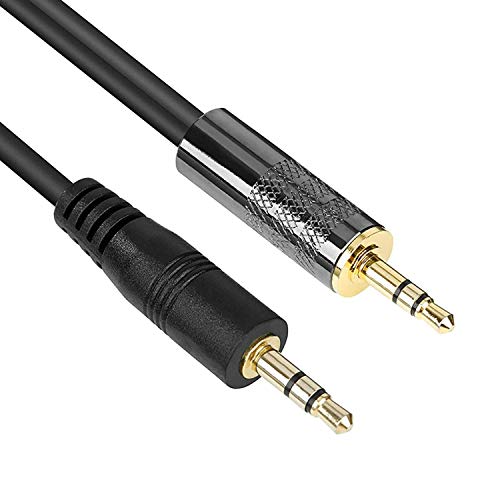
The MV-RC100 provides about -35dB attenuation, aligning a recorder’s output with a microphone input for DSLR cameras. It is designed to minimize signal mismatch and preserve audio integrity. The gold-plated TRS connectors and shielding help reduce RF interference, making it a solid pick for on-camera audio workflows. It’s best for users who need a simple, dedicated line-to-mic path with strong noise rejection. A consideration is that it is tailored for line-to-mic transitions rather than full studio-grade monitoring paths.
Movo MV-RC300 3.5mm TRS to TRS Attenuator

The MV-RC300 provides -25dB attenuation and supports monitoring through headphones while recording, a feature valuable for DSLR and video producers who need real-time level checks. It’s well-suited for camera rigs that rely on a single 3.5mm jack for both input and monitoring. The product’s design emphasizes ease of use and practical attenuation for typical DSLR audio workflows. Choose this if you require direct mic-level monitoring alongside attenuation; avoid if you need higher or programmable attenuation beyond -25dB.
SIUNIMAS Passive Stereo Inline Attenuator

The SIUNIMAS inline attenuator offers a passive design suitable for Hi-Z audio paths, providing attenuation from 0dB up to full signal depending on the configuration. This makes it a flexible option for home theaters and official audio setups where external power is not available. It’s best for users seeking a simple, no-power solution with straightforward attenuation control. A potential limitation is less precise numeric attenuation values compared to multi-position switches.
3.5mm Male Line-in to Male Microphone Attenuator Cable

This LSYRIA cable allows line output devices to feed a DSLR or HDSLR microphone input with built-in attenuation. It uses gold-plated TRS connectors and shielding to maintain signal integrity and minimize RF interference. Best for creators who need a reliable line-to-mic connection with good corrosion resistance and corrosion-resistant connectors. Limitations include a lack of explicit attenuation level specification in the listing, so exact reduction may vary by cable length and device environment.
Hosa ATT-448 In-line XLR Attenuator

The Hosa ATT-448 is an in-line XLR input attenuator designed for mic-level to line-level conversions in more professional, XLR-based workflows. It’s best for users who work with XLR-connected audio gear and need a straightforward attenuation stage. It is not a direct 3.5mm line-to-mic solution, so choose it only if your setup uses XLR inputs/outputs. A limitation is that it isn’t a 3.5mm TRS solution, which may reduce compatibility with consumer gear without adapters.
Buying Guide: Key Considerations For Line-To-Mic Attenuators
- Attenuation range and control: Look for devices offering explicit attenuation values (-10dB, -20dB, -30dB, etc.) and whether the control is switch-based or continuous.
- Connector compatibility: Ensure the connector type matches your gear (3.5mm TRS, 1/4″ TRS, or XLR) and whether you need stereo or mono paths.
- Monitoring capabilities: If you need live headphone monitoring, consider models that provide a monitoring jack or direct monitoring features.
- Power requirements: Passive attenuators require no power, which is ideal for simple rigs. Active solutions may be needed for some setups, but they introduce latency or power considerations.
- Compatibility with devices: For cameras, DSLRs, and camcorders, verify that the mic input impedance and gain structure align with the attenuator’s output level.
- Cable length and flexibility: Short cables keep the setup tidy on-camera, but longer cables provide more placement options.
- Build quality and shielding: Gold-plated connectors and proper shielding reduce noise and RF interference, improving signal integrity.
- Durability vs. portability: For field use, choose compact, robust designs that withstand travel and handling.
FAQ
- What is a line-to-mic attenuator used for?
It reduces a line-level signal to a mic-level signal to prevent clipping and distortion when feeding camera mic inputs or portable recorders. - Do I need a powered attenuator?
Most inline attenuators are passive and do not require power, making them simple and portable for on-the-go recording. - Which connector should I choose for my camera?
Choose based on your gear’s input: 3.5mm TRS for most consumer cameras; XLR for professional setups. - Can I use a line-to-mic attenuator with headphones?
Some devices offer monitoring while recording; select models that include a monitoring path if this is important to you. - Is higher attenuation always better?
Not necessarily. Use the attenuation level that matches your input’s headroom; overly strong attenuation can yield too little signal. - Are 3.5mm attenuators compatible with smartphones?
Yes, many are designed to interface with smartphone mic inputs, but verify compatibility with your device’s microphone bias and TRS/TRRS configuration.