
Best Loop Station Guitar Pedals for Instant, Layered Performances
When searching for a loop station guitar pedal, you want reliable looping, clear sound, and easy live handling. This guide highlights five top options ideal for guitarists seeking fast setup, dependable overdubs, and practical performances. Whether you’re a beginner building textures or a seasoned player layering complex phrases, these picks cover straightforward operation, ample memory, and strong audio quality. The buyer profiles below explain who benefits most from each model, plus practical limits to consider in real-world use.
Product snapshot
- BOSS RC-1 Loop Station — Best for beginners and compact pedal setups.
- BOSS RC-5 Loop Station — Best for live performance with extended recording and editing.
- LEKATO Looper Pedal — Best for budget-conscious players wanting synced recording and tuner features.
- LEKATO Looper Pedal (3 Loops, 18 Minutes) — Best for multi-loop ideas with visual timing.
- MOOER GE100 Multi-Effects — Best for players wanting a broader tone toolbox with looping capability.
BOSS RC-1 Loop Station Pedal

The RC-1 is designed for ease of use and compact setups. It supports straightforward recording, playback, overdubs, and undo/redo loops within a single compact stompbox. This model is best for beginners or players who want a dedicated looping tool that’s simple to operate during practice or small gigs. It’s a dependable choice when you want quick loop creation without learning a complex interface. Caution: limited features may feel restrictive for artists seeking advanced loop editing onstage.
Boss RC-1 Loop Station

This RC-1 iteration features a new loop indicator layout—24 LEDs in a circular pattern on the top panel to reveal Rec/Overdub/Play status at a glance. It offers up to 12 minutes of stereo recording time and stereo I/O for compatibility with stereo effects and instruments. Best for performers who need a clear status readout on stage and a straightforward, battery-powered workflow. Limitation: the single-track looping may not satisfy users needing multi-track layers without overdub creativity.
LEKATO Looper Guitar Pedal with 9 Loops

LEKATO’s looper offers nine loops with a total recording time around 40 minutes. It uses 48K/24-bit audio and features an Analog-Dry-Through design for clean tone. The built-in tuner helps keep performances in tune, and the uncompressed audio ensures a transparent signal path. Best for players who want long looping sessions and reliable tuning without needing a high-cost unit. Caution: power supply details are important; ensure you use a compatible 9V center-negative supply as recommended.
MOOER GE100 Multi-Effects Guitar Pedal

The GE100 combines a broad effects suite with looping capabilities, offering 80 presets and 80 user patches, along with 8 effect modules and 6 assignable expression pedal parameters. Its flexible output mode supports line-level tones without an amp. This option is best for players who want a compact device covering both tone shaping and looping, suitable for studio work and live use. Limitation: the vast feature set can require a longer learning curve to master all options efficiently.
Boss RC-5 Loop Station
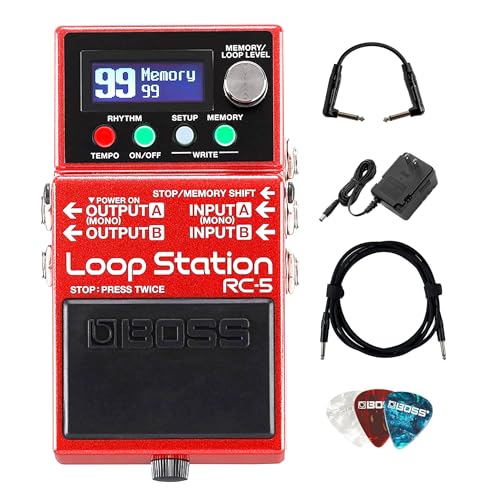
The RC-5 adds advanced looping features with 32-bit AD/DA and 32-bit floating-point processing, delivering high-quality sound in every loop. It supports up to 13 hours of stereo recording and stores 99 phrase memories for quick recall. The LCD with multi-color backlight helps monitor loop status, and its reverse function adds texture for creative lines. Best for players who need extensive memory, high-fidelity sound, and live editing on stage. Caution: may be more complex than entry-level users require.
LEKATO Looper Pedal with 3 Loops
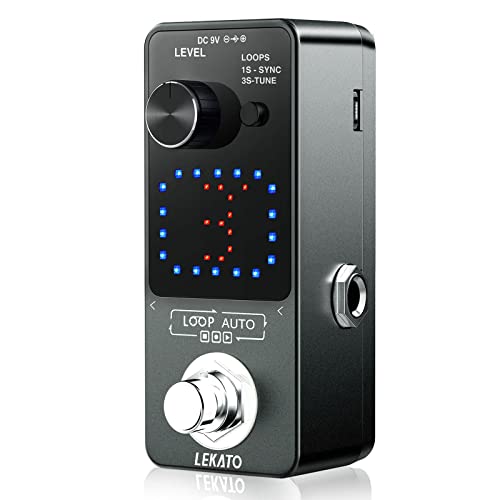
This LEKATO model supports three loops with an 18-minute total record time, a synchronized recording mode, and an LED time indicator. It emphasizes uncompressed audio with a clear dry-through design. Best for players who want a compact, budget-friendly looper with easy sync features. Limitation: fewer loops than higher-capacity units may constrain longer performances or complex layering.
Buying Guide
What should you consider when choosing a loop station guitar pedal?
- Loop capacity: Do you need multiple loops or a single-track loop? More loops allow complex layering but can complicate live control.
- Recording time: Longer timelines matter for extended performances; verify stereo recording support if you use stereo effects.
- Memory and recall: Some pedals store dozens of phrases or presets; this helps with quick changes during gigs.
- Audio quality: 24-bit or 32-bit processing generally yields cleaner loops; check AD/DA specs for professional sound.
- Ease of use: Beginners benefit from simple indicators and straightforward controls; advanced players may want deeper editing.
- Power and portability: Battery-operated units are convenient on small stages; AC adapter compatibility matters for steady gigs.
- Additional features: Tuner, reverse effects, drum kits, and MIDI/footswitch expandability add versatility for live use.
Quick comparison
- Best for beginners: BOSS RC-1 variations for simple looping and reliability.
- Best for live editing: Boss RC-5 with substantial memory and editing options.
- Best value: LEKATO looper with essential features and built-in tuner.
- Best for extended projects: MOOER GE100 for tone shaping plus looping.
- Best multi-loop setup: LEKATO 3-Loop model suits quick, layered performances.
FAQ
- Can I use these loopers with bass or keyboards? Many models support guitar, bass, and keyboards, but check input compatibility and impedance.
- Do loopers require an external power source? Some operate on batteries; others require an AC adaptor. Verify power needs before a gig.
- Is overdubbing possible on all models? Most offer overdub functions, but the ease of undo/redo and latency varies by model.
- Can I store loops for later use? Several units provide memory slots or phrase banks for quick recall during sets.
- Do loopers support external control like MIDI or footswitches? Some models do; confirm compatibility with your rig and pedals.
- What’s the difference between 24-bit and 32-bit processing? Higher bit-depth can improve dynamic range and reduce noise in loops.