
If you want headphones with satisfying bass, start with the sound balance and the situations in which you listen. A maximum-volume promise does not tell you whether a kick drum, a bass line or a voice will sound right at a comfortable listening level. The aim is an enjoyable, usable pair rather than a reason to turn the volume higher.
The selections here include over-ear designs and one smaller on-ear model. They offer different combinations of app EQ, preset modes, noise control and connectivity. The comparison uses identified product features, not personal listening tests, measured output or a claim that one pair has objectively stronger bass than another. Fit and your actual source device remain important parts of the decision.
Decide Which Listening Problem You Want to Solve
For music at home, you may mainly want a comfortable shape and useful sound adjustment. On a commute, outside noise and convenient controls can matter as much as the bass setting. For calls and work, device switching and microphone behavior deserve their own checks; they should not be inferred from the way a product describes music.
Choose a few familiar recordings that represent your listening. Include a track where the bass and voice are both important, rather than using only a heavily boosted demonstration. Compare at a moderate, consistent level during any permitted assessment. Raising one pair’s volume can confuse the comparison and is unnecessary to judge whether you enjoy its balance.
Decide whether you need active noise cancellation. Passive isolation comes from the physical fit, while ANC is an electronic function. An app’s bass preset is not ANC, and a microphone advertised with noise reduction for calls is not proof of incoming noise cancellation.
Existing Options: Features, Buyer Fit and Limits
JBL Tune 720BT in Black: Adjustable Sound Without ANC

The Black Tune 720BT is an over-ear wireless model with JBL Pure Bass branding and EQ through the JBL Headphones app. JBL’s model documentation also identifies multipoint connections, a detachable audio cable and up to 76 hours of wireless playback. These are reasons to compare its everyday flexibility, not proof of the deepest bass in this group.
Who may prefer it: a listener who wants app adjustment and long rated runtime without choosing an ANC model. Check before ordering: the earcup fit, the controls and the audio connection your devices require. The battery figure is a manufacturer maximum, and your routine may differ. Do not infer active noise cancellation from an over-ear shape or assume that using the included cable preserves every wireless microphone or app function. Assess the supported wired mode separately if that is central to the purchase.
JBL Tune 720BT in Blue: The Same Model, a Different Color

The Blue selection is another Tune 720BT color option. It belongs alongside the Black pair when deciding which listing and finish to buy, rather than being treated as a separate acoustic design with better bass or a wider soundstage. The relevant model-level features remain the app EQ, wireless connection and supported cable option.
Why retain this option: color and the exact selected order can matter to the buyer, especially when product pages display multiple choices. What to compare: the model identity, supplied accessories, applicable warranty and return terms for the actual order. Do not assume a lower advertised price means a different sound profile, or that a color change alters comfort. If noise control is your main priority, compare the appropriate ANC models below instead of expecting a different 720BT color to provide it.
JBL Tune 510BT: An On-Ear Alternative

The linked Black Tune 510BT is an on-ear model, rather than an over-ear pair. That distinction changes where its cushions contact you and is more useful than grouping every headband headphone under the same fit description. It has JBL Pure Bass branding and a foldable wireless format.
JBL’s specification sheet identifies the on-ear design, multipoint function and up to 40 hours of battery life. Buyer fit: someone who deliberately wants this smaller on-ear format and straightforward listening controls. Limitation: pressure on the ears may suit you differently from an around-ear cushion, and a compact design does not guarantee comfort during a long session. Check its actual connection options and controls; do not transfer the 720BT’s app or cable features to this different model because both have Pure Bass branding.
BERIBES Over-Ear: Preset Sound Modes to Compare
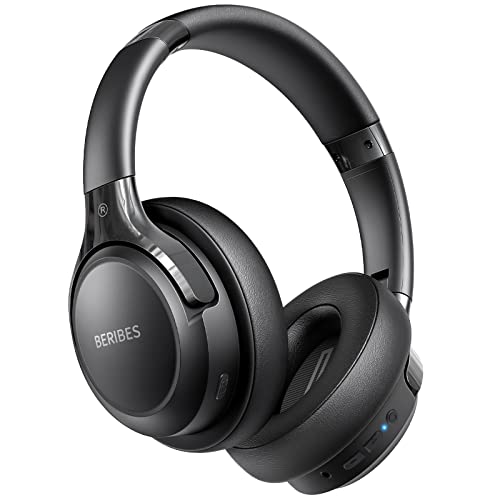
This selected BERIBES pair is an over-ear wireless headphone advertised with six EQ modes and up to 65 hours of playback. Presets may be useful if you prefer selecting a general sound character to editing an EQ curve. They should be compared as options for your recordings, not as proof that the headphones meet an undefined audiophile standard.
Reason to investigate it: a listener who wants several onboard sound choices and can confirm the supported connection arrangement. Before buying: identify how the modes are selected, what the current version includes and whether the supplied instructions cover any planned wired use. The rated playtime is not a guarantee for your volume, calls or settings. Do not assume a larger driver, a lightweight claim or memory-foam wording establishes superior bass or all-day comfort. Assess earcup clearance and cushion pressure in the same practical way as the other designs.
JBL Tune 770NC: ANC With App-Based Sound Adjustment
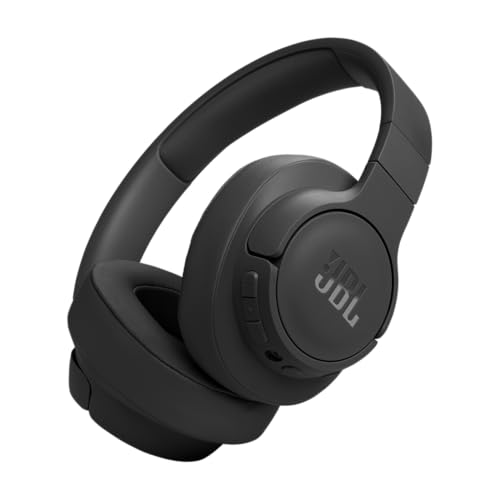
The Black Tune 770NC adds adaptive ANC and Smart Ambient to an over-ear design with JBL Headphones app EQ. That feature combination is relevant to a listener who needs noise control as well as sound adjustment. It is not evidence that ANC removes every noise or that an ambient mode guarantees awareness of everything nearby.
JBL’s battery specification separates up to 70 hours with ANC off from up to 44 hours with ANC on. Why consider it: your commute or shared workspace makes that noise-control option useful, and the supported device switching suits your routine. What to verify: your source devices, desired mode, fit and cable behavior. Do not assume app availability supplies every optional Bluetooth feature immediately; follow the documentation for the actual firmware and supported functions. The manufacturer figures are conditional maxima rather than results from our own use.
Pointcinco Hybrid ANC: Read the Battery Modes Separately
The linked Black Pointcinco selection is identified as a hybrid-ANC over-ear model with wireless and 3.5mm wired options. Its current product information advertises up to 50 hours with ANC on and 80 hours with ANC off. The distinction matters: an 80-hour headline should not describe continuous ANC use.
Buyer profile: someone investigating an ANC model with a cable option and willing to confirm the exact included functions. Check first: mode controls, supported charging requirements, supplied cables and whether the selected device’s call behavior meets your needs. A Bluetooth version number does not establish zero delay or reliable sound through every obstacle. No comparison of its bass quality or ANC strength with premium products is claimed. Treat the documented features as a shortlist entry, then assess fit and normal listening behavior within the applicable purchase terms.
DOQAUS Wireless Over-Ear: App and EQ Choices
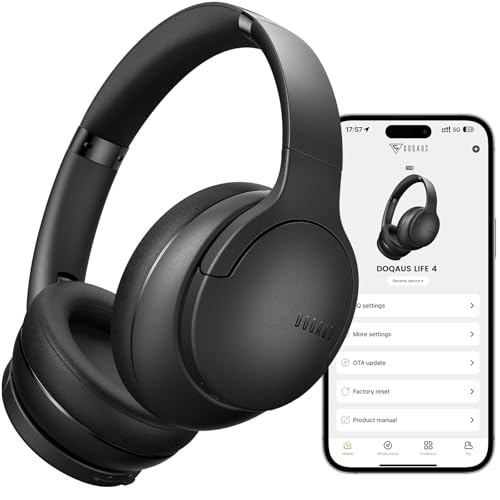
The selected Black DOQAUS item is advertised with app control, nine EQ modes and up to 90 hours of playback. That makes its adjustment workflow worth investigating for someone who wants more than one fixed sound setting. The count of modes does not tell you how well any one preset will suit your music.
Selection reason: you want to compare the exact app-supported version and the available sound controls. Pre-purchase checks: supported phone software, access to the app, the way settings are stored and how the headphones connect to each intended source. An ENC microphone description concerns call processing and should not be mistaken for listening ANC. The battery headline is a rated claim, not a promise for every mode or a reason to postpone charging indefinitely. Do not assume dual-device behavior or a particular latency figure without documentation for this selection.
Soundcore Q20i in Pink: ANC, BassUp and App EQ

This link selects the Pink Q20i, not a generic unspecified color. The model offers hybrid ANC, BassUp and app EQ, with a supported AUX connection for its wired Hi-Res feature. A wired feature label should not be transferred to every Bluetooth source or interpreted as a bass-performance measurement.
Soundcore’s Q20i information lists up to 40 hours with Bluetooth and ANC on, or 60 hours with ANC off, and describes the battery test at 50% volume with three songs looped. Who may consider it: a listener who wants both noise control and adjustable sound with clearly separated battery modes. Limits to check: fit, source compatibility and the functions available over AUX. Confirm how the intended wired mode works instead of expecting it to preserve every wireless call or app feature. Manufacturer runtime conditions do not guarantee your own listening result.
Bass Balance: Listen for More Than a Large Thump
A bass line can contain sustained notes, a brief kick or very low content, and those do not all ask the same question of a headphone. Decide whether you prefer a prominent beat, a warmer balance or a less boosted presentation. There is no single bass setting that fits every recording and listener.
Pay attention to the rest of the music. If a preset makes speech or vocals difficult to follow, reducing the boost may be more useful than turning the entire track louder. Compare a setting on several familiar tracks before deciding that it works for your library.
A advertised frequency range does not show the balance across that range. Driver size, headphone weight and Pure Bass or BassUp branding also do not provide a comparable response measurement. Use those labels to identify features, not to construct a ranking unsupported by equivalent test data.
Keep your comparison level consistent. A louder presentation can feel more dramatic without being the balance you actually prefer. These recommendations do not assign measured bass scores or maximum output figures to models that have not been assessed under a shared procedure.
Fit, Glasses and Cushion Contact
Over-ear cushions need enough usable space around your ears, while an on-ear design applies contact differently. Check the actual cup shape and depth instead of assuming that every over-ear label means the same fit. Glasses, hairstyle and headband adjustment can affect how the cushions sit.
During an appropriate fit assessment, look for pressure and unwanted rubbing as well as a useful seal. A pair that sounds appealing for a few minutes may feel different during a longer work session. Do not force more clamping pressure to improve bass when the resulting fit is uncomfortable.
Changes in cushion position can change your listening impression. Settle the fit before repeatedly changing EQ, and avoid assuming a weak bass impression always means the driver needs more boost. Replacement cushions should be compatible with the actual model; an unknown substitute may change both fit and sound.
Foldability is helpful for transport but does not protect a headphone from every load in a bag. Check the storage guidance and whether your normal carrying arrangement puts pressure on hinges or controls. Comfortable daily use includes keeping the pair in suitable condition between sessions.
Adjust EQ With One Clear Goal
Begin with the default sound and choose the particular change you want. If you want slightly more warmth, make a modest adjustment and replay familiar content. Avoid boosting every band while raising the main volume, which makes it difficult to understand what improved.
An app preset and a custom curve may behave differently across devices or supported modes. Check whether settings are retained on the headphones, require the app or stop applying in a wired arrangement. A preset count alone cannot settle those details.
Use the actual model’s supported app. Do not infer compatibility from a shared manufacturer name or from screenshots of a different headphone. If customization is essential, confirm your phone’s software requirements before the purchase and keep the available settings manageable.
If a recording remains unsuitable after sensible adjustments, consider whether it differs from the rest of your library. A headphone purchase cannot ensure that every mix sounds identical. Choose a balance you can enjoy across normal listening rather than tuning only for one demonstration.
Noise Control, Calls and Awareness Are Different Jobs
ANC can be useful when unwanted outside sound is part of the problem. It does not establish better bass by itself or replace the need for a suitable physical fit. Compare it for your intended environment, and do not expect all intermittent sounds to disappear.
A transparency or ambient mode is a convenience for hearing more of the surroundings. Its presence does not guarantee that you will hear every warning, vehicle or announcement. Follow the applicable rules and use appropriate judgment around traffic and machinery.
Call microphone processing is a separate function. An ENC claim does not prove incoming noise cancellation, and multiple microphones do not establish speech quality in every environment. Check calls on your actual software and device if work meetings are an important use.
Connections and Runtime Should Fit Your Routine
Confirm the actual playback device and its supported audio arrangement. Wireless music, multipoint switching and simultaneous mixed audio are different capabilities. Establish what happens when a phone call interrupts computer playback, instead of assuming a two-device label provides every workflow.
A cable option may be useful for a source without Bluetooth or for a depleted battery, but the exact supported behavior matters. Check power requirements, microphone support and whether EQ or ANC is available in that mode. The charging port is not automatically a USB audio input.
Bluetooth SIG explains that radio design and obstacles affect reliable range. A newer version number alone does not guarantee faster calls, lower video delay or uninterrupted listening through walls. Evaluate the complete connection you will actually use.
Compare rated battery figures under the relevant mode. ANC-on music, ANC-off music and calls may have different estimates. Charge with the specified equipment and leave a practical margin for your schedule. A large maximum is useful context, but it should not replace a reliable charging routine.
A Moderate-Level Listening Check
- Fit first: settle the headband and cushions without forcing pressure or discomfort.
- Familiar content: include bass, vocals and spoken audio that represent your normal listening.
- One change at a time: compare the default setting with a modest preset or EQ adjustment.
- Actual connections: assess the phone, computer and any permitted cable mode you need.
- Useful controls: confirm volume, calls, noise modes and device switching before judging convenience.
WHO’s safe-listening guidance emphasizes both volume and exposure duration, breaks and suitable fit. Noise cancellation can reduce the temptation to overpower outside noise, but it does not make high-volume playback harmless. Use your device’s exposure guidance rather than treating a bass feature as permission to ignore it.
Questions About Bass-Focused Headphones
Do heavier headphones necessarily have stronger bass?
No. Weight describes a physical property, not the frequency balance at your ears. Fit, design and tuning need separate assessment. Choose a wearable pair instead of using weight as a bass score.
Does another color change the sound?
The Black and Blue Tune 720BT links identify color choices within the same model. Verify the selected order and accessories, but do not invent a different bass profile for a cosmetic option.
Is ANC essential for bass listening?
No. It is useful when incoming noise is a problem. A comfortable, appropriate fit and a sound balance you enjoy remain relevant whether or not ANC is included.
Can a cable preserve every feature?
Only the documented features of the exact wired mode should be expected. Check power, microphone and sound-control behavior; the presence of a cable socket does not establish universal function across every source.