
Best Low Noise USB Cables for Stable Quick Charging
When you need a low-noise USB connection that stays reliable under load, these cables are designed to minimize electromagnetic interference and voltage drop while delivering steady power and data transfer. They’re ideal for gamers, photographers, and professionals who rely on stable peripherals, external drives, or charging accessories. The list below covers different connector types, lengths, and build qualities to suit varied setups.
| Product | Why It’s Chosen | Best For |
|---|---|---|
| ULIFTUS 3ft Mini USB Cable | Durable construction with reinforced connectors and copper conductors; supports fast charging up to 3A and data transfer up to USB 2.0 speeds. | Devices using Mini USB 5-pin connectors, such as PS3 controllers, MP3 players, cameras, and certain GPS units. |
| TRIPP LITE USB 2.0 Hi-Speed A/B Cable (3-ft) | Premium shielding and ferrite chokes to reduce EMI; USB 2.0 compliant with solid data transfer performance. | Peripherals and drives requiring stable, shielded connections. |
| Ruaeoda USB to USB Cable 3 ft, USB 3.0 | Braided design with 5 Gbps data rate, 24K gold-plated connectors; anti-interference shielding for cleaner signals. | Hard drives, cooling pads, and other USB 3.0 devices where stable high-speed transfers help prevent dropouts. |
| BOEEA USB Charging Cable for Oneisall RFC-676 Dog Clippers | USB charging compatibility specifically matched to Oneisall RFC-676 model; length and build suited for controlled charging.”, | Oneisall RFC-676 dog clipper usage where a dedicated charging cable is required. |
ULIFTUS 3ft Mini USB Cable Product Page

Best for devices using Mini USB ports, such as older handheld devices or certain cameras. This cable provides a practical length and a durable jacket that withstands bending. It supports fast charging up to 3A and data transfer speeds up to 480 Mbps, making it a solid choice for everyday syncing and charging. Caution: the Mini USB connector is less common on newer devices, so verify compatibility before purchase.
TRIPP LITE USB 2.0 Hi-Speed A/B Cable
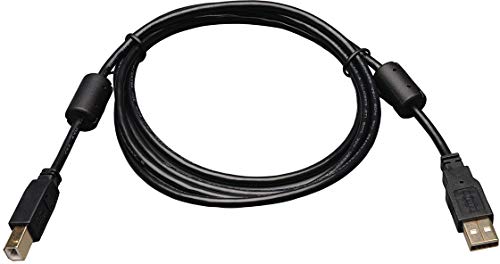
Best for peripherals and drives needing reliable shielded data transmission. This 3-foot USB 2.0 Hi-Speed cable includes ferrite chokes and premium shielding to minimize EMI. It’s a straightforward choice when you need stable connections for keyboards, mice, and external drives. Caution: USB 2.0 limits maximum data rates compared to USB 3.0 or higher, which matters for large file transfers.
Ruaeoda USB to USB Cable 3 ft (USB 3.0)

Best for high-speed data tasks and powered devices. The 3-foot braided design reduces clutter and strain while the 5Gbps data rate and 24K gold-plated connectors help maintain signal integrity in noisy environments. Suitable for cooling pads and external hard drives. Caution: Not intended for PC-to-PC connections, which can require different cable specifications.
BOEEA USB Charging Cable for Oneisall RFC-676

Best for dedicated charging of Oneisall RFC-676 dog clippers. This 6-foot cable offers a reliable power connection tailored to a specific device model, reducing charging issues caused by generic cables. Caution: this cable is model-specific and will not work with other clipper brands or models without matching interfaces.
Buying Guide: Low Noise USB Cable Essentials
What makes a USB cable “low noise”? It typically features better shielding, ferrite cores, and quality conductors to reduce electromagnetic interference (EMI) and radio-frequency interference (RFI). Look for:
- Shielding: Multi-layer shielding (foil plus braided) to minimize EMI.
- Connectors: Gold-plated or high-quality connectors reduce signal loss and corrosion.
- Cable length: Shorter cables reduce resistance and potential signal degradation; choose the shortest length that fits your setup.
- Backing specs: If you need fast charging, check amperage support (e.g., 2A–3A) and USB version compatibility.
- Intended use: Pick cables designed for the device type (Mini USB, USB-A, USB-C, etc.) and consider whether PC-to-PC transfers or peripheral connectivity is required.
Frequently Asked Questions
- What does “low noise” mean in USB cables?
It refers to reduced EMI/RFI in the cable design, helping to prevent data errors and unstable connections. - Are ferrite cores necessary on USB cables?
They are beneficial for reducing high-frequency noise, especially on longer runs or in noisy environments. - Can a USB 2.0 cable handle fast charging?
Yes, some USB 2.0 cables support higher current up to 3A; check the cable’s current rating and device compatibility. - Is USB-C always better than Mini USB or USB-A?
Not always; it depends on your devices. For older gear with Mini USB, use the appropriate cable to ensure compatibility. - How long should a low-noise USB cable be?
Choose the length you truly need to minimize signal loss; common lengths are 3 ft and 6 ft. Avoid overly long cables when not required. - What is the difference between shielded and unshielded cables?
Shielded cables provide better protection against EMI, which helps maintain data integrity and stable charging.