Best Low Profile Marine Subwoofer for Tight Boat Spaces
For boat audio, a low-profile subwoofer can deliver deep, reliable bass without hogging space. This guide highlights five compact, marine-rated subs that fit under seats or in tight compartments while keeping sound powerful and clear. Each option offers built-in amplification or easy integration with your boat’s stereo, plus marine-grade durability for sun and spray. Use the buying guide to compare size, power, and installation needs to choose the best fit for your vessel.
| Product | Brand | Power (Max/RMS) | Profile Size | Special Notes |
|---|---|---|---|---|
| Lanzar 8″ Subwoofer | Lanzar | 1000W / 300W RMS | 8″ x 9.5″ x 3″ | Built-in amplifier, adjustable bass |
| Pyle 8-Inch Subwoofer System | Pyle | 600W | 12.8″ x 9.5″ x 3″ | Integrated amp, low profile |
| Rockville SS10P | Rockville | 800W / 200W RMS | 13.6″ x 9.65″ x 3″ | Built-in amp, remote bass knob |
| Dayton Audio SUB-1000 | Dayton Audio | Not specified (high-efficiency) | 6″ thick, 10″ woofer | Ultra-slim, versatile mounting |
| Polk Audio DB1042 SVC | Polk Audio | 1050W peak | 10″ shallow design | Marine-certified, durable cone |
Lanzar 8″ Subwoofer With Built-In Amplifier

The Lanzar 8″ marine subwoofer combines compact size with notable power. With a built-in amplifier delivering up to 300W RMS, it supports tight boat interiors by reducing the need for extra components. Its 50-150 Hz low-pass filter and adjustable bass boost allow you to tailor bass to engine noise, cockpit acoustics, and seating layouts. The low-profile 14.5″ x 9.5″ footprint helps it tuck under seats or in narrow compartments while maintaining strong low-end response.
Pyle 8-Inch Low-Profile Subwoofer System

The Pyle PLMRSBA8 under-seat subwoofer integrates a compact amplifier and 8″ driver, optimized for marine environments. With a 12.8″ x 9.5″ footprint and a 3″ height, this unit fits under most seats. It features a low-pass crossover and adjustable input sensitivity, plus a remote bass boost option to fine-tune the listening experience across waterline environments. Its space-saving design makes it appealing for boats with limited dashboard or console real estate.
Rockville SS10P Slim Under-Seat Subwoofer

The Rockville SS10P is designed for space-constrained installs without sacrificing bass output. Delivering up to 800W peak and 200W RMS, it sits about 3″ tall and still provides substantial low-frequency impact. The built-in amplifier supports high-level and RCA inputs, with adjustable input sensitivity and auto turn-on, simplifying setup on boats with diverse audio sources. It is suited for under-seat placement in smaller helm stations or cabin areas where space is scarce.
Dayton Audio SUB-1000 10″ Low Profile Powered Subwoofer
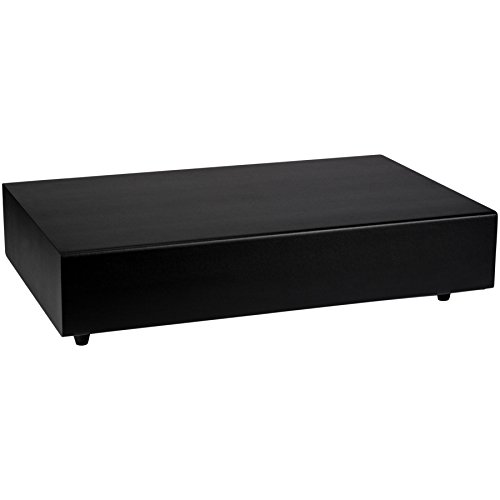
The Dayton Audio SUB-1000 emphasizes versatility with a slim cabinet that can mount down-firing or side-firing. Its 10″ woofer and efficient amplifier produce substantial bass while maintaining a compact form factor, with a design that aims to maximize bass output in a space only about 6″ thick. This model is ideal for boats needing a hidden sub that still delivers full, musical bass without dominating cabin space.
Polk Audio DB1042 SVC 10″ Marine Sub

The Polk DB1042 SVC is a shallow, 10″ sub built for marine use, certified with IP56 protection. It features a polypropylene woofer cone with a Santoprene surround, delivering high power handling (1050W peak) and broad bass dispersion. Its durable design is well-suited for boats exposed to sun, salt spray, and humidity, providing reliable bass across a range of marine audio systems.
Buying Guide: Key Purchase Considerations
Installation space and mounting orientation are crucial when selecting a low-profile marine subwoofer. Look for slim cabinet depth, mounting hardware compatibility, and under-seat clearance to ensure it fits your vessel without obstructing foot traffic or storage. Power requirements matter: built-in amplifiers simplify wiring, but externally amplified subs may offer higher RMS output for larger boats or louder crowds.
- Depth and footprint: Measure the available space and verify clearance for wiring, ports, and grill openings.
- Power needs: Decide between active (built-in amp) and passive subs based on existing amplifier capacity and wiring complexity.
- Marine-grade durability: Ensure IP ratings or water resistance align with your boat’s exposure to spray, humidity, and temperature.
- Sound tuning: Look for adjustable bass boost, low-pass filtering, and phase controls to optimize performance with your boat’s acoustics and seating layout.
- Connectivity: Check input options (RCA, high-level) and compatibility with your head unit or amplifier.
- Installation ease: Consider included mounting hardware, remote bass controls, and whether the sub suits under-seat, console, or hatch placements.
When comparing options, balance physical fit with output capability. A compact unit with 200W RMS can outperform a larger unit with insufficient power if it’s tuned to the space. Marine-specific features, such as salt-fog resistance and UV-stable components, extend longevity in harsh boating conditions. Budget considerations should also reflect installation costs, possible enclosure requirements, and the need for additional wiring or amplification.