
Low profile speaker stands help blend speakers into living spaces while improving sound and reducing vibration. Below is a quick comparison of selected stands to help you decide which option fits your room and speaker type.
| Product | Best For | Height / Tilt | Weight Capacity |
|---|---|---|---|
| PERLESMITH Universal Speaker Stands | Floor placement for small bookshelf/satellite speakers | 33.3″–45.1″ | 11 lbs |
| SANUS Speaker Stands Pair | Satellite speakers with tool-free vertical adjust | 28″–38″ | 3.5 lbs |
| Kanto S2 Tilted Desktop Speaker Stands | Desktop monitors / nearfield listening | Low-profile tilt 16° | 6 lbs |
| Kanto S10 Low-Profile Angled Stand | Sound bar / center channel placement | Low-profile, 12° upward tilt | Designed for compact bars |
| USX MOUNT Universal Speaker Stands | Stable floor stands with square base | 30.0″–39.1″ | 11 lbs |
PERLESMITH Universal Speaker Stands

The PERLESMITH floor stands offer adjustable width and height for small bookshelf and satellite speakers. They accept speakers with flat backs and up to 11 lbs per stand. The stands extend from 33.3″ to 45.1″, giving flexibility to position drivers near ear level for better imaging.
Key features include an adjustable width (4.5″–9″) for various cabinet sizes, a twist-lock height collar for tool-free adjustment, solid steel construction, deeper threaded connections for added rigidity, and non-slip foot pads for stability on hard floors.
SANUS Speaker Stands Pair

The SANUS stands focus on simple, reliable support for satellite speakers. They provide a 28″–38″ adjustable height range with a 10″ adjustment span using an easy collar mechanism. Built-in cable management helps keep wires neat behind the stand.
Constructed from steel with a wide base, these stands are tailored for lightweight satellite speakers (up to 3.5 lbs). They are a practical option where compactness and quick height changes are priorities.
Kanto S2 Tilted Desktop Speaker Stands
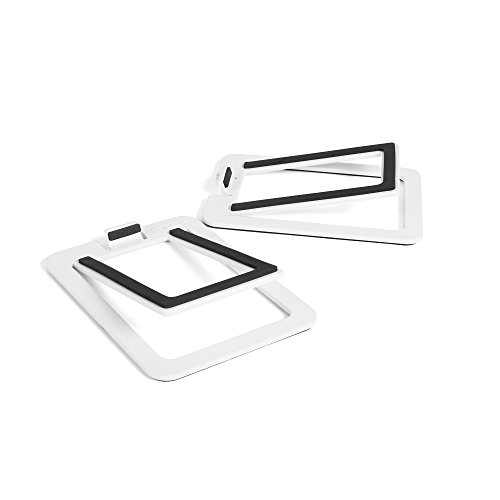
The Kanto S2 are low-profile tilted stands intended for desktop use or nearfield monitoring. Each stand tilts speakers 16° toward the listener, improving high-frequency clarity and on-axis response for small 2″–3″ monitors.
These stands feature foam padding to decouple and reduce resonance and are built from solid metal for stability. They are rated to support up to 6 lbs per speaker and keep the desktop footprint minimal.
Kanto S10 Low-Profile Angled Sound Bar Stand

The Kanto S10 is a dedicated low-profile angled stand for sound bars and center channels. With a 12° upward tilt, it aims to align the sound bar toward listening position and reduce reflections from the furniture surface.
Foam padding and a bent metal design decouple speakers from surfaces to reduce rattling. Its low profile supports lower TV placement for improved ergonomics without introducing a tall pedestal footprint.
USX MOUNT Universal Speaker Stands

The USX MOUNT stands provide adjustable height from 30.0″ to 39.1″ with a sturdy square base designed to resist tipping. They accept speakers with rear screw/keyhole mounts and include metric screws for many common models.
Constructed of steel with rubber feet for hard floors, these stands list a capacity of 11 lbs per stand and multiple installation options. The square base offers a compact footprint while prioritizing stability.
Buying Guide: How To Choose Low Profile Speaker Stands
Selecting the right low profile stand depends on speaker type, room layout, and listening goals. Below are key considerations and comparison perspectives to guide a practical choice.
Speaker Compatibility And Mounting
- Weight Capacity: Match the stand’s rated capacity to your speaker’s weight with margin for safety.
- Mounting Method: Check for compatible screw holes, keyholes, or flat-top mounts. Some stands expect back-mounted screws while others support flat-bottom placement.
- Shape And Footprint: Low-profile stands suit flat-backed or rectangular cabinets; round or irregular shapes may need specialized mounts.
Height, Tilt, And Acoustic Positioning
- Height Range: Floor stands should place the speaker at tweeter/ear level for seated listening; desktop stands tilt for nearfield work.
- Tilt Angle: Angled stands (12°–16°) improve on-axis response when speakers sit below ear level.
- Adjustability: Tool-free collars and twist-lock mechanisms simplify fine tuning in multi-seat rooms.
Stability And Vibration Control
- Base Design: Wide, heavy bases or square bases reduce tipping risk. Consider rubber feet or spikes for different floor types.
- Damping: Foam padding or decoupling features lower cabinet resonance and reduce transmitted vibration.
- Construction: Steel or heavy-duty metal increases long-term stability versus lightweight plastic designs.
Placement And Aesthetic Fit
- Low Profile Goals: If you need minimal visual impact or lower TV placement, choose stands specifically marketed as low-profile or angled for soundbars/center channels.
- Room Layout: Consider cable management channels to hide wires; compact footprints help in smaller rooms.
- Finish And Color: Black or white finishes often match electronics and furniture; consider matching your décor for seamless integration.
Installation, Tools, And Flexibility
- Tool-Free Adjustment: Collars and twist-locks speed setup and repositioning without tools.
- Included Hardware: Verify whether screws, spacers, or adapters are provided for your speaker model.
- Multi-Use: Some stands work for both bookshelf speakers and satellite surrounds, while others are optimized for soundbars or desktop monitors.
Comparison Perspectives
- Desktop vs Floor: Desktop tilted stands (Kanto S2) prioritize nearfield clarity; floor low-profile stands (PERLESMITH, USX MOUNT) focus on room placement and imaging.
- Tilted Soundbar/Center Stands: For center channel clarity and lower TV placement, dedicated angled stands (Kanto S10) provide targeted performance.
- Lightweight Satellite Support: If you have very light satellites, compact tool-free stands (SANUS) may be sufficient; for heavier bookshelf monitors, choose higher capacity steel stands.