
Best Low Z to Hi Z Adapters for Flexible Mic and Instrument Setups
Answering the search for low-impedance to high-impedance adapters, this guide highlights reliable options that help you connect microphones and instruments to mixers, interfaces, and recorders without extra noise or distortion. The top picks below suit different buyers: studio engineers seeking transparent tone, live performers needing robust connectors, and hobbyists exploring vintage gear compatibility. The quick-reference table summarizes who each product is best for and why.
| Product | Best For | Why It Stands Out |
|---|---|---|
| Shure A85F Line Matching Transformer | Pro studios and live rigs needing reliable impedance matching | Balanced XLR to unbalanced 1/4″ connector with clear low-to-high impedance translation. |
| AUDIX T50K | Vocalists and players who plug directly into guitar amps | Inline transformer converting lo-Z to hi-Z for flexible signal routing with minimal noise. |
| Shure A95U Transformer | Long cable runs and mixed-impedance setups | Reversible transformer matching between low and high impedance with practical length guidance. |
| Fotasy Nikkor F Mount to Z Mount Adapter | Photographers using legacy lenses on Nikon Z bodies | Solid mechanical adapter enabling compatibility across lens mounts. |
| Fotasy Nikkor G to Z Mount Adapter | Photographers with modern AF lenses on Z bodies | Applies aperture control when needed and ensures good fit on Z-series cameras. |
Shure A85F Line Matching Transformer

The Shure A85F is a low- to high-impedance microphone-matching transformer with balanced female XLR and unbalanced high-impedance 1/4″ male connectors. This device is designed to connect a balanced low-impedance microphone output to an unbalanced high-impedance input on a mixer or recorder. Best for studio engineers and live sound technicians who need dependable impedance translation without introducing color to the mic signal. A limitation is that it focuses on the transformer function and does not provide built-in level controls or phantom power handling beyond the mic signal path.
AUDIX T50K Professional XLR to TS Inline Transformer

The AUDIX T50K is a professional-grade inline impedance transformer converting low-impedance signals (100–600 Ω) to high-impedance instrument signals (10k–50k Ω). It is ideal for vocal mics or instrument mics routed directly into guitar amps or high-impedance inputs, expanding sonic possibilities. It’s best for performers who want to experiment with mic-to-amp setups without extra electronics. A potential limitation is that the inline form factor may require careful cable management on crowded stages or studio benches.
Shure A95U Transformer

The Shure A95U is a reversible transformer designed to match low- or high-impedance microphones to high- or low-impedance inputs. It enables the use of very long microphone cables with low-impedance mics and provides practical guidance: if using a high-impedance microphone, keep the cable length between mic and transformer under about 15 feet (4.6 meters). This makes it suitable for stage builds and large rooms where cable length is a factor. The caution is that rear-panel controls are limited; the emphasis remains on impedance matching rather than signal shaping.
Fotasy Nikkor F Mount to Z Mount Adapter

The Fotasy Nikkor F Mount to Z Mount Adapter provides compatibility for Nikon F-mount lenses on Nikon Z-series mirrorless cameras. It guarantees infinity focus and uses a copper lens mount for durability. Best for photographers who want to preserve existing glass while upgrading to newer camera bodies. A limitation is that it’s a dedicated mount adapter; it does not alter exposure or focus behavior beyond adapter compatibility and is not a replacement for native lens features.
Fotasy Nikkor G to Z Mount Adapter
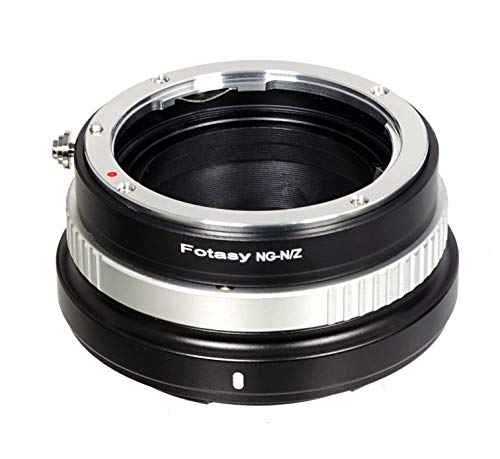
The Fotasy Nikkor G to Z Mount Adapter allows F-mount lenses with G-series design to fit Nikon Z bodies, often including an aperture ring feature on some variants. It is best for photographers who want to adapt modern AF lenses to the Z system with additional manual control over exposure. A potential drawback is that autofocus performance can vary with adapted lenses, depending on the camera body and lens characteristics.
Buying Guide
What should you consider when choosing low Z to hi Z adapters?
- Impedance path: Decide whether you need a direct impedance transformer (mics to line or line to mic) or a passive adapter. Transformers like the A85F and A95U provide explicit impedance matching, while simple adapters focus on mechanical compatibility.
- Cable length and routing: For stage or studio setups, consider recommended cable lengths when using impedance transformers to avoid signal loss or tone changes.
- Connector types: Ensure the device uses balanced XLR inputs/outputs or TS jacks as appropriate for your gear. Some devices offer both balanced/unbalanced options via different connectors.
- Applications: For mic-to-m mixer routes, prefer transformer-based solutions. For instrument-to-amp signals, inline lo-Z to hi-Z devices can open sonic possibilities without extra gear.
- Durability and build: Look for solid mounts, rugged casings, and reliable connectors to minimize failure in live environments.
- Compatibility: When using camera lens adapters, confirm lens mount compatibility and focus behavior with your camera body to avoid misfocusing or infinity issues.
Frequently Asked Questions
- What is the difference between low-Z and high-Z in audio systems?
Low-Z sources produce less noise over long cables, while high-Z inputs are more susceptible to noise and signal degradation over long runs. Impedance matching helps preserve signal integrity. - Do I need a transformer for every mic in a setup?
Not necessarily. If your mic output matches your input impedance without notable noise or hiss, a transformer may be unnecessary. In longer cable runs or mismatched pairs, a transformer can improve clarity. - Can I connect a dynamic mic directly to a line input?
Often yes, but it may require attenuation or a transformer to prevent distortion and ensure proper impedance matching. - Are these adapters compatible with phantom-powered mics?
Some transformers pass the signal without phantom power, while others may require separate supply considerations. Check product specs for phantom handling details. - When using lens adapters, will AF work the same as native lenses?
Autofocus performance varies by lens and camera body. Some adapters enable full AF, while others require manual focus for best results. - What’s the main limitation of inline impedance transformers?
They add a passive path between devices, which can introduce subtle changes in tone if the impedance or cable lengths interact uniquely with your gear.