
Best Medium Tension Classical Guitar Strings for Balanced Tone and Playability
Finding the right medium-tension classical guitar strings can balance brightness, warmth, and comfortable playability for a wide range of players. This guide highlights five top options well-suited for players seeking a middle-ground feel and tone. It covers who each string set is best for, why it stands out, and potential drawbacks. Whether you are new to classical guitars or upgrading, these picks help you tailor your instrument’s response to your touch.
To help you compare at a glance, here is a quick summary of the featured products. The table lists the product name, tension type, and who it’s best for. Use it as a starting point to decide which set to explore first.
- D’Addario Pro-Arte Nylon Classical Guitar Strings, Normal Tension — Best for balanced classic tone and versatile playing feel.
- Augustine Classic Red — Medium Tension — Best for players with a moderate touch seeking a fuller midrange.
- D’Addario Pro-Arte Nylon Classical Strings, Normal Tension (3 Sets) — Best for players who want consistent tone across multiple sets.
- D’Addario Pro-Arté Carbon Classical Strings EJ45FF, Normal Tension — Best for bright projection with stable intonation.
- Martin M160 Classic Silverplated Hard Tension Ball End — Best for players who prefer more resistance and longer sustain.
D’Addario Pro-Arte Nylon Classical Guitar Strings, Normal Tension
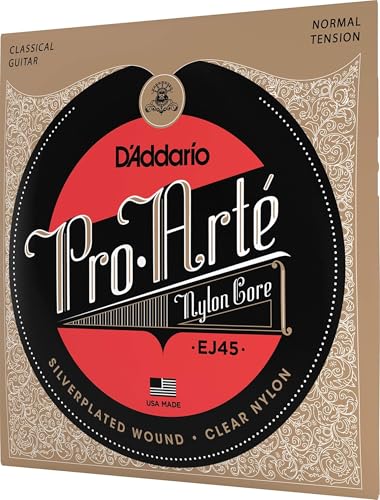
These Pro-Arte nylon strings deliver standard classical tone with responsive playability and warm, mellow timbre. The basses use a multi-filament nylon core while the trebles are clear nylon, offering a balanced feel across the fretboard. The set uses tie-ends with silver-plated copper winding. Best for players seeking a reliable, well-rounded classical voice suitable for a wide repertoire.
Who it’s best for: Players who want a dependable, traditional classical texture with predictable tension for daily practice or performance. Good for students and intermediate players who prefer a comfortable, consistent touch.
Why chosen: It provides a classic, even tension feel that many players associate with standard nylon strings, along with clear trebles and warm warmth in the bass. The construction supports steady intonation across common classical pieces.
Caution: Some players may desire a brighter edge in the trebles; if so, consider carbon or bright nylon options as alternatives.
Augustine Classic Red — Medium Tension

The Classic Red set uses nylon trebles with a comfortable medium tension, delivering ample tone without excessive stiffness. It is favored by younger players and those with a lighter touch. The product notes include two sets per pack and emphasis on a balanced, approachable feel for developing technique.
Who it’s best for: Beginners or players with a lighter right-hand technique who want more volume than ultra-light sets but without sacrificing comfort. Also suitable for players exploring a mid-range dynamic range.
Why chosen: The medium tension offers a good compromise between playability and tone, making it a practical choice for students progressing through classical repertoire.
Caution: As with any nylon set, tone and tension respond to playing style; aggressive picking can lead to more dynamic response than lighter sets.
D’Addario Pro-Arte Nylon Classical Strings, Normal Tension, 3 Sets

This bulk option mirrors the standard Pro-Arte nylon tone with the same responsive playability and warm depth. The set uses nylon monofilament material and silver-plated copper wrap wire, with tie-ends for reliability. It is well-suited for players who want to stock up on a dependable classical tone for a busy practice schedule.
Who it’s best for: Players who prefer a consistent, classic nylon tone across multiple guitars or for teaching studios needing repeatable sets. Ideal for frequent players who change sets often.
Why chosen: The repeatable construction and tone profile help maintain a familiar feel for players who rotate between instruments or perform regularly.
Caution: Because this is a multi-pack, ensure you have the correct gauge preferences for your instrument and technique prior to purchase to avoid mismatch with personal play style.
D’Addario Pro-Arté Carbon Classical Strings EJ45FF, Normal Tension

Pro-Arte Carbon strings use a dynacore composite bass and fluorocarbon trebles to deliver brighter projection with strong intonation. The nylon monofilament wrap wire provides durability. The carbon construction can yield a quicker response and a more modern tonal character compared with traditional nylon.
Who it’s best for: Players seeking a brighter, louder classical voice with precise intonation in performance contexts. Suitable for more aggressive plucking or modern repertoire where projection matters.
Why chosen: Offers a distinct tonal character within the “medium”-to-brighter spectrum while maintaining comfortable playability. A good alternative when standard nylon feels too warm or muted for certain pieces.
Caution: Carbon-based strings can feel stiffer under the fingers for some players; beginners may benefit from trying a more traditional nylon set first.
Martin M160 Classic Silverplated Hard Tension Ball End

The M160 lineup is noted for longer life and corrosion resistance due to silver-plated windings. The hard tension profile provides more resistance and a punchier feel in the bass, which some players associate with increased projection and sustain. This choice is often favored by players who want more stiffness and stability for intricate fingerstyle passages or bright tonal goals.
Who it’s best for: Players who prioritize durability and a firmer feel, especially on gigs or frequent transport where string longevity matters. Ideal for players who enjoy a crisp, assertive attack.
Why chosen: It offers a distinct tension level and tonal presence that can complement repertoire requiring strong fundamentals and articulate bass notes.
Caution: Hard tension can be harder on fingers and could wear out the fretting hand for beginners; try lighter sets first if hand fatigue is a concern.
Buying Guide: Medium Tension Classical Strings
- Tension and Feel: Medium tension balances response and comfort between easy playability and tonal reach. If you have a lighter touch, you may prefer normal tension; if you want more projection, look for brighter materials like carbon or fluorocarbon trebles.
- Tonal Preference: Nylon trebles produce mellow warmth; carbon trebles tend to boost brightness and sustain. Consider your repertoire and playing style when choosing between nylon and carbon options.
- : Multi-filament nylon cores provide flexible feel with smooth response. Fluorocarbon trebles offer brightness. Silver-plated windings resist corrosion for longer life on some models.
- : Sets labeled as “Normal” or “Medium” generally aim for a stable feel across the neck. For teaching studios or multi-instrument players, consider multi-set bundles to maintain consistent tone across guitars.
- : Some strings emphasize longevity with durable windings; others prioritize immediate brightness or mellowness. If you perform regularly, consider a carbon or silver-plated option for projection and stability.
Frequently Asked Questions
What defines medium tension in classical guitar strings?
Medium tension refers to a balance between ease of fretting and resistance when plucked, offering a compromise between light and hard tension sets.
Are nylon strings better for beginners than carbon strings?
Nylon strings are typically easier on the fingers for beginners due to their generally softer feel, though carbon options can offer brighter tone and different response.
Do carbon strings require more maintenance?
Carbon strings can be slightly more sensitive to humidity and finger oils; proper cleaning and storage help maintain tone and intonation.
How often should classical strings be replaced?
In daily play, replace strings every 2–6 weeks depending on playing style, climate, and sweating. Gigging players may replace more frequently.
Which set offers the best tonal balance for a wide repertoire?
Sets labeled as normal/medium tension with nylon trebles and balanced bass cores tend to offer the most versatile tone across classical pieces.
Is a bulk set worth it for non-professional players?
Bulk sets can reduce long-term cost and ensure consistency across replacements; they suit players who practice frequently or teach.