
Best Micro Bass Amp Heads for Portable Power and Great Tone
Answering the question: if you want compact bass amp heads that deliver real stage or studio power, these models offer excellent portability, solid wattage, and versatile tone shaping. They’re best suited for players needing lightweight options for rehearsals, live gigs, or small studios. The top picks below are grouped by who benefits most—traveling players, small-studio setups, or live performers seeking tonal flexibility. A quick buying guide and FAQ follow to help you compare features at a glance.
| Product | Wattage | Portability | Best For |
|---|---|---|---|
| TC Electronic BH250 | 250W | Ultra-compact | Stage/Travel bassists |
| Warwick Gnome | 200W | Very small | Traveling players needing DI |
| Peavey MiniMAX | 600W | Compact | Small venues with big headroom |
| Trace Elliot ELF | 200W | Lightweight | Ultra-portable studio-to-stage use |
| Ampeg Venture V3 | 300W | Moderately compact | Classic tone in a small package |
TC Electronic BH250 Bass Guitar Amplifier Head

The TC Electronic BH250 is a 250-watt micro bass head designed for stage and studio use. It emphasizes ultra-compact size and light weight, helping players maintain carry-on friendly gear without sacrificing power. The TonePrint knob gives access to signature effects created by renowned bassists, enabling quick tonal shifts for live performances or warm studio tones. Best for players who need reliable headroom in a small footprint and enjoy on-the-fly tone shaping via signature effects.
Best for: players who perform live in tight spaces, frequent travelers, and studio players who value signature-effect customization. Limitations: the compact chassis may limit some rear-panel options compared with larger heads; ensure your cab impedance alignment matches your rig for optimal headroom.
Warwick Gnome – Pocket Bass Amplifier Head
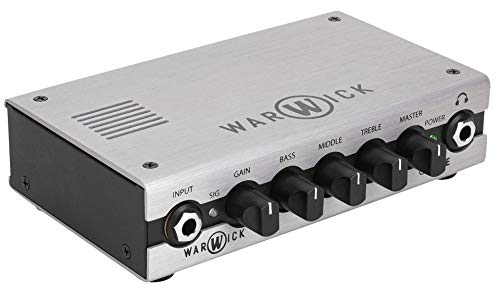
The Warwick Gnome is a compact 200-watt head built for portability with features like a 3-band EQ that offers +/-15 dB cut/boost per band. It includes an XLR DI output and a 1/4″ headphone out, making it versatile for silent rehearsals or direct-to-PA scenarios. Best for: players who travel with a small rig and need flexible tone shaping plus easy live DI support. Limitation: while extremely portable, some users may prefer additional tone-shaping options found on larger heads.
Peavey MiniMAX 600-Watt Mini Bass Amp Head

The Peavey MiniMAX provides a robust 600 watts RMS into 4 ohms, with DDT speaker protection and a Pre-gain control featuring TransTube gain boost. This head emphasizes clean headroom and aggressive gain when needed, making it suitable for players needing to push a small configuration without sacrificing punch. Best for: players who prioritize loud, reliable performance in small venues and studio rigs that require strong preamp versatility. Caution: the compact design may require careful cab matching at higher volumes to avoid overloading smaller cabinets.
Trace Elliot ELF Ultra Compact Bass Amplifier

The Trace Elliot ELF is exceptionally portable at about 1.60 lb (0.73 kg) with 200W continuous into 4 ohms (and 130W into 8 ohms). Its three-band rotary EQ mimics the response of classic Trace Elliot graphic EQ filters for familiar tone shaping. Best for: players who travel frequently and need a featherweight head with classic Trace Elliot tone options. Limitation: lower wattage compared to some compact heads may require careful cab pairing for louder performances.
Ampeg Venture V3 Bass Guitar Head
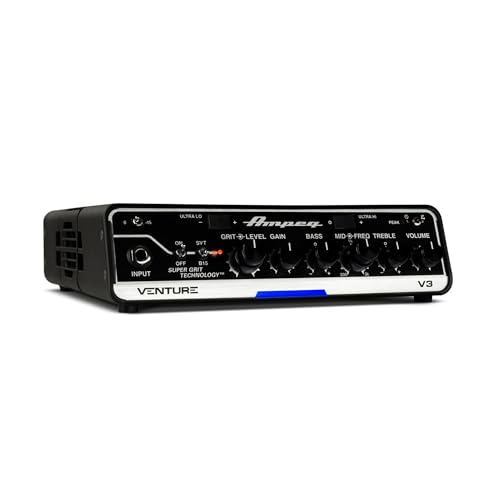
The Ampeg Venture V3 offers 300 watts with a legacy preamp, 3-band EQ, sweepable mids, and Ultra Hi/Ultra Lo switches. It also includes a footswitchable SGT Overdrive circuit with SVT and B15 voicing options. Best for: players seeking a familiar Ampeg voice in a compact head with optional overdrive and voice-shaping flexibility. Limitation: some users may find the control layout less intuitive for quick on-stage adjustments compared to newer models.
Buying Guide
- Power vs. portability: Higher wattage heads like 600W offer headroom in small venues, but ultra-compact options (200-250W) excel for travel and studio use.
- Output and impedance: Check cabinet impedance compatibility (4 ohms, 8 ohms, etc.) to ensure proper matching and maximum power transfer.
- Tone shaping: Look for EQ controls, presence of sweepable mids, and effects like signature TonePrint or built-in overdrive to tailor your core tone.
- DI and connectivity: A robust XLR DI output is valuable for direct-to-soundboard work; headphone outputs are useful for silent rehearsals.
- Weight and durability: For touring, weight matters. Consider rugged housings and reliable cooling for long sessions.
- Future-proofing: Some heads offer extendable tone options via footswitches or software updates; plan for potential additions to your rig.
FAQ
- What should I prioritize in a micro bass head? Prioritize power headroom, cabinet compatibility, and tone-shaping options to fit your playing style and venue size.
- Is DI output important on a micro head? Yes, if you perform with a PA or record directly, an XLR DI is very helpful for clean stage-to-studio bass capture.
- Can I use a micro head with any bass cabinet? Most, but verify impedance (ohms) and power handling to prevent overloading smaller cabs.
- Do these heads support overdrive or effects? Several models include built-in overdrive or signature effects; check individual specs if you rely on them live.
- Are lighter heads less capable? Not necessarily; many ultra-light models deliver solid power and versatile EQ, with the trade-off being input/output options or cab pairing constraints.
- What’s the best option for travel? The smallest, lightest units (like Trace Elliot ELF or Warwick Gnome) excel for travel without sacrificing essential tone controls.