
Best Microphone for Piano Singing: Clear Picks for Every Voice
The best microphone for piano singing depends on your venue, voice, and setup. This guide highlights five solid options that work well for vocalists performing with piano, from live stages to home studios. Each pick targets different needs: dynamic mics for durability and on-stage use, USB mics for quick setup, and cardioid patterns for reducing background noise. Ideal buyers include beginners seeking plug-and-play mics, performers who move on stage, and podcasters who also sing along with piano accompaniment.
| Product | Best For | Key Benefit |
|---|---|---|
| Shure SM58S Dynamic Vocal Microphone | Live performance and studio alike | Reliable cardioid pattern and built-in pop filter |
| Shure SM58-LC Dynamic Vocal Microphone | Professional singers and studios | Legendary vocal clarity and consistent sound |
| FIFINE AM8 USB/XLR Dynamic Microphone | Streamers, gamers, and home studios | Flexible USB or XLR with RGB mute features |
| MAONO A04 USB Microphone | Podcasting and voice work | High-resolution 192kHz/24-bit recording |
| FIFINE Studio Condenser USB Microphone Kit (T669) | Home studios and multi-use setups | Boom arm, pop filter, and easy USB setup |
Shure SM58S Dynamic Vocal Microphone

Best for on-stage vocalists who need durability and clear projection. The SM58S delivers warm, present vocals with a tuned frequency response that helps cut through a mix. A cardioid pattern focuses on the voice while minimizing stage noise. This is a proven choice for live performances and rehearsal spaces, especially when a consistent vocal presence is required with piano accompaniment. A built-in pop filter reduces sibilance and wind noise.
Who this is for: performers who move around on stage and require reliable performance across venues. Why selected: iconic, stage-proven sound with predictable behavior under varied lighting and acoustics. Caution: it lacks USB connectivity and requires an audio interface or mixer for digital recording.
Shure SM58-LC Dynamic Vocal Microphone

Best for studios and venues seeking consistent, professional vocal sound. The SM58-LC uses a precise cardioid pattern to isolate vocals from instruments, monitors, and crowd noise. It’s a staple in many live sound rigs and recording studios, offering dependable performance with a familiar, rugged build. Ideal for piano-involved performances where the vocal must stay forefront without being overwhelmed by piano dynamics.
Who this is for: singers who need a durable, familiar stage mic with reliable, studio-like results. Why selected: time-tested sound with a balanced response ideal for live or studio use. Caution: similar to SM58S, it requires an external mic preamp or mixer for digital recording, not a plug-and-play USB solution.
FIFINE AM8 USB/XLR Dynamic Microphone

Best for creators who want flexible connectivity. The AM8 offers USB plug-and-play for quick setups and XLR connectivity for more advanced audio interfaces. It supports a wide frequency response and has a mute feature accessible on the device, enabling privacy during live streams. This can be advantageous for singers performing with piano at home studios or small venues where quick transitions matter.
Who this is for: beginners to intermediate users who want both USB simplicity and professional XLR options. Why selected: versatility and convenient mute control, plus compatibility with many recording setups. Caution: RGB lighting and some USB features are inactive when using XLR, so expect feature differences depending on connection type.
MAONO A04 USB Microphone

Best for podcasting and voice work with piano accompaniment. The MAONO A04 features a 192kHz/24-bit chipset for high-resolution capture and a smooth 30Hz-16kHz frequency response, ideal for speech clarity and musical vocal warmth. USB plug-and-play makes it a strong choice for home studios and beginner recording setups. The condenser design enhances detail in vocal performances while preserving live feel.
Who this is for: podcasters and home-recording vocalists who want crisp, detailed voice capture. Why selected: high-resolution audio and easy USB setup. Caution: condenser mics can pick up room reflections; use in a treated space to minimize echo.
FIFINE Studio Condenser USB Microphone Kit (T669)
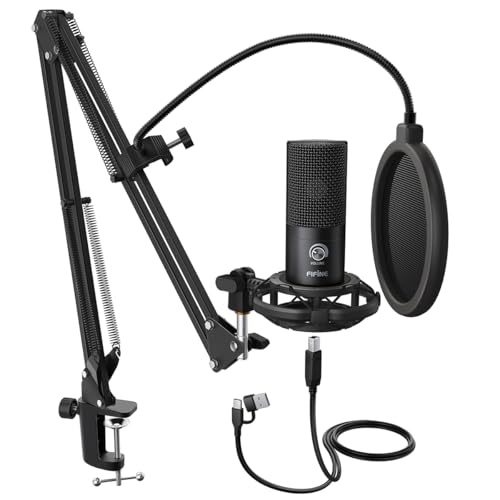
Best for home studios and multi-use setups requiring a complete package. This kit includes a desktop boom arm, a double pop filter, and an 8.2-foot USB cable. The cardioid condenser capsule captures front-focused sound with minimal ambient noise, making it suitable for singing, voice-overs, and instrument capture. It’s a strong middle-ground option for piano-and-vocal performances at home or small studios.
Who this is for: creators who want an all-in-one setup with immediate usability. Why selected: bundled accessories simplify placement and recording. Caution: USB-only operation excludes external XLR/Mic preamp expansion in some scenarios.
Buying Guide: Key Purchase Considerations
- Voice type and venue: Dynamic mics (like Shure SM58 variants) excel in loud environments, while condenser mics capture more detail in controlled spaces. For piano singing, choose a cardioid pattern to minimize piano bleed.
- Connectivity: USB mics are easiest for beginners and desks without audio interfaces. XLR mics require interfaces or mixers but offer greater flexibility and future-proofing.
- Durability vs. fidelity: Live performance often prioritizes durability and feedback rejection; studio work emphasizes accurate frequency response and low noise.
- Included accessories: Bundled boom arms, pop filters, and cables can impact setup time and overall value. If you record in a small space, a pop filter and proper placement matter more than mic type alone.
- Room acoustics: Converters and mics will reflect room treatment. For piano singing, treat your space with basic absorption to reduce echo and improve intelligibility.
Frequently Asked Questions
- What mic is best for piano and singing on stage?
– Dynamic cardioid mics like the Shure SM58 family are trusted for stage use due to durability and feedback rejection. - Do I need an audio interface for USB mics?
– No. USB mics plug directly into computers or compatible devices, making them ideal for beginners. - Is a condenser mic suitable for live piano singing?
– Condenser mics offer more detail but are more sensitive to room noise; they work best in treated spaces or controlled environments. - Should I choose USB or XLR?
– USB is simplest; XLR offers more control and upgrade paths for future studio or live rigs. - Can I use a USB mic with a mixer?
– Some USB mics can be connected to certain mixers with appropriate adapters; most prefer a dedicated USB interface for best results. - What is the advantage of a mic with a built-in mute?
– Quick privacy control during streams or performances without leaving the recording software.