
Best MIDI Out to XLR Adapters for Clean, Flexible Audio Routing
Here’s the best selection of MIDI out to XLR adapters that simplify connecting MIDI gear to XLR-equipped devices. This guide helps producers, live sound engineers, and studio hobbyists choose the right option for compact setups, durable cabling, or split/daisy-chain configurations. Each top pick is suited to a specific use case—whether you need a short, pedalboard-friendly link, a robust male-to-male/dual routing solution, or a compact DIN-to-XLR splitter for keyboard rigs. The following quick-reference table highlights the chosen products and who they’re best for.
| Product | Best For | Key Benefit |
|---|---|---|
| CNCESS DIN 5-Pin MIDI Female to XLR 3-Pin Male Adapter (2-Pack) | Compact setups | 6-inch length, stable DIN to XLR signal |
| Seadream MIDI 5 Pin DIN Male to XLR 3 Pin Female Cable | Ergonomic design, general purpose | Unique ends, silver/nickel plating |
| Seadream MIDI 5 Pin DIN Male to XLR 3 Pin Male Cable | Live rigs with gender-specific needs | Flexible cable, velcro management |
| Seadream MIDI 5 Pin DIN Male to XLR 3 Pin Female Cable (5FT) | Balanced pedalboards | Longer reach with ergonomic ends |
| XMSJSIY MIDI 5 PIN DIN to XLR Splitter Y Adapter Cable | Keyboard/synth setups needing split | Split DIN to XLR with shielded signal |
| Hosa DTM-805 MIDI to 1/4″ (TRS) Adapter Cable | Bridge to instrument amps or desks | TRS adapter for MIDI routing to analog gear |
CNCESS DIN 5-Pin MIDI Female to XLR 3-Pin Male Adapter (2-Pack)
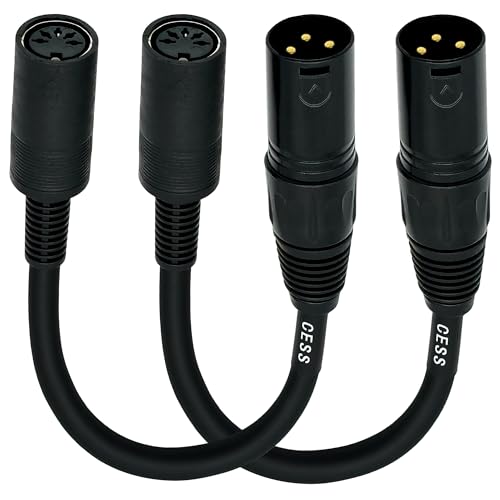
This compact 6-inch adapter connects a standard 5-pin DIN MIDI female port to a 3-pin XLR male plug, enabling MIDI output to XLR-input devices in tight spots. It is best for small pedalboards or portable rigs where cable length must be minimized and signal integrity is important. The wiring maps MIDI Pin 4 to XLR Pin 2 (Signal+), Pin 5 to Pin 3 (Signal−), and Pin 2 to Pin 1 (Ground), supporting a straightforward signal path.
Best for: players and engineers needing a quick, space-saving link between MIDI gear and XLR-equipped devices. It’s a practical choice for compact studios or touring setups. Limitation: being a short adapter, it may require additional length if devices aren’t in close proximity.
Seadream MIDI 5 Pin DIN Male to XLR 3 Pin Female Cable

This DIN-to-XLR cable uses nickel-plated MIDI 5-pin DIN male to a silver-plated XLR 3-pin female end. It features an ergonomic, unique design that’s larger than standard ends, which can aid grip and connection during busy sessions. This is a solid pick for general use with MIDI gear and XLR inputs, offering dependable conductivity and a straightforward setup.
Best for: performers and studio users who value a comfortable grip and robust connectors. Limitation: the larger end may not fit tight on crowded pedalboards or enclosures with limited clearance.
Seadream MIDI 5 Pin DIN Male to XLR 3 Pin Male Cable

This cable provides a male-to-male DIN-to-XLR connection with nickel-plated MIDI DIN and silver-plated XLR ends plus a flexible black jacket. It’s designed for live rigs or studio setups where you need a direct path from MIDI DIN to an XLR input without adapters. The flexible cable and Velcro management help keep cables organized on stage or in the studio.
Best for: users who require a direct signal path and easy cable management in dynamic environments. Limitation: may be less suitable where XLR input orientation demands specific plug gender alignment.
Seadream MIDI 5 Pin DIN Male to XLR 3 Pin Female Cable (5FT)
This 5-foot DIN-to-XLR cable pairs nickel-plated MIDI 5-pin DIN male ends with silver-plated XLR 3-pin female ends, offering a longer reach than shorter adapters. The unique, ergonomic ends and longer length make it a good choice for pedalboards or stage setups where devices sit farther apart. It’s compatible with MIDI female and XLR female connections on compatible gear.
Best for: setups needing extra cable length without sacrificing durability. Limitation: longer cables can introduce more potential for signal bounce or clutter if not managed well.
XMSJSIY MIDI 5 PIN DIN to XLR Splitter Y Adapter Cable

This splitter Y adapter combines DIN to XLR signaling with a two-branch output. Connector A uses two MIDI DIN 5-pin female interfaces, while Connector B is an XLR male. It’s designed for connecting a MIDI keyboard or synth to multiple XLR-driven devices or split paths, with shielding to preserve signal integrity and reduce interference.
Best for: keyboardists or synth players who need to feed two XLR inputs from a single MIDI source. Limitation: as a splitter, it may introduce minor phase considerations if outputs are used for multiple devices simultaneously.
Hosa DTM-805 MIDI To 1/4″ (TRS) Adapter Cable

Hosa’s DTM-805 provides a MIDI to 1/4″ TRS adapter option, useful when routing MIDI signals to an instrument input or mixer channel prepared for TRS connection. It’s a practical choice when you need to bridge MIDI data to a different line format without changing outputs. The listed feature note references an 8-channel snake and typical XLR-related compatibility in related gear, but the essential takeaway is its instrument-side compatibility.
Best for: rigs where an instrument-level TRS path is preferred or needed. Limitation: not a direct DIN-to-XLR solution, so use only when TRS compatibility is present in the workflow.
Buying Guide: How To Pick The Right MIDI Out To XLR Cable
What’s your primary use case? For compact pedalboards, prioritize short adapters like the CNCESS 6-inch option. If you need a longer reach, choose the 5-foot Seadream cable. Do you need a direct male-to-male path or a splitter? The Seadream male-to-male and the XMSJSIY splitter offer different routing styles to fit stage layouts or multi-device setups. Consider connector plating: nickel and silver plating improve corrosion resistance and signal stability in live environments. Ergonomic ends can save time during quick changes on stage or in studio sessions.
What about signal integrity? Look for cables with defined pin mappings (MIDI Pin 4 to XLR Pin 2, etc.) and shielding. If you’re feeding multiple devices, a splitter like the XMSJSIY model can help, but monitor phase and loading effects when using multiple outputs simultaneously. Cable length matters for delay and potential interference, so match length to your space and gear layout.
Durability and management matter too. Models with flexible jackets and Velcro-friendly design help with routing on crowded boards. If you frequently travel, compact adapters reduce bulk and tangling. Finally, verify compatibility with your gear’s input/output arrangement to avoid mismatches in grounding or pin configuration.
FAQ
- Can MIDI be transmitted over XLR directly?
– No; MIDI uses a 5-pin DIN signal, and XLR is a different connector standard. Adapters convert the physical interface while preserving the MIDI signal path where supported by equipment. - Is a splitter cable better than a standard adapter for MIDI to XLR?
– A splitter can feed two devices from one MIDI source, which is useful for multi-channel setups. It may require careful signal management to avoid interference. - What length should I choose for a live performance?
– For tight stages, 6-inch adapters work well. For desks or rigs spread across a larger area, a 5-foot option offers more flexibility while still being manageable. - Do nickel or silver plating impact performance?
– Plating improves durability and corrosion resistance, potentially supporting more reliable connections under heavy use. - Are there any limitations to DIN-to-XLR adapters?
– Some configurations require correct gender matching and pin mapping. Always confirm the connector genders and pin assignments align with your devices.