Best Monitor Controller With Sub Out: Top Picks for Precise Studio Monitoring
For precise monitoring with dedicated sub-bass output, these monitor controllers and related audio gear help you balance multiple speaker pairs and subwoofers, whether you’re mixing music, producing podcasts, or mastering projects. This guide highlights five options that offer clear volume control, reliable input/output switching, and sub-out capability. Ideal buyers include home studios needing simple reference levels, project studios with multiple monitor pairs, and engineers who want a transparent signal path. The comparison table below summarizes key specs to help quick decisions.
| Product | Best For | Sub Out | Notes |
|---|---|---|---|
| DYNASTY PROAUDIO PMC-2 | Diligent, hands-on control between sources and monitors | Yes (XLR/Phone Jack/Mini Jack outputs) | Passive, no power supply required |
| DeerSync McONE | Three-monitor setups with cue and talkback | Yes (sub output available with dedicated routing) | Active controller with multiple inputs/outputs |
| PreSonus Eris Pro Sub 10 | Sub-bass integration for full-range monitors | Yes (XLR subwoofer output) | Front-firing, integrates with full monitoring setup |
| DOWN4SOUND Subwoofer Bass Knob V2 | Vehicle or desktop rigs needing remote sub control | Yes (subwoofer control via RCA) | Voltage readout for system health |
| Behringer FBQ1502HD | Budget-friendly monitor system with sub crossover | Yes (mono sub output with adjustable crossover) | FBQ for feedback detection and room correction |
DYNASTY PROAUDIO PMC-2 Premium Passive 2 x 2 Studio Monitor Volume Controller

The DYNASTY PROAUDIO PMC-2 is a fully passive monitor volume controller designed to attenuate analog signals between sources and active speakers. It features a large rotary knob for precise level changes and supports balanced inputs and outputs, including XLR, 1/4″ TRS, RCA, and mini jack options. The device provides DIM and Mute/Mono switches for quick checks without altering master levels. Best for engineers seeking a transparent, reference-level signal path without a power supply, and for studios that want direct, hands-on control over multiple analog sources.
Who it’s best for: small-to-medium studios needing clean, passive attenuation with flexible I/O. Why selected: it delivers accurate level control while preserving audio resolution due to its passive design. Caution: as a passive unit, it relies entirely on the connected equipment for drive; ensure your monitors can operate at the attenuated levels without losing headroom.
DeerSync McONE Active Monitor Controller

The DeerSync McONE Active Monitor Controller provides simple input switching with three stereo 1/4″ balanced inputs and corresponding outputs for three monitor sets. It includes a dedicated sub output and a cue feed for headphone monitoring, plus talkback capability. This setup suits rooms needing quick comparisons across multiple monitor pairs or speaker configurations, along with integrated talkback and cue routing for collaboration. Best for projects with multiple listening environments or clients who require fast, accurate switching while keeping consistent levels.
Who it’s best for: producers or engineers who juggle several monitor configurations. Why selected: the McONE’s flexible routing, dedicated sub output, and cue/talkback features support efficient, professional sessions. Caution: as an active controller, consider power needs and ensure it aligns with your other gear’s impedance and gain structure.
PreSonus Eris Pro Sub 10-10-Inch Active Subwoofer Bundle

The PreSonus Eris Pro Sub 10 is an 10-inch active subwoofer designed to serve as the central hub for a basic monitoring setup. It provides left/right balanced XLR and 1/4″ TRS inputs, plus an XLR subwoofer output for chaining to a second Sub 10 if needed. The sub includes a switchable high-pass filter to prevent content below a chosen frequency from reaching full-range monitors and a lowpass filter for smooth crossover transitions. A momentary footswitch allows quick A/B checks with or without sub-bass frequencies. Best for studios needing a clear low-end anchor and precise crossover control for multiple speakers.
Who it’s best for: mixers and producers building a two-channel monitoring chain with controlled sub-bass. Why selected: its crossover controls and phase/low-cut options help maintain phase coherence and reduce low-frequency masking. Caution: setup complexity increases with multiple subs or non-studio room acoustics; start with recommended crossover points.
DOWN4Sound Subwoofer Bass Knob V2 with Voltage Readout
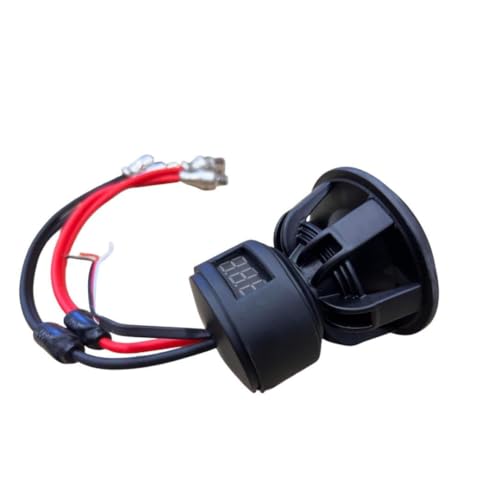
The Down4Sound Subwoofer Bass Knob V2 adds a voltage readout, offering real-time monitoring of your car or desktop system’s electrical health. It is a universal bass control device compatible with any RCA-based amplifier. While not a dedicated monitor controller, it provides a practical remote knob for sub gain control, useful in mobile or desk setups requiring precise bass management. Best for users who want a physical sub gain control with voltage feedback for quick health checks. Caution: not a full studio monitor controller; use alongside proper monitoring for accurate level matching.
Behringer FBQ1502HD

The Behringer FBQ1502HD integrates a feedback detection system to identify problem frequencies and can be used as an audio analyzer. It includes a dedicated mono subwoofer output with an adjustable crossover frequency and a low-cut filter to remove unwanted low-end content. This model is a cost-effective option for adding a sub crossover and general monitoring improvements. Best for budget-conscious setups needing quick feedback detection and a dedicated sub path. Caution: as a low-cost device, its audio transparency and build feel may differ from premium brands.
Buying Guide
What should you look for in a monitor controller with sub out?
Key features include the number and type of inputs/outputs, whether the unit is passive (no power) or active, presence of a dedicated sub-out, and ease of use for quick level matching. A sub-out should offer a clean crossover path and maintain phase alignment with main monitors. Consider whether you need talkback, cue, and DIM features for collaboration and quick level checks.
Passive vs. Active control
Passive controllers preserve the original signal with minimal coloration but require that downstream gear provide drive. Active controllers add amplification or buffering, which can simplify matching but may introduce noise or latency in some setups. Choose based on your existing gear, required headroom, and whether you prioritize transparency or convenience.
Input/Output flexibility
Look for balanced connections (XLR, TRS) to minimize noise over longer runs. A mix of RCA, 1/4″ TRS, and XLR can accommodate a wide range of gear, from audio interfaces to mixers and powered monitors. The ability to route signals to multiple monitor pairs increases versatility for mixing across different listening environments.
Sub-bass management
For bass-heavy productions, ensure the sub-out offers adjustable crossover points, phase control, and a clean high-pass option for full-range monitors. This helps avoid frequency conflicts and ensures a solid low-end translation across listening systems.
Practical setup tips
- Start by connecting your primary reference monitors and a sub, set the crossover conservatively, then audition with familiar tracks.
- Label inputs and outputs to simplify switching between listening setups during sessions.
- When using a talkback and cue path, route the control path to your main monitoring while keeping the reference at unity gain where possible.
FAQ
- What is a monitor controller with sub out?
It is a device that manages multiple monitor outputs and provides a dedicated subwoofer output for bass management, improving low-end accuracy. - Is a passive monitor controller better than an active one?
Passive units preserve signal integrity but rely on other gear for drive; active units offer buffering and ease of use but can color the signal slightly depending on design. - Do I need a subwoofer with a monitor controller?
If your work involves low-end heavy genres or precise bass tracking, a sub helps translate mixes across systems; ensure proper crossover settings. - Can I use RCA cables with professional monitors?
Yes, but balanced connections (XLR/TRS) are preferred for longer cable runs to reduce noise. - What features matter most for mixing?
Input switching, sub-out routing, phase controls, and a clear, repeatable level knob are essential for consistent playback during sessions.