
Best High-End Condenser Microphones for Studio Quality
Direct answer: For premium studio recordings, the Rode NT1 Signature Series stands out as the top pick, followed by the Audio-Technica AT2020 for value in a home setup. This guide highlights five high-quality condenser mics best suited for project studios, vocal tracking, podcasts, and music recording. Each entry notes who benefits most, why it was chosen, and a practical caveat.
Summary table of selected products:
| Product | Best For | Why It Was Selected |
|---|---|---|
| RØDE NT1 Signature Series Studio Condenser Microphone | Vocalists and hit-recording studios | Legendary low self-noise and detailed vocal voicing |
| Audio-Technica AT2020 Cardioid Condenser | Project/home studios on a budget | Price-to-performance standard in side-address condensers |
| Mackie EM-Series EM-91C | Budget-conscious professionals | Affordable professional-quality with rugged build |
| Blue Yeti USB Microphone | PC-based creators and streamers | Versatile patterns and plug-and-play convenience |
| Phonyx Pro/K66 USB Microphone and Others | Multi-platform podcasters and remote creators | USB convenience with noise reduction features |
RØDE NT1 Signature Series Studio Condenser Microphone
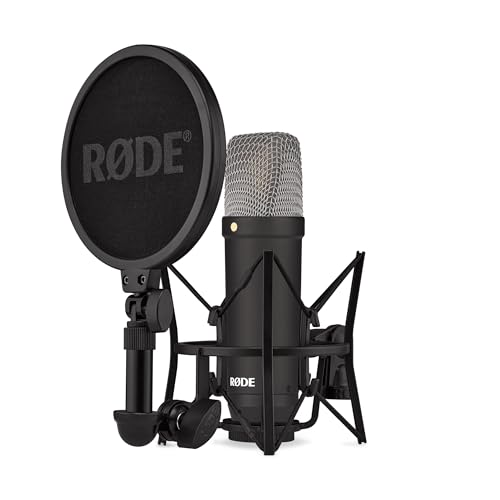
The NT1 Signature Series is designed for studio vocal work with a focus on clarity and ultra-low self-noise. It comes as a complete vocal setup with a shock mount, pop filter, and XLR cable, making it a turnkey option for serious home studios. The mic’s large-diaphragm voicing is trusted in professional rooms for two decades, delivering a quiet performance that minimizes noise between takes. Best for vocalists and instrument recordists who need a pristine signal and minimal self-noise.
Who it’s best for: Professional vocalists and engineers seeking studio-grade tone with low noise. Why selected: the NT1’s historic voicing and quiet operation suit high-fidelity vocal tracks. Caution: higher price point may be a consideration for beginners who only need occasional recording.
Audio-Technica AT2020 Cardioid Condenser Studio Microphone
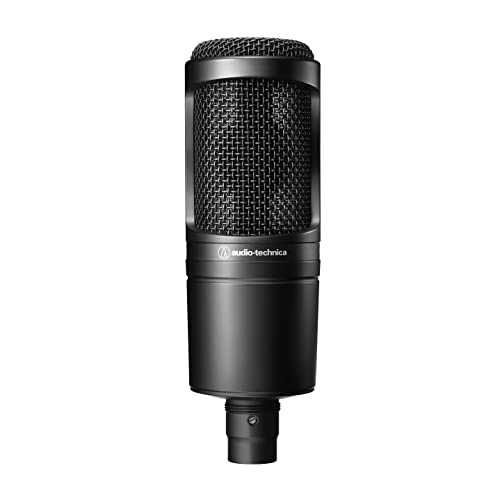
The AT2020 is a staple for project and home studios thanks to a strong price-to-performance ratio. Its cardioid pattern helps isolate the source and manage room noise, while its wide dynamic range supports diverse vocal and instrument applications. Best for: users starting a home studio who want reliable, professional-sounding recordings without a premium price. Better for: those who value simplicity and durability in a single-mic setup. Limitation: not the quietest option in ultra-dynamic environments.
Mackie EM-Series EM-91C Large-Diaphragm Condenser Microphone

The EM-91C provides solid, affordable professional-quality sound suitable for larger or home studios. The microphone’s construction is rugged, and its large-diaphragm design yields a warm, present vocal tone. Best for: budget-conscious studios seeking a dependable condenser for voice work and instruments. Better for: users who need a durable mic with straightforward performance. Caution: at the lower end of the price spectrum, you may notice more room interaction noise in untreated spaces.
Logitech G Blue Yeti USB Microphone

The Yeti is a versatile USB condenser with multiple pickup patterns: cardioid, omni, bidirectional, and stereo. It’s well-suited for YouTube videos, streaming, podcasts, and gaming. Best for: creators who need plug-and-play convenience and flexibility across recording scenarios. Better for: users who prioritize ease of use over ultra-low noise or studio-grade XLR connectivity. Caution: USB mics generally have higher self-noise than professional XLR mics in a treated studio.
ZealSound Podcast USB Microphone, K66

The K66 USB microphone targets podcasters and online creators with a cardioid pattern and USB connectivity. It emphasizes clearer voice capture with a noise reduction mode and a mute function. Best for: podcasters needing a dedicated USB mic with noise control features. Better for: streaming and meetings in moderately reflective rooms. Caution: USB-only may limit future upgrade to an XLR interface if you scale up production.
Amazon Basics Condenser Microphone for PC

The Amazon Basics condenser mic offers a cardioid pickup pattern and a 360° adjustable stand, aimed at straightforward streaming, podcasting, and recording. Best for: beginners seeking a simple, affordable entry into condenser mics. Better for: quick setup and basic broadcasts. Caution: entry-level design may lack some refinements found in higher-priced models.
Phenyx Pro PDM35 Overhead Condenser Microphone

The PDM35 is designed for overhead capture of cymbals and percussive elements, featuring a cardioid pattern and wide frequency response. Best for: percussionists and instrument miking in home and project studios. Better for: overhead applications where rejection of off-axis noise is important. Caution: overhead mics may not be ideal for close-range vocal use.
Buying Guide: Key Purchase Considerations
- Signal path: Do you need USB plug-and-play or an XLR connection for a dedicated audio interface?
- Voice and instrument needs: Are you prioritizing vocal clarity, warmth, or instrument capture?
- Noise handling: Is the recording space untreated, making a mic with low self-noise crucial?
- Mobility and setup: Do you need a compact desktop mic or a sturdy stand-ready model?
- Budget vs. upgrade path: Is this mic a long-term investment or a starter option?
FAQ
- What is a condenser microphone best used for?
Condenser mics excel at capturing detail and high-frequency content, making them ideal for vocals, acoustic instruments, and studio recordings.
- Should I choose USB or XLR?
USB mics are plug-and-play and great for beginners or on-the-go work. XLR mics require an audio interface but offer higher fidelity and more control.
- What does “low self-noise” mean?
Low self-noise indicates the mic adds minimal electronic noise to the signal, important for quiet passages and intimate vocal takes.
- Do I need a pop filter with condenser mics?
Yes, especially for close voice recording, to reduce plosives and sibilance that can cause distortion.
- Can I use these mics for streaming and gaming?
Yes, most listed mics are suitable, with USB options offering the easiest setup for streamers and content creators.
- Is space treatment important for condenser mics?
Yes. Acoustic treatment helps reduce reflections, improving clarity and reducing room coloration.