
Best Multi-Channel USB Mixer for Stage and Studio
Planning a versatile mixing setup? This guide highlights top multi-channel USB mixers that balance live performance and home studio work. Each pick is suited for different buyers—from touring DJs and band members to podcasters and content creators. Read on to compare features, inputs, and workflow at a glance.
| Product | Brand | Best For |
|---|---|---|
| Pyle 8 Channel DJ Audio Mixer | Pyle | Live gigs and mobile DJs needing Bluetooth streaming |
| Yamnweo GF12 PRO | Yamnweo | Stage performances with extensive channel control |
| Mackie ProFX12v3+ | Mackie | Multi-source playback and USB recording in small venues |
| Pyle PMXU63BT | Pyle | Bluetooth streaming and USB/MP3 play for casual venues |
| Behringer X AIR XR18 | Behringer | Wi‑Fi controlled, tablet-friendly digital mixing for studios and stages |
Pyle 8 Channel DJ Audio Mixer

The Pyle 8 Channel DJ Audio Mixer emphasizes Bluetooth wireless streaming to the console, making it convenient for mobile setups. It includes XLR and 1/4″ inputs with a +48V phantom option, plus a LED peak level indicator and a 3-band EQ on all channels. This creates an accessible option for small gigs, karaoke, or rehearsal spaces. Best for DJs and venues that prioritize cable-free music sharing from mobile devices, with straightforward control for quick sound shaping.
Why selected: It combines wireless streaming with flexible mic/line inputs in a rugged steel chassis, suitable for performers who value portability without sacrificing basic routing. Caution: the built-in DSP effects are modest, so it’s not intended as a high-end studio mixer. Use this if you need a budget-friendly, all-in-one live tool with Bluetooth.
Yamnweo GF12 PRO Multi-Function 12-Channel Mixer
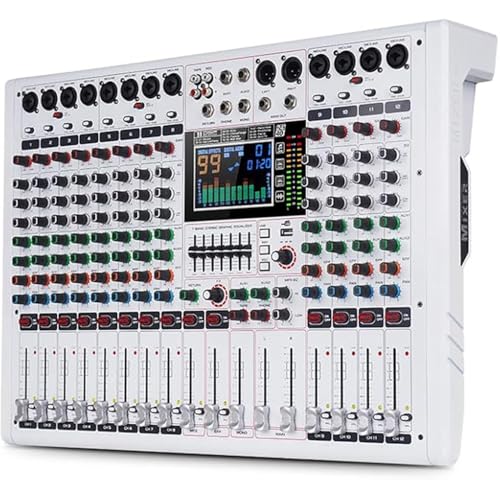
The Yamnweo GF12 PRO focuses on granular channel control, including preset gains, balance, EQ, and send effects per channel. It features a 7-stage equalizer and 99 DSP effects, making it adaptable to live shows, studio work, or entertainment events. Best for performers who need precise tone shaping and a wide palette of effects, with strong on-stage flexibility.
Why selected: It stands out for its detailed channel management and abundant effects, which help tailor sound for varied venues. Limitation: the user interface relies on on-device controls, which may require a learning curve for beginners. Choose this if you need deep EQ and a broad effect suite.
Mackie ProFX12v3+ 12-Channel Mixer

This Mackie model emphasizes ease of integration with mics, instruments, phones, and computers. It supports Bluetooth playback and USB recording, aligning with modern performance and home studio workflows. Best for small bands, solo artists, or podcasters who need reliable out-of-the-box connectivity and straightforward mixing plus a capable FX engine.
Why selected: It offers familiar Mackie Onyx‑style preamps with a practical effects suite and simple USB recording. Caution: The form factor is compact, so there may be limited headroom for very loud live bands. Choose this if you want a proven, all-around performer for live and studio tasks.
Pyle Professional 6 Channel PMXU63BT
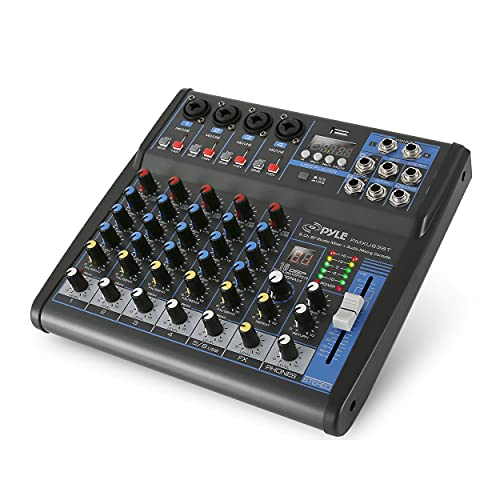
The PMXU63BT provides USB/flash reader compatibility, Bluetooth streaming, and multi-input mic and line options with +48V phantom power. It also includes a built-in 16-bit DSP FX library. Best for home studios and small venues that want to mix from a variety of sources, including USB drives and mobile devices.
Why selected: It balances Bluetooth streaming with USB media playback and solid per-channel EQ. Limitation: It’s a smaller 6-channel model, so users needing more inputs may need a larger mixer. Choose this if you need flexible media playback and streaming in a compact package.
Behringer X AIR XR18
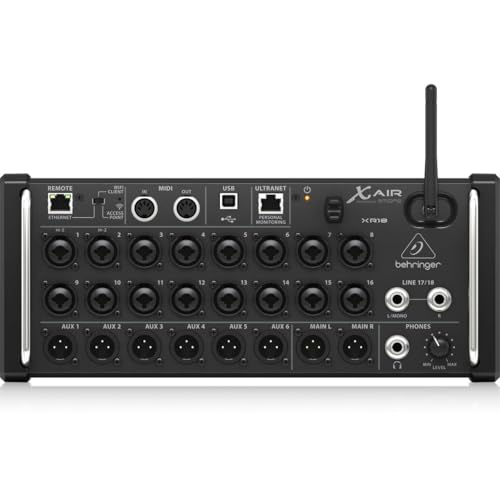
The Behringer X AIR XR18 is a digital mixer designed for tablet control with built-in Wi‑Fi. It features 18 inputs and multi-channel USB audio, plus programmable Midas preamps and an integrated wireless router. Best for studios or live setups where remote control from an iPad or Android tablet is essential.
Why selected: Its IPad/Android compatibility and extensive preamps are ideal for tech-forward users who want flexible, networked mixing. Caution: Digital workflows can introduce latency if network conditions are unstable. Choose this if you need wireless control and a scalable digital mixing solution.
Buying Guide: Key Purchase Considerations
- Inputs and outputs: Match the number of mic and line inputs to your typical gigs or recording sessions. Consider USB output for direct computer recording.
- Connectivity: Bluetooth can simplify streaming from mobile devices, but wired connections remain essential for stable audio.”/>
- Processing and effects: DSPs and built-in effects help shape your sound without external processors. Assess whether you need reverbs, delays, or EQ flexibility per channel.
- Control interface: Tablet or laptop control can enhance workflow for digital mixers. For traditional analog models, ensure physical knobs and faders meet your tactile preferences.
- Portability vs. feature set: Smaller systems are easier to transport, but larger multi-channel consoles may be needed for complex performances. Balance payload with required inputs.
- Reliability: Steel chassis and sealed controls reduce dust and grime exposure in live environments. Look for rugged builds for touring or mobile gigs.
FAQ
- What is a multi-channel USB mixer best used for?
– It combines multiple audio sources into a single output for live shows, studios, podcasts, and streaming setups, with USB capability for easy recording or playback. - Is Bluetooth streaming essential in a mixer?
– Not essential, but it adds convenient wireless music sources for certain venues and practice spaces. Prefer wired inputs for the most reliable sound in critical performances. - Which mixer is best for beginners?
– A model with clear labeling, simple EQ per channel, and straightforward USB/recording options tends to be most beginner-friendly. - Do I need a digital mixer or an analog one?
– Choose digital if you want extensive built-in effects and remote control; choose analog if you prefer hands-on, tactile control and typically lower latency. - What should I consider for stage use?
– Portability, rugged build, reliable preamps, adequate headroom, and easy access to essential inputs are key considerations for live use.