
Best Multi-Room Audio Distribution System Solutions
Yes, a multi-room audio distribution system can deliver synchronized or independent music across several rooms using a single setup. This guide highlights five top options suited for different buyers—from homeowners seeking powerful, centralized control to those preferring app-driven convenience. The featured products cover bridgeable amplifiers, zone control, and app-based management, helping you decide which system matches your home layout, speaker wiring, and preferred streaming methods. The quick-reference table below summarizes each product’s suitability and key strengths to help you compare at a glance.
| Product | Best For | Key Benefit | Limitations |
|---|---|---|---|
| Dayton Audio DAX88 | Homes with many zones and wired speakers | 8 sources, 8 zones, bridgeable power | Requires expertise for optimal wiring |
| Soundavo WS66i | Whole-home audio with app control | 6 zones, 6 sources, AirPlay/Spotify Connect | Wireless reliance can affect stability |
| OSD Nero Control12 | Centralized control with multiple zones | Six zones with matrix distribution | Setup may be intricate |
| Dayton Audio DAX66 | Expandable multi-room setups | Six sources, six zones, IR/RS232 control | Limited wireless streaming features |
| Juke-6 | Small-to-mid size homes with flexible streaming | Six zones, multiple wireless sources | Requires network coordination for multiple amplifiers |
Dayton Audio DAX88 8-Source 8-Zone Matrix Amplifier

The Dayton Audio DAX88 enables independent multi-room audio across eight zones with eight source inputs. It provides 75 watts per channel at 8 ohms or up to 260 watts when bridged, supporting a robust, immersive listening experience in larger setups. This unit includes integrated Wi-Fi and supports a variety of analog and digital connections, making it suitable for wired speaker arrays in custom homes or small venues. Best for: homes with demanding multi-zone needs and higher power requirements.
Best for: Users who want centralized control with high power and flexible bridging to drive multiple speakers across rooms. Why selected: The DAX88’s bridgeable channels and eight-zone architecture offer scalable distribution for larger homes or entertainment areas. Limitation: The setup complexity increases with more zones and wiring, so professional installation may be beneficial.
Soundavo WS66i 6 Zone Amplifier

The Soundavo WS66i distributes audio to six rooms with independent control, supporting six sources and six zones. It excels for whole-home systems where you want seamless app-driven management, and it integrates streaming options like AirPlay and Spotify Connect. Best for: households seeking straightforward app control and reliable multi-room playback without complex configurations.
Better for: App-driven control of multiple zones with relatively simple wiring. Why selected: The WS66i emphasizes user-friendly multi-room management and flexible source handling. Limitation: Wireless streaming performance can vary with Wi-Fi conditions, so a stable network is important.
OSD Nero Control12 6 Zone Multi Room Controller

The OSD Nero Control12 centers control of six zones with matrix-style source distribution. It enables routing multiple sources to different rooms from a single interface, making it ideal for centralized, flexible audio management. Best for: homes needing centralized routing and room-by-room customization without relying solely on consumer-grade smart hubs.
Better for: Users who want per-room source selection and centralized control in one location. Why selected: The matrix design supports assigning various sources to any zone, enabling versatile distribution. Limitation: Setup can be intricate, and users may need professional configuration for optimal results.
Dayton Audio DAX66 6-Source 6-Zone System

The Dayton Audio DAX66 provides six sources across six zones with expansion potential to 18 zones. It supports IR remote control, keypad, or RS232 automation, making it suitable for integrated home theater or audio installations where centralized control and wired reliability matter. Best for: users planning medium-scale multi-room layouts with room-to-room automation. Why selected: Expandability and multiple control options support growing systems. Limitation: It offers fewer wireless streaming capabilities out of the box compared with app-centric models.
Dayton Audio MA1260 Multi-Zone 12 Channel Amplifier

The MA1260 consolidates 12 channels (6 stereo zones) in one enclosure, with independent bus inputs and bridgeable outputs for added power when needed. It suits builders seeking substantial zone coverage in a single chassis while maintaining flexible routing. Best for: larger homes or venues requiring many zones from a single amplifier. Why selected: High channel count and flexible input options support complex, scalable layouts. Limitation: You may need additional control interfaces for easy zone management across many rooms.
Juke-6 | 6 Zone Wireless Multi-Room System
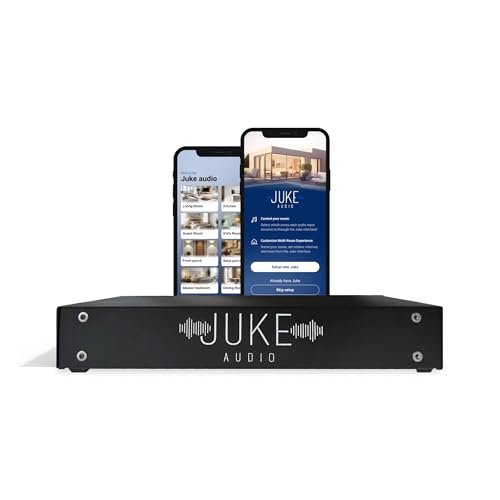
The Juke-6 delivers six zones with wireless control and compatibility with AirPlay 2, Spotify Connect, Bluetooth, and DLNA. It supports streaming to multiple zones and can be expanded by linking more amplifiers on the same network. Best for: households seeking flexible wireless multi-room capabilities and easy app-based control. Why selected: Strong streaming compatibility across popular services. Limitation: For larger installations, coordinating multiple units over Wi-Fi may require network optimization.
Buying Guide
What should you consider before buying a multi-room system?
- Number of zones and sources: Match the system’s zone count to your room layout and the number of devices you want to route to each zone.
- Power and amplification: Consider whether you need high-power outputs for large rooms or efficiency for smaller spaces.
- Wiring versus wireless: Decide between wired speaker configurations or wireless streaming; wired systems generally offer more stability in large homes.
- Control method: App-based control vs. dedicated remotes or physical keypads; consider future-proofing with compatibility for voice assistants if desired.
- Integration with existing gear: Check inputs/outputs, such as RS232, IR, HDMI, or Bluetooth, to ensure compatibility with your current gear.
- Expandability: If you anticipate growth, choose a system that can add more zones or sources without a complete overhaul.
How to choose between bridgeable and non-bridgeable amps?
Bridgeable amplifiers allow combining channels to increase power for specific zones or to drive subwoofers. They are ideal for large rooms or outdoor zones, but may require careful impedance planning and wiring. Non-bridgeable amps are simpler to wire and manage, suitable for standard multi-room layouts where every zone receives ample power at standard impedance.
What network considerations matter?
Wireless streams work well in most homes, but wireless reliability improves with a stable, fast Wi-Fi network. For large or interference-prone environments, a wired backhaul for critical zones or a dedicated router can improve stability.
Where to place the main controller?
Place the central controller in a convenient, accessible location—often a home theater rack, media closet, or equipment cabinet. Ensure it has adequate ventilation and clear access to power and network connections for reliable operation.
What about future-proofing?
Look for systems that support multiple streaming protocols, firmware updates, and scalable zone counts. A modular approach reduces the need for complete rewrites as listening habits and room configurations evolve.
FAQ
- What is a multi-room audio distribution system? Answer: A system that routes audio from one or several sources to multiple rooms or zones across a home, with centralized control and often independent zone playback.
- Can I mix wired and wireless zones? Answer: Yes, many systems support a combination, but performance may vary depending on the zone and network setup.
- Do I need a central amplifier for every room? Answer: Not necessarily; some zones can be driven by a single multi-channel amplifier, while others may require dedicated amps for sufficient power.
- Is app control necessary? Answer: App control enhances convenience and flexibility, but some systems offer physical controls or remotes as alternatives.
- Can I expand a system later? Answer: Many options support expansion by adding more zones or more amplifiers, though compatibility and wiring considerations apply.
- What should I avoid? Answer: Avoid oversizing a system for a small space, as power and wiring costs can be unnecessary; plan room-by-room needs before purchasing.