
Best NMEA 2000 Micro-C Connectors for Easy Marine Network Cabling
Answer: For quick, field-installable NMEA 2000 connections in tight boat spaces, micro-C style connectors deliver reliable, compact solutions. This guide highlights five micro-C/N2K connectors that simplify custom-length cabling, backbone extensions, and in-mast or engine-room setups. Best for DIY riggers, boatowners upgrading networks, or professionals installing temporary drops, these options cover male/female field-installable connectors, shielded cables, and a terminator for clean networks.
Below is a quick comparison of the top five micro-C NMEA 2000 options covered in this article. Use this table to decide which is best for your boat’s layout and maintenance preferences.
| Product | Best For | Key Benefit | Limitations |
|---|---|---|---|
| Regatta Processing NMEA 2000 Male Field Installable Connector | Hard-to-reach areas, mast foot connections | Easily create custom-length drops and backbone extensions | Field installation requires care with terminals |
| Jsvecip NMEA 2000 5pin Micro Male Field Connector | Compact, versatile field drops | Insulation resistance ≥100 MΩ; robust data/power connections | Requires proper crimping tools for best results |
| ZONCTIK Micro-C 5-Pin N2K Backbone Cable | Shielded, interference-prone environments | Metal-shielded connectors reduce interference | Higher cost than plastic variants |
Regatta Processing NMEA 2000 Male Field Installable Connector

Reference features: Use as a field-installable connector to create custom-length drop cables and backbone extensions. In hard-to-access areas, cut off the original end, run the cable, and install the field-installable connector. Useful at the mast foot for easy connection/disconnection of mast cables to the backbone.
Best for: Boat owners needing a straightforward, field-serviceable solution in tight spaces such as mast bases or engine rooms. This option supports both male and female field-installable configurations, enabling flexible network topologies.
Caution: Ensure proper insulation and tight terminal seating to prevent data loss or intermittent connections in rough seas.
Jsvecip NMEA 2000 5pin Micro Male Field Connector

Reference features: Insulation resistance ≥100 MΩ; contact resistance ≤5 mΩ. Rated for 60 VAC, 60 VDC, and 4 A. Works with field-installable male/female connectors to create custom-length drops and backbone extensions. Designed to ease cable runs in hard-to-access areas.
Best for: DIY installers needing reliable electrical/crimp specs and compatibility with common NMEA 2000 networks. This is a solid all-around micro-C solution for custom drops.
Limitation: Field crimping requires proper tools for optimal contact integrity; improper crimp can jeopardize network reliability.
ZONCTIK NMEA 2000 Micro-C 5-Pin Backbone Cable
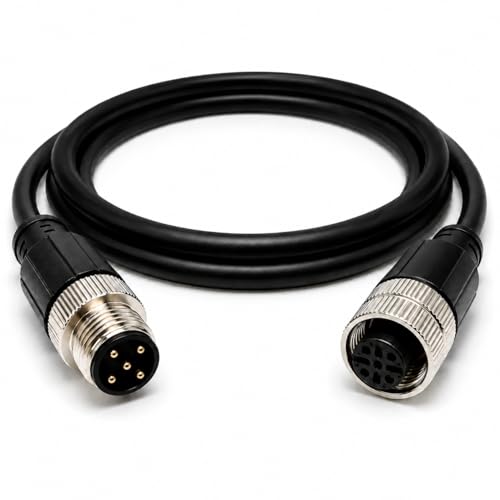
Reference features: 5-pin M12 x 1.0 Micro-C connectors; shielded 22AWG/24AWG cable. Backbone, drop, or extension use to connect chartplotters, fish finders, sensors, and engine interfaces. Upgraded metal-shielded connectors offer improved interference resistance and durability.
Best for: Marine environments with potential interference from engines or radios. Choose this for added shielding and robust construction in crowded electronics bays.
Caution: Shielded cables can be stiffer; plan cable routing to avoid excessive bending or tension on the connector shells.
HangTon Micro 5 Pin Male Field Installable DeviceNet Connector

Reference features: Micro-C male connector intended for NMEA 2000 device networks and CAN bus devices. Used to create custom-length drop or backbone cables and connect to a network or device. Compatible with multiple brands including Humminbird, Lowrance, Garmin, and more.
Best for: Users needing a highly versatile field-installable connector compatible with many devices across leading marine brands. The field-installable design supports bespoke cabling runs in cramped installations.
Limitation: As with many field-installable parts, successful performance depends on proper crimping and seal integrity in harsh marine conditions.
Jsvecip NMEA 2000 Micro Male Terminator (120-ohm)

Reference features: Terminator 120-ohm resistor for NMEA 2000 networks with 5-pin male configuration. Data mentions insulation resistance ≥100 MΩ and contact resistance ≤5 mΩ. Used to properly terminate network ends to prevent reflections and maintain signal integrity.
Best for: Networks that require proper termination at the end of a backbone run. Essential in longer or multi-branch topologies to ensure stable communication.
Limitation: Terminators must be placed at valid network ends; using a terminator in the middle of a backbone can cause network issues.
Buying Guide: Micro-C NMEA 2000 Connectors
What is Micro-C and when should I choose it?
Micro-C refers to a compact 5-pin NMEA 2000 connector format designed for tight installs. It is ideal for short drops, backbone extensions, and places with limited space, such as under decks, in bulkheads, or at mast bases.
Field-installable vs. fixed connectors: which is better?
Field-installable connectors let you customize cable length on-site, reducing waste and shipping bulky long cables. Fixed connectors offer maximum durability but less flexibility for on-the-water adjustments. For custom-length runs and periodic reconfigurations, field-installable options are preferable.
Shielded vs. plastic shells: what to pick?
Shielded metal shells provide better interference resistance and durability in engine rooms or near radios. Plastic variants are lighter and cheaper but may be more susceptible to EMI and impact damage in harsh environments.
Terminations and network topology: how many should I terminate?
Typically, one terminator at the end of each backbone run is sufficient. Do not terminate mid-backbone segments. Plan your layout to ensure stable power and data paths with fewer stubs.
What tools and skills are required?
Crimping tools precise for NMEA 2000 field-installable connectors are recommended. Ensure you have good strain relief, clean conductor preparation, and proper seating of terminals to maintain reliable connections.
Best practices for on-board installation
- Plan cable routing to minimize bends and exposure to heat and moisture.
- Use shielded cables in high-EMI areas and label connections for future maintenance.
- Keep a spare terminator and field-installable connectors for upgrades or repairs.
Summary of recommended uses
- Best for mast-area connections: Regatta Processing and HangTon field-installable options.
- Better for EMI-prone zones: ZONCTIK shielded Micro-C cables.
- Choose this if you need a dedicated terminator: Jsvecip 120-ohm terminator.
FAQ
- What is the purpose of a NMEA 2000 terminator?
To prevent signal reflections and ensure stable backbone communication. - Can I mix different brands of micro-C connectors on the same network?
Yes, compatibility is based on the NMEA 2000 standard, but maintain consistent pinouts and terminations. - Do field-installable connectors require special tools?
Yes, a proper crimping tool and sometimes a diagnostic meter improve reliability. - Are shielded cables necessary in all installations?
Not always, but they help in EMI-heavy environments near engines or radios. - How do I determine the correct backbone length?
Plan drops and backbones to minimize stubs; keep backbone runs as short and direct as possible. - Is a metal shield always better than plastic?
Metal shields offer superior EMI protection but add weight and cost; choose based on installation needs.