
Best Bass Guitar Nuts for Upgrading Your Tone and Tuning
When upgrading a bass guitar, replacing the nut can noticeably improve intonation, tuning stability, and overall sustain. This guide highlights five top-rated nut options that cater to different bass builds and player needs. It’s ideal for players seeking better sustain, precise tuning, and reliable intonation without major modifications. The selections emphasize bone and graphite options, known for tonal clarity and durability. The buyer’s intent is to find a ready-fit nut that matches common four-string bass radii and string spacing.
Summary table of chosen products:
- Metallor 4 String Graphite Bass Nut — Slotted graphite, PB/Precision style, 43mm x 9mm x 6mm, 34mm spacing
- Metallor 4 String Black Cattle Bone Nut — Slotted bone, flat bottom, 42mm x 6mm x 3mm, 7.25″ radius
- Guyker Bass Guitar Bone Nut — 4-string, flat bottom bone nut, 38×3.5x6mm, package of 2
- Metallor Cattle Bone Bass Nut — Slotted bone, 42mm x 5mm x 3mm, 36mm spacing, PB/J bass compatible
- KAISH 38×3.5 Flat Bottom Cattle Bone Nut — Real bone, 4-string, 38×3.5×5.3/4.5mm
Metallor Graphite Nut For PB Bass

Best for players seeking smoother string movement and improved tuning stability. This nut blends a plastic base with graphite for reduced friction and smoother string sliding. It’s particularly advantageous for Precision or similar basses with standard 34mm string spacing. Caution: not solid graphite; it is a graphite-infused plastic nut. Ideal for upgrades or project builds where durability and cost-efficiency matter.
Metallor Graphite Nut For PB Bass, Black Slotted

Best for players requiring a low-friction graphite upgrade with a solid PB-style radius. It features a flat bottom and a 7.25″ radius, with E to E spacing about 33mm. It delivers smoother string movement and better tuning stability than standard plastic nuts. Caution: like other graphite-infused plastics, it isn’t pure graphite.
Guyker Bass Guitar Bone Nut (Set of 2)

Best for players seeking a traditional bone nut with minimal porosity and classic tone. The set of two bone nuts is designed for 4-string basses and aims to improve tuning stability and reduce string friction in the nut. It’s a natural choice for players who value a warm, fuller tone and traditional nut material. Caution: some adjustments might be needed to fit exact slots or radii on non-standard basses.
Metallor Cattle Bone Bass Nut 4 String
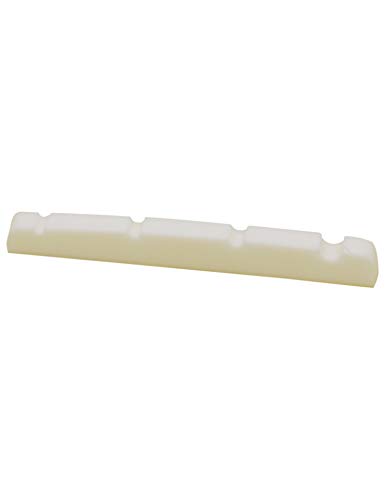
Best for players wanting a traditional bone nut with a mellow, robust tone. The bone nut features a 42mm x 5mm x 3mm size and 36mm string spacing. It’s compatible with Precision-style basses and similar models. Caution: bone may require careful fitting and slot widening for perfect intonation on some necks. Strong choice for tone-oriented upgrades.
KAISH 38×3.5 Flat Bottom Cattle Bone Nut
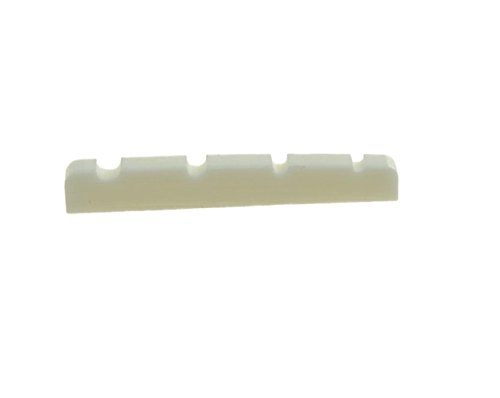
Best for cost-conscious players who want a straightforward bone nut for 4-string basses. This nut’s flat bottom and bone construction offer good sustain and tuning stability. Note: you may need to sand or deepen the slots and polish during installation to fit your exact neck and slot spacing. Caution: slot alignment is critical for accurate intonation and comfortable string action.
Buying Guide: How To Choose The Right Bass Nut
- Material matters: Bone nuts tend to deliver a warm, musical tone with solid sustain, while graphite-infused plastics reduce friction for smoother tuning. Your tone preference and playing style will guide material choice.
- String spacing and radius fit: Check the nut’s width, slot spacing, and the neck radius (e.g., 7.25″ radius commonly used on many Precision basses). Mismatched spacing can cause intonation and action issues.
- Installation needs: Some nuts require slot widening or minor sanding. If you’re upgrading a factory-installed nut, confirm compatibility with your bass model (Precision/P/J formats) and whether slots need re-cutting.
- Durability and maintenance: Bone nuts are durable but can be more sensitive to fit. Graphite-infused plastics resist wear and sliding friction but are not pure graphite. Consider how often you’ll adjust action or slot sizes.
- Compatibility with tone and playability: Bone tends to emphasize warmth and sustain; graphite options can improve precision and tuning stability. Your pickup, body resonance, and playing style influence perceived results.
Frequently Asked Questions
- What material is best for a bass nut?
- Will a different nut change the bass’s action or setup?
- Do I need to widen the nut slots when upgrading?
- Can I install a nut without professional help?
- How do I know if a nut fits my bass model?
- Are graphite nuts more durable than bone?
Bone nuts are traditional and provide a strong, musical tone with solid sustain. Graphite or graphite-infused nuts reduce friction for smoother tuning, which can improve intonation in some setups.
Yes. Replacing a nut can alter string height and spacing, potentially affecting action and intonation. It may require slot adjustments and careful setup after installation.
Often yes. Slots sometimes need minor widening to accommodate strings and ensure correct intonation. Do not force strings into slots; misfit can cause tuning instability and string binding.
For many players, a simple nut replacement with careful measurement and slot adjustments can be done at home. More complex radii or necks may benefit from professional setup to ensure accurate intonation and action.
Match the nut width, string spacing, and radius to your bass. Look for nut sizes labeled for Precision, PB, J, or similar bass formats, and verify the measurements (e.g., 34mm or 36mm string spacing) before buying.
Graphite-infused plastic nuts are resistant to wear and provide low friction, which benefits tuning stability. Bone nuts are durable but may require precise fitting and slots. Both are reliable with proper installation.