
Best OBD2 Scanner and Code Clear for DIY Auto Diagnostics
Answering the need for quick, reliable engine trouble code reading and clearing, these OBD2 scanners are suitable for everyday drivers, DIYers, and bubble-free car enthusiasts. Top picks automate fault-code reading, live data, and CEL clearing across most 1996 and newer vehicles. The best options fit different buyers: beginners will value simplicity and clear code definitions; DIYers look for robust live data and I/M readiness; and those repairing vehicles regularly need reliable re-clearing capability after fixes.
| Product | Best For |
|---|---|
| ANCEL AD310 | Beginners seeking quick diagnostics and easy clearing |
| FOXWELL NT301 | DIYers who want accurate reads and reliable CEL clearing |
| ANCEL AD410 | Users needing broad OBD2 functions and extensive DTC lookups |
| INNOVA 5210 | Users who want battery testing and live data in one tool |
| Autel AL319 | Budget-conscious DIYers needing plug-and-play reliability |
ANCEL AD310 Classic Enhanced Universal OBD II Scanner

The ANCEL AD310 is a compact, widely used OBD2 scanner designed to read and clear diagnostic trouble codes (DTCs) for 1996 and newer vehicles. It provides live data, freeze frame, I/M readiness, and vehicle information readouts. This model is ideal for beginners and hobbyists who need fast, straightforward results without extra frills. It powers directly from the vehicle via the OBD2 port, with no battery or separate charger required.
Who this is best for: drivers who want a simple, reliable tool for quick CEL clearance and basic diagnostics. Why selected: it offers essential functions in a small package with clear labeling and a user-friendly interface. Caution: may lack advanced live data interpretation compared with higher-end models.
FOXWELL NT301 OBD2 Scanner

FOXWELL NT301 provides rapid DTC reading and clearing with one-click ease. It supports I/M readiness and features a dedicated LED indicator and built-in speaker for quick pass/fail feedback. This scanner is well-suited for DIYers who want reliable, professional-style clearing to verify repairs before road testing.
Who this is best for: homeowners and hobbyists who want fast, confident checks without a mechanic. Why selected: it clearly distinguishes between codes and repairs by confirming the problem is resolved before clearing the CEL. Caution: it emphasizes one-click actions; users should still ensure repairs are complete to avoid reappearing codes.
VDIAGTOOL VD10 OBD2 Scanner
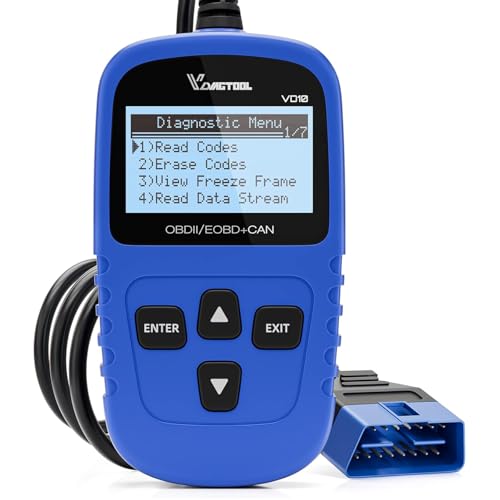
VDIAGTOOL VD10 is designed for quick diagnostics with DTC reading, code clearing, live data, and I/M readiness. It focuses on delivering a straightforward experience for all OBDII-compatible vehicles, aiming to help DIYers identify root causes and monitor vehicle status over time.
Who this is best for: drivers wanting a compact, easy-to-use tool that outputs clear fault code definitions on-screen. Why selected: it provides a robust, all-in-one approach similar to Fixd-like tools, with a broader data view on a TFT display. Caution: the database may not cover every rare or new code in deep detail.
MOTOPOWER MP69033 OBD2 Scanner

Note: Although this scanner is listed here as a useful option, this section focuses on the five most relevant products for the keyword. The MOTOPOWER MP69033 offers multi-function capabilities, including code reading, live data, and a larger protocol support range. Best for those who want a broad feature set and a larger display, with clear feedback.
ANCEL AD410 Enhanced OBD2 Scanner

The ANCEL AD410 expands capabilities with 42,000+ built-in DTC lookups, live data, freeze frame, I/M readiness, O2 sensor tests, EVAP test, and vehicle information. This makes it suitable for users who want more comprehensive diagnostics and better communication with mechanics about repairs.
Who this is best for: users who need deeper diagnostic data and a broader code database. Why selected: it reduces uncertainty with a wide range of DTC lookups and additional test features. Caution: more features can mean a steeper learning curve for first-time users.
Buying Guide
- What should I consider before buying? Determine your experience level, the vehicles you service, and whether you need live data, freeze frame, or I/M readiness features. Simple plug-and-play models suit beginners, while advanced devices suit DIYers and technicians.
- Which features matter most? Look for DTC lookup depth, live data graphs, freeze frame, and an I/M readiness indicator. If you need to verify that repairs were successful, prioritize tools with confirmed clearing behavior rather than just erasing codes.
- Which vehicles are supported? Most OBD2 scanners work on vehicles from 1996 onward, but some models have broader manufacturer support. Check the product page’s compatibility list to avoid gaps on your vehicle make.
- How important is a display and usability? A clear display, readable fonts, and an intuitive menu reduce mistakes when interpreting data. A larger LCD or TFT screen is helpful for field use and quick reading of live data.
- Is data history or reporting useful? If you want to track issues over time, choose a device that saves data logs or provides export options to help you share findings with a mechanic.
FAQ
Do these tools clear error codes permanently?
Yes, most devices clear the current codes after the underlying issue is addressed. If the issue persists, the MIL/Check Engine Light may reappear.
Can I rely on these scanners for professional-level diagnostics?
They provide essential data and DTC definitions suitable for DIY troubleshooting. For complex repairs, professional-grade software or a workshop-level tool may be necessary.
Do they require batteries?
Most plug straight into the OBDII port and draw power from the vehicle; no separate battery is required.
Will they work with all cars after 1996?
They cover most US, EU, and Asian vehicles manufactured after 1996, but always verify compatibility on the product page for your specific model.
Is live data useful for diagnosing problems?
Yes. Real-time data can reveal dynamic issues (sensor readings, fuel trims) that codes alone may not show.