
Best Octave Pedals for Acoustic Guitar: Top Picks for Richer Tone
Discover octave pedals that suit acoustic guitar players seeking warmth, depth, and ambient texture. This guide highlights five top options, explaining who each is best for and why it fits acoustic workflows.Choose these when you want subtle octave warmth for unplugged sessions or bold octave shimmers for live performances.
| Product | Best For | Key Benefit |
|---|---|---|
| Donner Octave Guitar Pedal | Acoustic players seeking multiple shift options | 21 tonal options with three tone modes |
| SONICAKE Octave Pedal | Analog lovers who want classic octave with minimal latency | 2-voice octave with dry blend |
| BOSS OC-5 | Live performers needing reliable polyphonic octave | Polyphonic, mono/poly modes, precise lowest-note control |
| AFOT Polyphonic Octave Pedal | Studio and stage players exploring top/bottom/both layering | Three modes with independent dry and octave controls |
| JOYO Octave Fuzz (Voodoo JF-12) | Guitarists seeking vintage fuzz with octave shimmer | Germanium fuzz plus octave up and mid-cut options |
Below are five carefully selected octave pedals that work well with acoustic guitar tones, from subtle blends to dramatic shimmers. Each entry includes why it fits acoustic use, a quick caution, and who it’s best for.
Donner Octave Guitar Pedal With 7 Shifts And 3 Tone Modes

The Donner Harmonic Square provides 21 tonal options across octave, semitone, and detune sounds, plus Sharp, Flat, and Detune tone modes. It includes WET and DRY knobs to balance effected and clean signals. Best for: Acoustic players exploring a range of octave textures without extra bulk. Caution: Some users may prefer a higher-end, more transparent sound for pristine acoustic tones.
SONICAKE Octave Guitar Pedal

Designed for guitar and bass, this analog pedal blends a two-voice octave lower than the direct signal, with low latency in use. Best for: Acoustic players seeking a warm, classic octave effect with quick tracking. Caution: Analog pedals can vary slightly in response between units, so bench testing is helpful if possible.
BOSS OC-5 Octave Pedal

OC-5 offers polyphonic octave effects with mono/poly modes and a Dry Direct Output. In poly mode, the lowest note can carry the octave effect in chords. Best for: Acoustic performers who need reliable octaves in live setups and flexible chord voicings. Caution: Some users may find the interface less intuitive for quick live changes during a set.
AFOT Polyphonic Octave Guitar Pedal
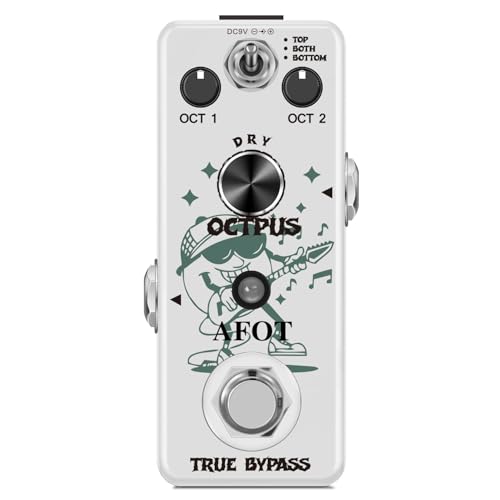
AFOT offers three modes—Top, Both, Bottom—with independent dry and octave controls for precise tonal shaping. Best for: Studio work or live tones that require crafting complex octave layers without noise. Caution: Information emphasizes control features; verify compatibility with your specific guitar setup if used in busy pedalboards.
JOYO Octave Fuzz Guitar Pedal
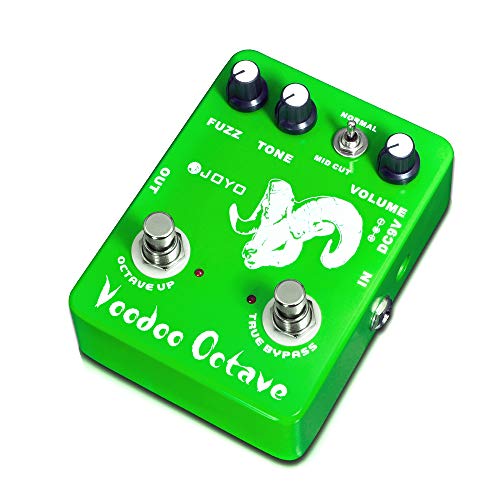
This pedal combines a vintage Germanium fuzz with an octave up and a mid-cut switch. Best for: Acoustic players wanting a punchy fuzz texture with an octave shimmer for solos. Caution: The vintage flavor may be too aggressive for some clean acoustic applications; use for stylistic effect rather than a clean foundation.
Buying Guide: Octave Pedals For Acoustic Guitar
What octave range do you need? For gentle warmth, look at pedals with two-octave options or blend controls. For shimmering leads, prioritize pedals with easy top-octave access and reliable tracking on chords.
How important is polyphony?
Polyphonic octaves handle chords more smoothly than monophonic models. Acoustic players will generally prefer polyphonic options (OC-5, AFOT, and similar) for live playing to avoid dropped notes.
Should you use dry/wet blending?
WET/DRY controls preserve the natural acoustic tone while adding octave effects. This helps maintain clarity when playing arpeggios or fingerpicking styles.
What about tone control and pitch range?
Three-tone or multiple pitch modes let you shift by semitones or whole octaves. Sharp or flat settings determine whether you push or pull the octave, affecting phase alignment with the dry signal.
Trail and latency considerations
Analog octave pedals typically offer immediate tracking with minimal latency, while some digital pedals can exhibit slight timing gaps. For live use, select a model with strong tracking and low latency on sustained notes.
Size, build, and reliability
Acoustic players often tour with compact boards. Choose pedals with sturdy housings and reliable switches, especially if you travel with your gear frequently.
FAQ
- Do octave pedals work well with acoustic guitars? Yes, when paired with a pickup, they add octave texture without overpowering the original tone. Look for blends and true bypass to preserve signal when off.
- Is polyphony essential for acoustic playing? It helps smoothly reproduce octave effects across chords, reducing note dropouts, especially in live settings.
- Which pedal is best for subtle shimmer? Pedals with on-board blending and lower octave emphasis, like models offering dry/wet balance and gentle octave shifts, are ideal for subtlety.
- Can I use octave fuzz with acoustic guitars? Yes, but be mindful of brightness and sustain; fuzz can overwhelm a delicate acoustic voice. Test with your pickup setup.
- How do I choose between analog and digital octave pedals? Analog often delivers warmer, more musical intervals; digital can offer precise tracking and more effects modes. Your tone goals will guide the choice.
- Are there any drawbacks to octave pedals on acoustic guitars? Some pedestals may alter tone coloration or require careful level balancing to avoid muddy results in blends.