
Best Octave Pedals for Bass: Clear Tracking and Tone
Answering the question, these octave pedals are designed to deliver reliable tracking, musical octave intervals, and a usable blend of dry and effected signals for bass players. The top picks here suit different players: some prioritize tight, polyphonic tracking for chords, others emphasize aggressive sub-octave tones for live gigs. Below, each product section explains who benefits most and why it stands out, followed by a compact Buying Guide and a practical FAQ.
| Product | Best For | Key Benefit |
|---|---|---|
| SONICAKE Octave Guitar Pedal | Beginners to intermediate players needing analog warmth | Low and two-octave blend with minimal latency |
| BOSS OC-5 Octave Pedal | Players needing polyphonic tracking and flexible modes | Mono/Poly modes with precise lowest-note octave |
| MXR Bass Octave Deluxe | Players seeking clean headroom and vintage tone | Constant headroom technology, analog warmth |
| MXR Vintage Bass Octave | Players chasing classic, warm sub-octave vibes | Warm analog sub-bass with improved headroom |
| Donner Octave Guitar Pedal | Budget-conscious players wanting versatile options | 7 shift types and 3 tone modes for broad options |
SONICAKE Octave Pedal for Guitar & Bass

The SONICAKE unit uses an analog, monophonic octave circuit that blends a second voice an octave lower (and up to two octaves down) with the dry signal. It is compact and designed for both guitar and bass, with minimal latency on bass applications. Best for players who want a straightforward, warm octave response without complex polyphony. A caution: monophonic tracking means chords can sound uneven if multiple notes trigger simultaneously.
BOSS OC-5 Octave Pedal

The OC-5 offers both mono and poly modes, with a dedicated dry direct output and a feature that applies the octave only to the lowest note in a chord in poly mode. This makes it versatile for bass chords and single-note lines alike. Best for players who need flexibility across clean and octave-toned outputs. Limitation: some players may prefer a more traditional, single-mode octave tone for bass heavy riffs.
MXR Bass Octave Deluxe
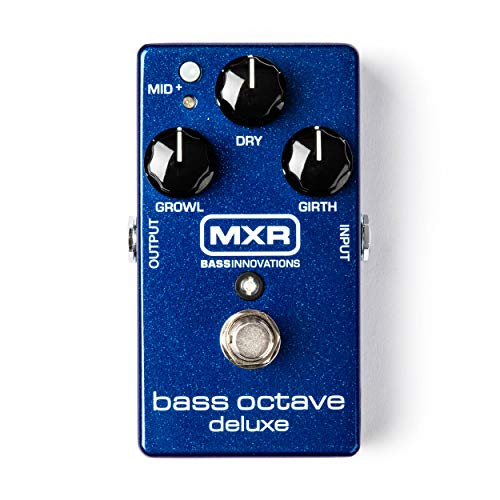
MXR’s Bass Octave Deluxe emphasizes headroom with constant headroom technology and true bypass. It blends a sub-octave signal with the dry bass signal for a robust low end and offers organic analog tone. Best for players who want a reliable, studio-friendly octave that remains clear at higher output levels. A caveat: the control set is straightforward, which may feel limiting to players seeking deeper tonal sculpting.
MXR Vintage Bass Octave

This pedal emphasizes warm, classic analog sub-bass with improved headroom and modern versatility. It blends a vintage circuit vibe with practical tracking improvements. Best for players seeking a traditional, musical sub-octave foundation that still performs well in a modern mix. Limitation: the vintage character may feel less precise for tight, modern staccato lines compared to newer designs.
Donner Octave Guitar Pedal

The Donner unit offers 7 shift types and 3 tone modes, including sharp, flat, and detune. It provides wet/dry mix control for blending, making it flexible for different tonal palettes. Best for players who want a broad palette of octave and detune options on a budget. Caution: feature-rich models at a lower price may have fewer refinements in tracking compared with premium pedals.
Buying Guide: Octave Pedals For Bass
- Tracking vs. polyphony: For bass players, accurate tracking of single notes is often more critical than perfect chord handling. If you play chords or complex lines, consider a polyphonic-capable pedal like the OC-5 for consistent results.
- Signal path and blending: Pedals with dry/wet controls help preserve your original tone while adding octave content. This is essential for live rigs and studio setups.
- Headroom and tone: Look for pedals with dedicated headroom features or analog tone pathways to avoid muddiness at higher output levels.
- Mode variety: A pedal offering multiple octave settings (+1, +2, -1, -2) and detune options enables experimentation across genres, from funk to ambient textures.
- Latency and responsiveness: Since bass players rely on tight rhythm sections, choose pedals noted for low latency and responsive tracking, especially in live settings.
- Build and form factor: Compact designs save pedalboard space, but ensure durability for gigging. Consider the physical layout and port configuration for easier signal chaining.
- Price vs. features: Higher-priced options often offer better tracking, headroom, and more tonal options. Budget pedals may still provide excellent basic octave effects but with trade-offs in tracking or control depth.
Frequently Asked Questions
- What’s the difference between an octave pedal and a pitch shifter? An octave pedal primarily generates one or two octaves below the original signal, while a pitch shifter can alter pitch more flexibly across semitones or larger intervals.
- Should I use a monophonic or polyphonic octave pedal for bass? For bass lines that play single notes, monophonic pedals are often sufficient. If you frequently play chords or polyphonic lines, a polyphonic pedal is advantageous.
- Can octave pedals cause latency? Some analog pedals have negligible latency, while digital models may introduce small delay. When precision is essential, prefer analog or low-latency designs.
- Do octave pedals affect tone when bypassed? True bypass pedals minimize signal loss when off, but pedal circuitry can still influence tone if the pedal isn’t perfectly transparent. Look for true bypass or buffer options if tone preservation is critical.
- How important is headroom for bass octave pedals? High headroom preserves low-end clarity, especially when your bass has strong low B or C notes. Pedals with constant headroom are preferable for dynamic playing.
- Is a detune or swell feature useful for bass? Detune adds subtle modulation for thickness, while swell can shape note attacks for pads or ambient textures. These features expand tonal options beyond simple octaves.