Best Open Reel Tape Deck Accessories for Clean Playback and Smooth Reels
Answering buyers who want reliable open reel tape deck accessories, this guide highlights practical options for cleaning, tabbing, and taking up reels. The top picks suit enthusiasts who maintain or restore 1/4″ open reel systems, whether for archival listening, hobbyist recording, or professional-sounding playback. Below, select five products best for different scenarios: cleaning and head-edge polishing, durable empty reels, premade tabs for quick tabbing, and sturdy take-up reels. A quick comparison table follows to help you decide at a glance.
| Product | Best For | Why It Stands Out |
|---|---|---|
| Lasermedia Open Reel Audio Cleaning Tape | Regular maintenance | Edge-to-edge cleaning and polishing; reusable reel; Made in USA |
| TME Sensing Foil Tabs | Quick tabbing | Easy peel, precise die-cut tabs, conductive adhesive |
| EAJONC 7 Inch Empty Takeup Reel | Universal compatibility | Durable, balanced for stable playback, lightweight |
| Lasermedia Splicing Tape Tabs Open Reel | Long-term tab solution | Die-cut to professional standards, archival adhesive |
| ASHATA Take Up Reel for 1/4in Tapes | Alternate take-up option | Aluminum NAB flange design, strong wind stability |
Lasermedia Open Reel Audio Cleaning Tape
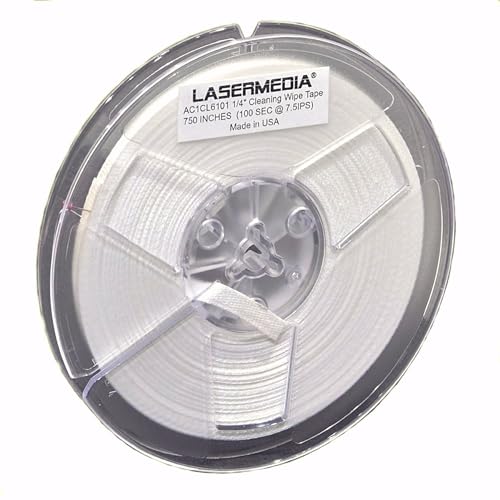
The Lasermedia cleaning tape is designed to clean and polish tape guides and heads edge to edge, including hard-to-reach corners. It is described as super strong and reusable, supplied on a five-inch diameter reel, and manufactured in the USA. This option is best for open reel users who perform regular maintenance to prevent buildup that can degrade sound quality. Caution: because it is a cleaning tool, avoid overuse on delicate guide surfaces to minimize any risk of abrasion.
TME Sensing Foil, Pre-Cut Tabs

This product delivers pre-cut sensing foil tabs with a polymer release film for easy peeling and application. It emphasizes precision die-cut tabs and aerospace-grade conductive adhesive. It’s a solid pick for users who need consistent tab length and dependable adhesion for archival or ongoing recording tasks. Best for projects where tabs must be accurate and long-lasting. Limitation: the tabs’ die-cut format may require careful handling to avoid misalignment during application.
EAJONC 7 Inch Empty Takeup Reel

The EAJONC 7-inch empty takeup reel is a universal option designed for 1/4″ open reel decks. It is built for compatibility with TEAC, ReVox, Studer, and other common reel-to-reel players. The reel emphasizes durable construction and balanced weight distribution to reduce vibration and wow/flutter, contributing to quieter operation and smoother takeups. Best for users upgrading or replacing a worn reel. Caution: ensure your deck’s NAB hub compatibility before purchasing, as it is designed for specific hub systems.
Lasermedia Splicing Tape Tabs Open Reel

The Lasermedia splicing tape tabs offer a no-waste solution with easy peel-and-stick application. Die-cut tabs are designed to professional studio and archival standards, and the tape uses archival-quality adhesive technology. This is a strong choice for long-term projects where reliable tab integrity is essential. Limitation: adhesive performance may vary with temperature and humidity, so store in a controlled environment for best results.
ASHATA Take Up Reel for 1/4in Tapes

The ASHATA take-up reel features an aluminum NAB flange design with a robust four-hole wind pattern. It is positioned as a durable replacement reel for 1/4″ tapes and is suitable for users seeking a strong, lightweight option to support stable tape winding. Best for those who want a reliable metal take-up reel with straightforward compatibility. Caution: verify compatibility with your deck’s hub and wind hole configuration before purchase.
Buying Guide
What should you consider when shopping for open reel tape deck accessories? Start with deck type compatibility. For take-up reels and hubs, confirm the NAB flange design, wind hole pattern, and hub adapters to avoid fit issues. For tabs, check whether you need pre-cut tabs and the adhesive’s archival quality to prevent future deterioration. Cleaning tapes are ideal for routine maintenance; ensure the material is gentle enough for your guides and heads. Durability and material composition matter for long-term use, especially for archival projects. Evaluate ease of use, such as peel-and-stick tabs and reusability of cleaning tapes, to minimize maintenance time.
Performance considerations include mechanical stability, such as balanced weight and vibration reduction in reels, which contribute to smoother playback and fewer wow/flutter issues. If you upgrade reels, choose options with robust construction (aluminum or reinforced composites) and verify compatibility with your deck’s dimensions and hub system. For archival tasks, prioritize tabs and tapes with archival-quality adhesives and anti-gum formulations to maintain long-term integrity.
Usage scenarios vary: a maintenance-focused buyer should prefer the cleaning tape, while a studio or archivist may need a combination of splicing tabs and reliable take-up reels. In open reel systems, having a consistent supply of high-quality tabs and take-up reels reduces downtime and improves workflow. Always store accessories in a climate-controlled environment to preserve tape quality and adhesive integrity.
FAQ
- What is the main purpose of an open reel cleaning tape? It cleans and polishes tape guides and heads edge to edge, helping maintain sound quality and reducing artifacts.
- Are pre-cut tabs necessary for open reel work? They improve efficiency and consistency, especially for archival or long-format sessions, but can be replaced with manual tabs if precise cutting is possible.
- Do empty take-up reels affect tape tension? Yes, a well-balanced reel helps minimize wow and flutter by providing stable rotation and even wind.
- How do I know if a reel fits my deck? Check the reel’s NAB flange, hub compatibility, and wind hole pattern against your deck’s specifications.
- Is aluminum better than plastic for take-up reels? Aluminum reels are typically stronger and more durable, offering better stability, though plastic can be lighter and cost-effective for casual use.
- What maintenance practice helps extend tape life? Regular cleaning of guides and heads, proper storage, and using archival-quality tabs and adhesives for long-term projects.