Best Passive Center Channel Speaker for Crystal-Clear Dialogue in Home Theater
Choosing a passive center channel speaker is essential for delivering crisp dialogue and a stable vocal image in any home theater. The right center channel can blend with your front speakers while maintaining precise localization and clear midrange. This guide highlights five strong options that balance performance, size, and compatibility, helping you pick a center channel that matches your room and listening preferences.
| Product | Brand | Key Benefit | Approximate Drivers |
|---|---|---|---|
| Klipsch R-52C Powerful Detailed Center Channel | Klipsch | Dynamic vocal clarity with tractrix horn | Dual 5.25″ woofers, 1″ tweeter |
| Polk Audio T30 Center Channel Speaker | Polk Audio | Clear dialogue, balanced midrange | Dual 5.25″ woofers, 1″ tweeter |
| Polk Monitor XT35 Slim Center Channel | Polk Audio | Hi-res, compact slim cabinet | 4″ woofers, 1″ tweeter (4 drivers total) |
| Polk Monitor XT30 Compact Center Channel | Polk Audio | Focused dialogues, compact footprint | 2x 5.25″ woofers, 1″ tweeter |
| Klipsch Reference Next-Generation R-30C | Klipsch | Wide directivity with low distortion | 3.5″ woofer, 1″ tweeter |
Note: Specifications vary by model. Consider room size, amplifier power, and compatibility with your existing speakers when choosing a center channel.
Klipsch R-52C Center Channel
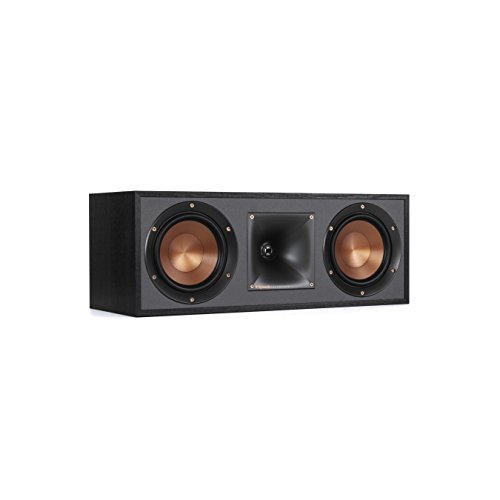
The Klipsch R-52C uses dual 5.25″ spun-copper IMG woofers and a 1″ aluminum LTS tweeter mated to a 90×90 Tractrix horn. It covers a frequency range of 89Hz to 21kHz with a ±3dB tolerance, providing strong vocal clarity and an expansive soundstage. The Tractrix horn helps control high-frequency dispersion for a more focused image, while the woofer array delivers strong midbass without excessive distortion. This center is well-suited to larger rooms where dialogue detail must cut through a busy soundtrack.
Polk Audio T30 Center Channel Speaker
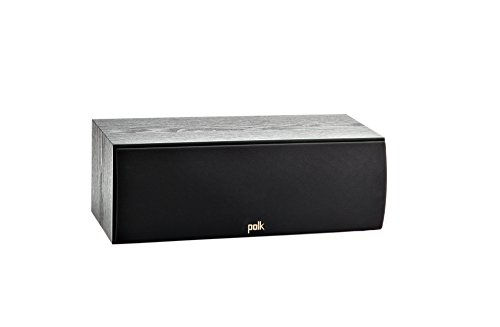
Polk’s T30 centers on dual 5.25″ woofers paired with a 1″ silk dome tweeter to deliver clear dialogue and a rich midrange. The design is intended to blend with Polk’s T-Series, offering timbre matching across fronts for natural vocal reproduction. The rear-tuned port aims to minimize cabinet noise while preserving impactful bass. Suitable for mid-sized rooms, the T30 provides a balanced voice presence without overwhelming the overall system.
Saiyin Center Channel Speaker

The Saiyin center uses dual 4-inch woofers and a silk-dome tweeter with a horn for improved high-frequency directivity. The design emphasizes a clean aesthetic that can blend into most living rooms while delivering tight bass and clear dialogue. The horn-enhanced highs aim to reduce listening fatigue over long movie sessions, and the compact footprint helps if space is at a premium.
Polk Monitor XT35 Slim Center Channel

The XT35 Slim Center channels a 4″ woofer array and a 1″ tweeter with four dynamic drivers, delivering an open mid-range and robust bass. Its slim chassis is designed to minimize TV obstruction while ensuring hi-res compatibility and support for Dolby Atmos and DTS:X via compatible sources. The build quality emphasizes a modern aesthetic that fits a range of decors without drawing attention away from the display.
Polk Monitor XT30 Compact Center
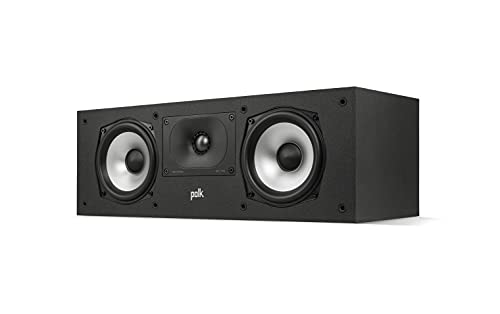
The XT30 is a compact center featuring 2x 5.25″ woofers and a 1″ tweeter, designed for rooms where space is limited. It emphasizes focused dialogues and a clean midrange with easy integration into most front-channel arrays. The cabinet is built to minimize standing waves and to deliver stable dialogue without overpowering other channels. It supports Dolby Atmos and DTS:X across compatible inputs, providing flexible placement options.
Klipsch Reference Next-Generation R-30C
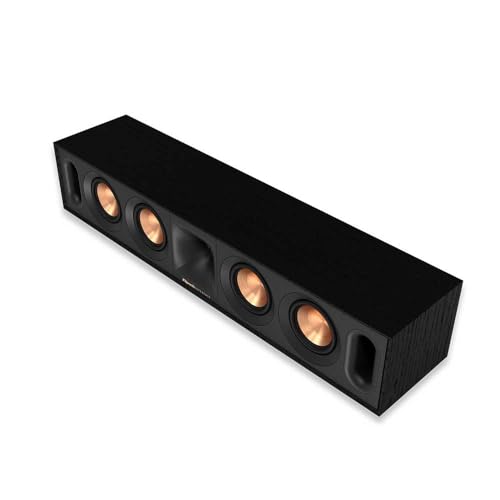
The R-30C features an all-new 90° x 90° Tractrix horn for wide and accurate high-frequency response and a Linear Travel Suspension aluminum tweeter for reduced distortion. Its three-and-a-half-inch TCP woofers with spun-copper cones are designed to deliver smoother, more transparent midrange and improved overall clarity. This model is aimed at listeners who value precise dialogue placement and a strong, engaging center channel without sacrificing musicality in a multi-channel setup.
Buying Guide: Key Considerations When Choosing a Center Channel
- Room size and seating distance: Larger rooms may benefit from larger woofer sizes and higher sensitivity, while compact rooms may favor slim enclosures and precise beam control.
- Speaker matching: Aim for a center channel with a similar vocal balance to your front left/right speakers to preserve timbre and reduce dialogue anomalies during action scenes.
- Cabinet design and placement: Wall-mountable or bookshelf-style centers offer flexibility. Consider whether you’ll place the center on a shelf, stand, or wall to optimize toe-in and imaging.
- Dispersion and horn design: Horn-loaded designs can improve directivity and reduce localization errors, but may require careful room placement to avoid harsh highs in reflective spaces.
- Power handling and compatibility: Confirm that your AV receiver can adequately drive the center channel with the intended amplification and that impedance and sensitivity align with your system.
- Hi-res and surround formats: If you use Dolby Atmos or DTS:X, ensure the center channel contributes cleanly to multi-channel soundtracks and supports the necessary input formats.
- Budget vs. performance: Midrange centers often strike the best balance, delivering clear dialogue without needing premium edge cases for most home theaters.
- Future-proofing: If you plan to upgrade fronts or add height channels, consider a center that remains compatible with evolving formats and room acoustics.