Best Passive Speaker Volume Control for Accurate Level Management
Passive volume controls let you manage speaker levels without adding gain or coloring sound. Below is a concise comparison of selected passive controllers and switches chosen for reliable level attenuation, balanced connections, impedance protection, and durable construction.
| Product | Key Feature | Connection Type |
|---|---|---|
| DYNASTY PROAUDIO PMC-1 | Balanced I/O, large knob | XLR/TRS/3.5mm |
| Nobsound Hi‑Fi Passive Preamp (Hi‑Fi) | ALPS potentiometer, RCA | RCA |
| Nobsound Mini Fully‑Balanced | ALPS quad balanced pot, XLR/RCA | XLR/RCA |
| OSD SVC100 In‑Wall Volume Control | Impedance matching, 100W | Speaker terminals |
| Pyle PSLSW4 Speaker Selector | 4‑zone selector with individual volume | Speaker screw terminals |
DYNASTY PROAUDIO PMC-1 Premium Passive Stereo Monitor Volume Controller
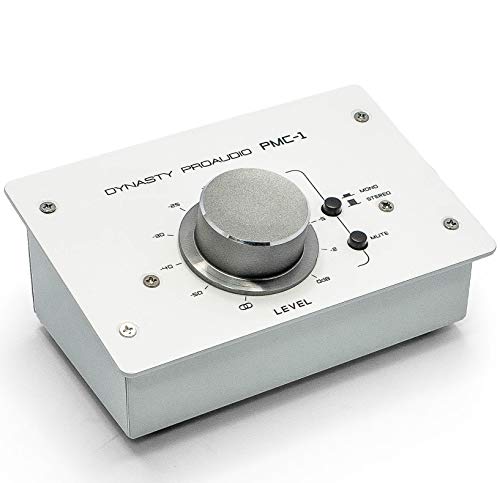
The PMC-1 is built for precise analog level control between sources and active speakers or amplifiers. It includes balanced combo XLR/TRS inputs and TRS outputs plus a 3.5mm mini jack for flexible connections. The large rotary knob is intended for fingertip adjustments and the unit is passive to preserve signal integrity.
- Balanced Ins And Outs: Minimizes interference on long cable runs.
- Large Knob: Offers fine tactile level adjustment.
- Insert Location: Designed for placement between a PC/audio interface and monitors.
Nobsound High Precision Passive Preamp Volume Controller

This passive preamp emphasizes lossless audio performance with no built-in gain. It uses a dual ALPS A50K potentiometer for smooth, non-stepped control and standard RCA I/O. The design is intended for sources with strong outputs like DACs, CD players, or active speakers that already include amplification.
- No Gain Design: Prevents added coloration or distortion.
- ALPS Potentiometer: Promotes accurate, smooth attenuation.
- Straightforward I/O: RCA-only for simple consumer Hi‑Fi setups.
Nobsound Mini Fully‑Balanced/Single‑Ended Passive Preamp

The mini Nobsound offers both fully balanced and single‑ended operation with an ALPS quadruple potentiometer and NEUTRIK XLR connectors. A selector switch toggles balanced/single-ended modes and input/output routing, while remaining passive to avoid changing source timbre.
- Fully Balanced Option: Useful for professional monitors and long cable runs.
- Compact Size: Small footprint for desktop or rack-adjacent use.
- No Amplifying Circuit: Preserves original signal character.
OSD 100W In Wall Volume Control Impedance Matching SVC100
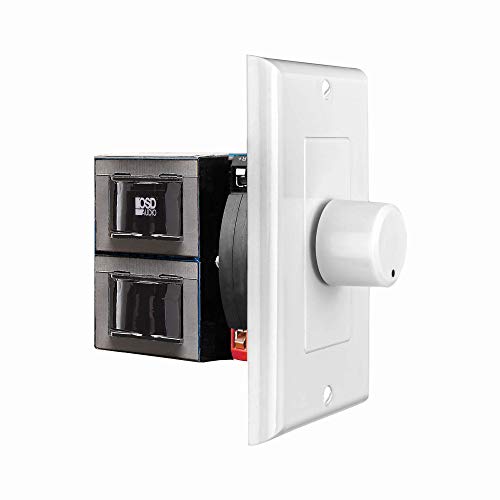
The SVC100 is an in‑wall passive speaker volume control rated for 100 watts per channel. It provides front-mounted jumpers to add multiple speaker pairs and an impedance matching feature to stabilize the load seen by the amplifier when multiple speakers are wired in parallel.
- Impedance Protection: Helps prevent receiver/amp overheating with parallel speaker wiring.
- Multiple Speaker Support: Adjustable jumpers allow adding up to eight pairs of 8Ω speakers.
- Independent Level Control: Volume adjustment for local speaker pairs in multiroom setups.
Pyle 4 Channel Speaker Selector Switch PSLSW4
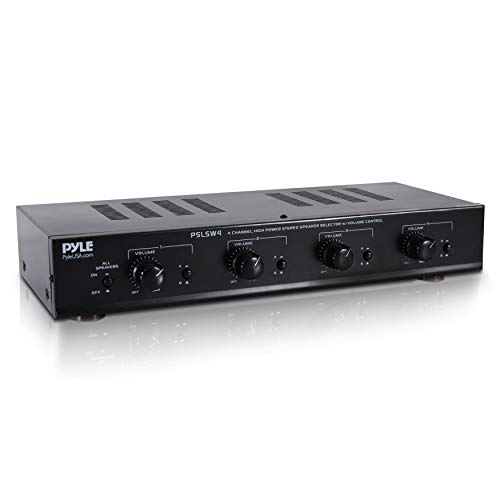
The Pyle PSLSW4 is a multi-zone speaker selector that supports up to four speaker pairs and includes independent volume controls for each zone. It accepts screw‑terminal speaker wiring and is intended for home theater or distributed audio environments where switching and per‑room level adjustment are needed.
- 4‑Zone Control: Activate/deactivate speaker pairs and adjust individual levels.
- Dedicated Volume Knobs: Per-zone attenuation for different room loudness preferences.
- Screw Terminals: Accepts up to 14AWG speaker wire for secure connections.
Buying Guide: How To Choose A Passive Speaker Volume Control
Selecting the right passive volume control depends on your system topology, desired connections, and priorities like signal integrity, impedance matching, and installation style.
Connection Types And Compatibility
- Balanced vs Single‑Ended: Balanced (XLR/TRS) reduces noise over long cable runs and suits pro monitors. Single‑ended (RCA) is common in consumer Hi‑Fi setups.
- Speaker‑Level Controls: In‑wall rotary controls and speaker selectors work at speaker level and include impedance matching; they connect directly to amplifier outputs and speaker wires.
- Inputs/Outputs: Confirm the control offers the physical connectors your source and speakers require (XLR, TRS, RCA, 3.5mm, speaker terminals).
Passivity And Signal Integrity
- No Gain Design: Passive units do not add amplification, preserving original tonal balance when source outputs are strong enough.
- Quality Potentiometers: ALPS or equivalent pots provide smoother tracking and reduced channel imbalance at low volumes.
- Balanced Pots And Wiring: Fully‑balanced potentiometers and quality connectors reduce interference and maintain clarity on long runs.
Power Handling And Impedance
- Speaker Power Rating: For speaker-level controls, check wattage ratings to match your amplifier and speakers.
- Impedance Matching: If you plan multiple parallel speakers or long runs, choose controls with impedance protection to avoid stressing the amplifier.
- Load On Amplifier: Passive controls introduce some attenuation; ensure your amplifier can drive the intended speaker load after any attenuation and wiring configuration.
Use Case And Installation
- Desktop/Studio: Small passive preamps with XLR/RCA and ALPS pots suit monitors and DACs on a desk.
- Multiroom/Home Theater: In‑wall rotary controls and multi‑zone selectors let you manage levels per room and safeguard amp loads.
- Portability: Compact metal‑cased passive controllers are useful for mobile rigs or temporary setups.
Comparison Perspectives
- Noise Performance: Balanced options reduce noise; choose balanced units if long cables or studio monitors are used.
- Precision Control: Look for ALPS or multi‑gang potentiometers for tight channel tracking and fine low‑level adjustment.
- Durability & Mounting: Metal housings and in‑wall frames matter for long‑term installations; rack or panel mounting may be preferable in studios.
Practical Tips
- Measure source output and amplifier sensitivity before choosing a passive control to ensure adequate headroom.
- When wiring multiple speakers, factor in impedance and use selectors or impedance‑matching controls to protect your amp.
- Prioritize connector type first (XLR vs RCA vs speaker terminals), then pot quality, then form factor for installation convenience.