
Best Pedal to Amp Cable Options for Clean, Quiet Signal Transfer
If you need reliable cables to connect pedals to amps, you want low noise, sturdy construction, and correct connector geometry. This guide highlights select guitar and pedal cables ideal for pedal boards, amps, and multi-instrument setups. Best for stage rigs, practice studios, or home recording, these picks optimize signal integrity and reduce noise across common guitar, bass, and effects chains. The following five cables balance durability, compatibility, and value for players seeking consistent tone with minimal interference.
| Product | Length | Best For | Why It’s a Fit |
|---|---|---|---|
| New Bee Guitar Cable 10ft | 10 ft | Electric guitar and bass players on stage | Low noise, high fidelity with oxygen-free copper conductors and double shielding. |
| Fender Professional Instrument Cable, 10ft | 10 ft | Pro setups needing durability | 95% oxygen-free spiral shielding, flexible PVC jacket, and reliable nickel-plated connectors. |
| JSAUX Guitar Cable 10 ft | 10 ft | Recording and live use with multiple gear | Thicker construction, multiple insulator shields, tangle-free nylon braid. |
| Aqdocvf Guitar Cable 10 ft | 10 ft | Onstage and studio setups | Rotatable copper casing, straight and right-angle options, colorful picks included. |
| MXR Patch Cable 6 in (3 Pack) | 6 in | Pedalboard patch connections | 20-AWG OFC wire, durable jacket, balanced tone for compact setups. |
New Bee Guitar Cable 10ft Electric Instrument Bass AMP Cord

Features include low noise high fidelity with 22AWG oxygen-free copper center conductors, high-density shielding, and PVC insulation for quiet operation. The cable uses 1/4″ straight and right-angle metal connectors; the L-shaped design helps on stage or near guitar stands. It is widely compatible with mixers, amplifiers, microphones, effect pedals, decoders, and electronic organs. Best for players who prioritize noise rejection and a secure, versatile connection in live or studio settings.
Best for: Electric guitarists or bass players performing live who need a longer, reliable cord with minimal interference. Caution: The product data emphasizes general compatibility; verify connector fit for your specific pedal and amp jacks to avoid fit issues.
Fender Professional Instrument Cable, Guitar Cable, Anti-Kink, 10ft, Black
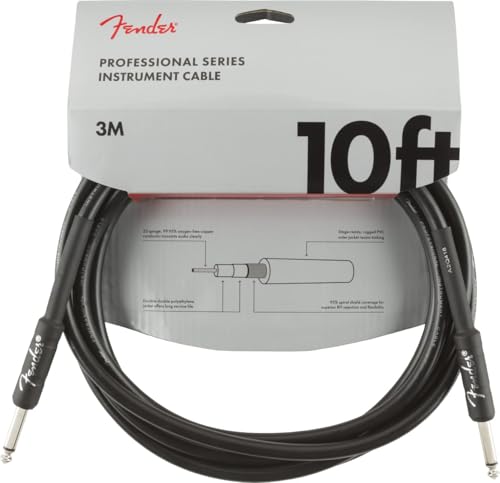
Fender’s 10-foot instrument cable is engineered to resist twisting and physical memory. It features a resilient 95% oxygen-free spiral shielding for reduced handling noise, a durable 8mm PVC jacket, a 22-gauge conductor for signal strength, and nickel-plated connectors. Best for players seeking rugged, road-ready performance with lower noise and consistent tone across pedalboards and amps. Choose this if you value brand-backed reliability and a flexible design.
Best for: Stage and studio players who want long-lasting cables with robust shielding. Limitation: Some users may prefer a lighter jacket for ultra-flexibility in tight pedalboard areas.
JSAUX Guitar Cable 10 ft

JSAUX offers a 10-foot guitar cable with multiple insulator shields for maximum isolation, reducing static and crackle for a clean signal. It uses high-quality oxygen-free copper and a durable nylon braided jacket to endure daily use and tangle resistance. Best for players needing a stable, noise-free signal in busy pedalboards or rehearsal spaces. Caution: Some users prefer higher flexibility for tight setups; the thicker build may affect pedalboard routing in very compact rigs.
Aqdocvf Guitar Cable 10ft

Aqdocvf supplies a 10-foot guitar cable with gold-plated straight and right-angle connectors, rotatable copper casing, and noise-reducing PVC insulation with high-density shielding. It ships with colorful picks for players who like a small accessory bundle. Best for performers who need secure connections with versatile plug orientations and onstage ease. Limitation: Some users may experience stiffness in extremely cold rehearsals due to the jacket material.
MXR Patch Cable 6 in | 15 cm – 3 Pack
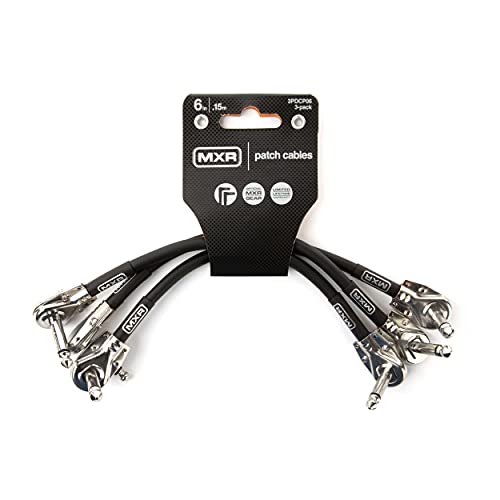
MXR patch cables are 6 inches long with 20 AWG OFC wire and a tough PVC jacket. They are designed to transmit warm, natural tone with clarity, even when many pedals are in the chain. Best for compact pedalboards where space is at a premium and you need clean signal transfer between pedals. Caution: Shorter length may require precise pedal placement; verify you have enough clearance on your board.
Buying Guide: Key Considerations For Pedal To Amp Cables
What length do you need? Longer cables add bulk and potential noise, but are essential for larger rigs. Short patches keep pedalboards tidy but may limit arrangement flexibility. Choose lengths based on your stage or studio setup and the distance between pedals, amps, and interfaces.
What about shielding and conductor quality? Cables with oxygen-free copper conductors and multiple shielding layers reduce noise and hum. For pedalboard use, a durable jacket and strain relief help withstand frequent stepping and coiling.
Connector orientation matters. Right-angle connectors save space on crowded pedalboards and can prevent plug interference with knobs. Straiht connectors remain common for amp inputs but may be less convenient in tight stages.
Durability versus flexibility. A rugged jacket and nickel-plated connectors improve longevity, while a flexible jacket helps with on-stage coiling and rapid setup. Nylon braided jackets resist tangling for repeat use.
Brand reliability and warranty considerations. Established brands often provide consistent performance, availability of replacement parts, and clearer compatibility with standard 1/4″ jacks used on most guitars, basses, and pedals.
Frequently Asked Questions
- What cable length should I choose for a pedalboard to amp setup? Choose length based on your stage layout; 6–10 feet is typical for most pedalboard-to-amp needs, with longer cables used for larger stages.
- Are patch cables different from instrument cables? Yes. Patch cables are shorter and designed to connect pedals; instrument cables connect guitars to amps or DI boxes. Use the appropriate type for each connection.
- Do I need shielded cables for pedalboards? Shielded cables reduce hum and noise, especially in environments with multiple electronic devices and wireless gear.
- Is a right-angle connector better for pedalboards? Right-angle connectors save space and reduce strain at the jack, which helps with tight setups and on-stage movement.
- Can I mix brands on my pedalboard? Yes, but consistency in shielding, conductor quality, and connector type helps maintain a uniform tone and minimize noise across the chain.
- Do cables affect tone? While cables can influence noise and high-frequency response, most tone differences are subtle unless the cable is faulty or unusually poor in shielding.