
Best Pedalboard for Acoustic Guitar: Easy Setup, Clean Power, and Portable Options
Answering the needs of acoustic guitar players seeking organization, reliable power, and travel-friendly solutions. This guide highlights five pedalboards that suit different stages—from practice rooms to live gigs—and explains who each is best for. Whether you’re layering reverb for shimmering acoustics or keeping cables tidy on the road, these options help you stomp with confidence.
Summary of selected products:
| Product | Best For | Key Benefit |
|---|---|---|
| GOKKO GKS-16 | Beginner to intermediate players | Compact size with sturdy steel construction |
| SONICAKE Acoustic Effects Pedal | Acoustic players needing onboard preamp and reverb | Analog preamp with digital reverb and XLR output |
| RVONE 14.5″x5.2″ | Travel-friendly setups | 10 isolated power outputs for clean power |
| STRICH MINI 15 | On-the-go performers | Built-in power and versatile 10-port power layout |
| GHOSTFIRE BABY1 | Lightweight needs | Ultra-light aluminum with DIY-friendly hardware |
GOKKO Small Guitar Pedal Board GKS-16
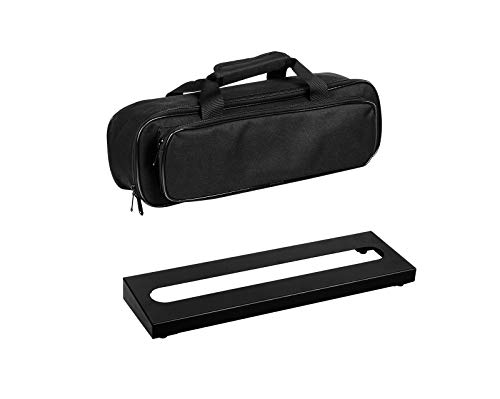
The GOKKO GKS-16 is a compact steel pedal board designed for 4–5 pedals, ideal for acoustic players seeking portability without sacrificing stability. Best for beginners or casual gigging players who want a durable, low-profile setup. The board tilts at about 8 degrees to ease stomping and precise switching. A downside is its smaller footprint, which may limit larger pedal collections.
SONICAKE Acoustic Guitar Effects Pedal With Analog Preamp

The SONICAKE unit combines an analog preamp with digital reverb, plus a built-in notch filter and mute controls. It’s best for acoustic players who want shaping and output options with an XLR balanced out. The high-impedance input helps preserve acoustic tone. Limitation: the integrated effects may not replace a dedicated pedal array for complex live rigs.
RVONE Guitar Pedal Board With Power Supply

RVONE’s 14.5″x5.2″ board includes a built-in power supply with 10 isolated DC channels, making it a strong choice for players who value clean power and expansion. It’s compact and suitable for beginners or home recording setups. A potential trade-off is that the board favors setups where rack-style power management matters more than oversized pedal arrays.
STRICH Mini 15 Pedal Board

STRICH MINI 15 provides a built-in power supply with 10 independent ports and a compact footprint. It’s best for players who travel and need reliable, noise-free power with short-circuit protection. Choose this if you want versatile power options and a lightweight build; avoid if you need more than a dozen pedals or larger-scale setups.
GHOSTFIRE BABY1 Pedal Board
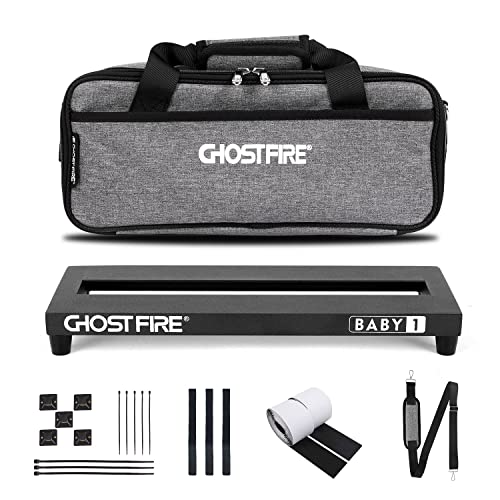
The Ghost Fire V series BABY1 is a lightweight 1.08 lb board measuring 13.7″x5.5″, designed for 3–4 pedals, with included cable ties, foot pads, and Velcro. Best for minimal rigs or vintage players who prioritize ultra-lightweight gear. Limitation: small size limits scaling for larger boards or future pedal acquisitions.
Buying Guide: Key Considerations For Acoustic Players
What should you look for when choosing a pedalboard for acoustic guitars? Start with size and weight to fit your live or home setup. Consider power needs: integrated supplies simplify cabling and reduce noise, but ensure the board can handle your planned pedal count. Build material matters for durability and transport—steel or aluminum offer different strength-to-weight ratios. Compatibility with existing cables, power adapters, and bags matters for quick gigs. Finally, plan for future expansion: a board that can grow with your effects chain saves time and money later.
What size should my pedalboard be?
Measure pedal widths and spacing to ensure a comfortable fit. If you often swap pedals, a slightly larger board with cable routing space reduces rearrangement time on stage.
Is built-in power important?
Built-in power supplies reduce cable clutter and can improve noise performance. Verify the number and type of outputs match your pedals (9V, 12V, 18V, and USB options are common).
What materials matter for travel?
Aluminum boards are lightweight and sturdy, while steel boards offer more rigidity and weight. Carry bags or cases with padding protect pedals during transport.
How important is ease of use on stage?
Look for tilt angles to aid stomping, quick-access latches, and simple cable management. A board with ample Velcro and included ties helps keep pedals secure during movement.
What if I plan to expand later?
Choose a board with extra space, additional power ports, and modular design. This minimizes future upgrades and simplifies reorganization during gigs.
Budget and durability considerations
Durability and weight often trade off with price. For frequent performers, investing in a robust, portable board reduces setup time and equipment failures on stage.
FAQ
- What is the best pedalboard for a small acoustic setup? A compact board with a built-in power supply is ideal for minimizing cables and setup time, such as the STRICH Mini 15 or GOKKO GKS-16 for very small rigs.
- Do acoustic players need a pedalboard with XLR output? If you use direct PA connections, a model with XLR output (like the SONICAKE unit) can simplify stage wiring and maintain signal integrity.
- Should I choose a lightweight board for travel? Yes. Light boards like Ghost Fire BABY1 or Ghost Fire SPL-1.5 options are easy to carry and set up quickly.
- Can a pedalboard improve tone for acoustic players? Pedalboards help organize effects and stabilize power delivery, which can reduce unwanted noise and maintain a consistent tone during performance.
- Is it better to buy a larger board now or later? If you anticipate adding pedals soon, choose a slightly larger board with expandable power options to avoid frequent upgrades.
- What maintenance is needed for pedalboards? Regularly check Velcro, tighten screws, and inspect power connections to prevent on-stage failures.