Best Pedals for Electric Guitar: Essential Options for Every Player
Finding the right pedals for electric guitar helps define your tone, whether you’re practicing at home, recording, or performing live. This guide highlights five versatile options that cover multi-effects, distortion, blues/overdrive, and tuning. Each pick is suited to different players: beginners seeking all-in-one versatility, live players needing dependable tones, or tone connoisseurs chasing specific textures. Read on for clear advantages, ideal use cases, and practical trade-offs.
Comparison At A Glance
| Product | Best For | Why It Stands Out | Limitation |
|---|---|---|---|
| MOOER GE100 | All-in-one tones and live gigging | 80 presets, 66 effects, drum patterns, loop and expression pedal options | Complex menu can require setup time |
| Flatsons KMF-1 | Studio and stage with rich cab/amp modeling | 77 effects, 18 amps, 18 cabs, advanced DSP | Bulk of features may overwhelm newcomers |
| Boss DS-1 Bundle | Classic rock and versatile distortion | Iconic tone with robust build and practical EQ | Limited to distortion family without extra effects |
| BOSS BD-2 Blues Driver | Blues and warm overdrive tones | Tube-like dynamics, simple controls | Not a multi-effects unit |
| Donner Tuner Pedal | Accurate tuning on stage or in studio | Wide range tuning, easy visibility | Does not add effect after tuning |
MOOER GE100 Multi-Effects Guitar Pedal

The MOOER GE100 targets players seeking a compact, feature-rich multi-effects solution. It includes 80 preset patches plus 80 user patches, eight effect modules, and a library of 66 effect types. An assignable expression pedal enhances real-time control, and a line-out mode offers good tone even without an amp. This is best for performers who want a wide tonal palette in a single pedalboard-friendly unit. A potential caveat is the learning curve to efficiently navigate the presets and functions.
Flatsons KMF-1 Guitar Pedal

The Flatsons KMF-1 prioritizes studio and stage versatility with advanced DSP simulation and a broad effects suite. It offers 77 effects across 8 modules, 18 amp models and 18 cabinet simulators, plus 50 preset patches for quick tone-starts. A built-in tuner, 30-second looper, 42 drum rhythms, and AUX IN for couch jams make it a strong option for players who want deep cab/amp modeling in one pedal. Beginners may benefit from focusing on preset tones first, as the feature set is expansive.
Boss DS-1 Distortion Bundle
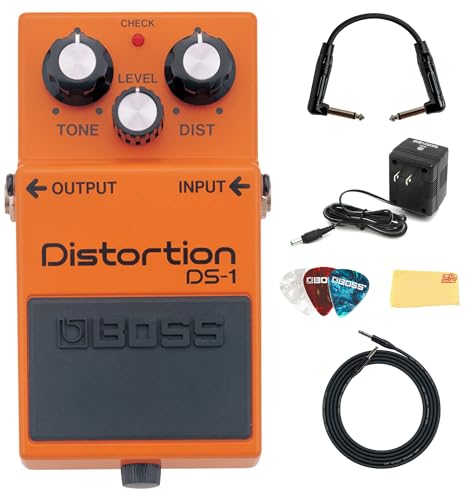
The Boss DS-1 Distortion Bundle centers on a classic distortion tone with reliable performance. The pedal delivers bright, cutting distortion with tight lows and smooth sustain, suitable for rock, punk, grunge, and hard rock. It’s versatile for shaping rhythm and lead tones, with a rugged all-metal chassis for touring use. This is a strong pick for players who want a dependable, traditional distortion voice without extra effects clutter. A potential limitation is that it is a single-effect pedal, so you’ll need additional pedals or a multi-effects unit for broader tonal variety.
BOSS SD-1 Super Overdrive

The BOSS SD-1 Super Overdrive delivers a distinct, classic overdrive tone widely used in rock and blues. Its straightforward controls make it easy to dial in subtle breakup to more saturated drive. It pairs well with boosters or other dirt pedals, expanding tonal options without complexity. It’s best for players who want a dependable, widely recognized overdrive voice that can stack with other pedals. A caveat: as a dedicated overdrive, it lacks built-in modulation, delay, or reverb—so you’ll need additional pedals for a fuller chain.
Donner Tuner Pedal, DT-1 Chromatic Guitar Tuner
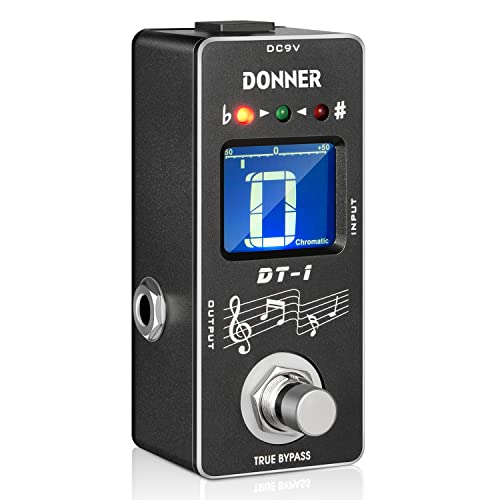
The Donner DT-1 chromatic tuner provides a wide tuning range from A0 (27.5 Hz) to C8 (4186 Hz) with a fast, precise mode and a bypass option to keep signal flow clean. Its large LED indicators and stage-friendly display improve visibility on brighter stages. The tuner is best for ensuring accurate pitch throughout performances, though it does not impart any effect once engaged. Use it as a reliable starting point for stage tuning or practice setups.
Buying Guide: Key Considerations When Choosing Guitar Pedals
What tonal goal do you have?
Decide whether you want an all-in-one solution (multi-effects), individual effects (distortion, overdrive, delay), or precision tuning. Multi-effects like the GE100 or Flatsons KMF-1 are ideal for players seeking versatility, while single-pedal options like DS-1, BD-2, and a dedicated Tuner address specific needs.
How important is cabinet and amp modeling?
If you record or perform without a full rig, consider pedals with robust amp/cab models (Flatsons KMF-1) to emulate a wide range of tones. These models help you achieve different vibes without carrying multiple amplifiers.
Are live performance features a priority?
Expression pedals, tuners, looper functions, and drum rhythms are practical for live sets. The MOOER GE100 adds expression control and built-in drum patterns, while the Flatsons KMF-1 offers a looper and an array of rhythms for on-stage texture.
Ease of use vs. depth of control
Some players prefer quick access to sounds via presets; others want deep editing for bespoke tones. The DS-1 and BD-2 provide straightforward, reliable sounds, whereas the GE100 and KMF-1 encourage deeper exploration of tonal possibilities.
Budget and stability considerations
Rugged builds and dependable power options matter for touring. The DS-1 and BD-2 are legacy favorites with proven durability, while multi-effects units may require thoughtful cable and power management on busy boards.
Practical testing tips
- Test gain staging with your usual guitar and amp setup to understand interaction with the pedal’s output.
- Check how presets respond to your playing dynamics, from clean to heavy picking.
- Ensure your power supply can handle the pedal’s draw and that expression pedals behave predictably.
FAQ: Quick Answers For Buyers
- What is a multi-effects pedal good for?
It provides a broad range of tones in one unit, useful for beginners and players who travel light. - Should I buy a dedicated overdrive or a multi-effects pedal?
Choose based on your core sound: if you mainly want overdrive tones, a dedicated pedal like BD-2 or SD-1 makes sense; for variety, a multi-effects unit may be better. - Do tuners belong on the pedalboard?
Yes, tuners are essential for live tuning; dedicated tuners offer fast, accurate reads with stage visibility. - Are amp/cab modeling pedals necessary for home recording?
Modeling helps simulate different rigs without physical amps, which is beneficial for home studios or silent practice. - Can a single pedal replace multiple pedals?
A high-quality multi-effects unit can replace several pedals but may compromise on individual pedal nuance compared to dedicated pedals.
Note: This article uses product features and descriptions provided for informational purposes. Specific performance details, compatibility, and warranties should be verified on the product pages before purchase.