
Best Percussion Instruments for Band: Top Picks for Schools and Players
Looking for reliable percussion instruments for a school band, youth group, or community ensemble? This guide highlights five top picks that balance durability, playability, and sound quality. Each option fits different skill levels and settings, from classroom exploration to performance-ready pieces. The top choices are best for newcomers seeking an engaging rhythm foundation, students needing portable options, and educators assembling a versatile percussion section.
| Product | Best For | Why It Stands Out |
|---|---|---|
| POPLAY 6 PCS Jingle Bells | Beginner to intermediate groups | Bright, adjustable bell bracelets with durable construction for active play. |
| TIPTAP Hand Percussion Triangle | Orff pedagogy and classroom rhythm | Clear tone, engaging detachable hanger, easy to handle for kids and beginners. |
| 13 Pcs Wooden Musical Instruments (KETAR) | All-in-one rhythm kit | Variety of instruments in a single set with storage bag for easy transport. |
| Melissa & Doug Band-in-a-Box | Young learners and group activities | Varied tones and a wooden crate for organization and portability. |
| EASTROCK 8″ Guiro Shaker | Accent percussion and texture | Stainless steel construction with a resonant scrape pattern and comfortable grip. |
POPLAY 6 PCS Jingle Bells, Adjustable Wrist Band, Multicolor

This set uses four small bell units per wrist band to deliver a bright chime. Best for beginner groups or youthful performers who want a rhythmic, festive sound during parades, festivities, or classroom activities. The 8.3-inch adjustable bands fit both children and adults, making them versatile for mixed-age ensembles. A potential limitation is that the bells may require frequent re-tightening during vigorous movement in larger performances.
Standard of Excellence Comprehensive Band Method: Drums & Mallet Percussion

This educational resource focuses on mallet percussion and drum techniques for progressing students. Best for school programs or private studios looking for a structured method to teach rhythm and cadence progression. It’s selected for its clear instruction framework that supports early-to-mid level percussionists. The limitation is that this item is a book and does not include sound-producing instruments directly, so it works best as a supplemental curriculum alongside hands-on kits.
TIPTAP Hand Percussion Triangle, 6IN

High-quality steel triangle with a striker and a detachable hanging ring provides bright, precise tones. Best for Orff-based classrooms and beginner ensembles seeking a clear tonal reference. The yellow hanger encourages engagement and hands-on practice, but the instrument may require careful handling to prevent mis-striking during fast passages.
13 Pcs Wooden Musical Instruments (KETAR)

This 13-piece wooden set covers tambourine, hand drum, maracas, guiro, wood block, chime bar, and more. Best for families, classrooms, or beginner bands that want a portable, all-in-one rhythm kit. Durable wood construction supports long-term use, and the included storage bag aids organization. A potential trade-off is that some metallic components may require periodic maintenance to keep the sound consistent.
Melissa & Doug Band-in-a-Box Clap! Clang! Tap!
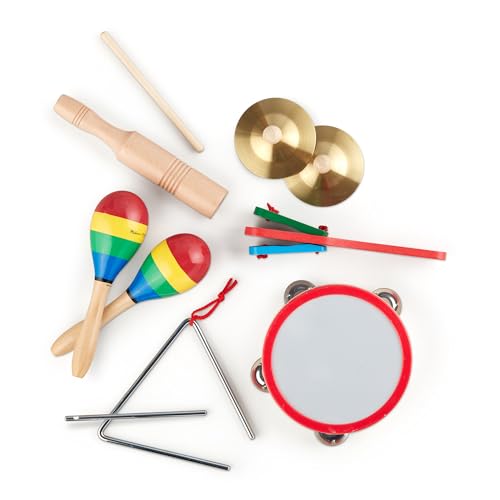
A 10-piece set designed to get kids moving and listening to different tones. Best for early learners and group activities in classrooms or camps. The crate helps keep instruments organized for easy rotation. Limitation: some items may be lightweight and require gentle handling to preserve tone and longevity during heavy use.
EASTROCK 8″ Guiro Shaker

Stainless steel guiro with a scraper provides a rich scrape sound and strong resonance. Best for rhythm sections needing texture and color in their percussion. The instrument’s robust construction supports long-term use. A limitation is that some players may require a brief adjustment period to maximize scrapes and resonance across different tempos.
Buying Guide
What should you consider when choosing percussion instruments for a band or classroom?
- Skill level and age: Select instruments that match the players’ experience and build confidence with an approachable learning curve.
- Durability and safety: Look for sturdy materials, secure hardware, and non-toxic finishes, especially for younger players.
- Portability and storage: Kits with a storage bag or crate help keep equipment organized for practice and travel.
- Sound variety and adaptability: A mix of pitched and unpitched instruments expands teaching possibilities and performance options.
- Maintenance: Consider ease of cleaning, restringing, or tightening to maintain consistent sound over time.
Practical buyer questions
- Is the instrument suitable for mixed-age groups? Yes, choose adjustable or versatile items like wrist bells or wooden kits.
- Do you need a full classroom kit or individual pieces? A 13-piece wooden set covers a broad range, while single items work well for incremental upgrades.
- How important is portability? For schools and ensembles that travel, compact sets with bags are advantageous.
- Are tone and resonance critical? Look for items with clear, durable sound production, such as steel triangles or well-made guiros.
- What about safety and handling? Prioritize durable materials and secure fittings to minimize hazards during vigorous playing.
- How should you incorporate these into curriculum? Pair instructional methods with hands-on practice using the included or recommended books and guides.
FAQ
- What is the best starter percussion instrument for a band? A versatile kit like the wooden 13-piece set provides diverse sounds and ease of transport.
- Which instrument helps teach rhythm clearly? The triangle and guiro offer distinct, easily recognizable percussion sounds, suitable for early rhythm training.
- Can these instruments be used for performance? Yes, several items provide reliable tones suitable for school concerts and recitals.
- Are adjustable wrist bells safe for younger children? When used with supervision and proper fitting, they are generally safe for ages that can handle light motion.
- What should educators consider when building a percussion section? Focus on a balance of pitched and unpitched options, durability, and ease of teaching rhythm concepts.