
Best Phosphor Bronze vs 80/20 Guitar Strings for Acoustic Players
If you want a clear, objective comparison between phosphor bronze and 80/20 bronze acoustic guitar strings, you’re in the right place. This guide highlights five relevant options to help you pick the tone, feel, and durability that match your playing style. Best for beginners may lean toward lighter gauges, while players chasing vivid projection may prefer brighter 80/20 windings. The summaries focus on who each string set is best for and why it was selected.
| Product | Type | Best For |
|---|---|---|
| Ernie Ball Earthwood Medium Light 80/20 Bronze Acoustic Guitar Strings | 80/20 Bronze | Bright, balanced tone; versatile for strumming and fingerstyle |
| Elixir Acoustic 80/20 Bronze NANOWEB | 80/20 Bronze | Long-lasting tone, smooth feel, stage use |
| D’Addario EJ11-3D 80/20 Bronze Acoustic Guitar Strings, Light 12-53 | 80/20 Bronze | Classic bright projection; reliable studio and stage work |
| D’Addario EJ13 80/20 Bronze Acoustic Guitar Strings, Custom Light 11-52 | 80/20 Bronze | Balanced brightness; easy playing for beginners |
| D’Addario EJ15 Phosphor Bronze Acoustic Guitar Strings, Extra Light 10-47 | Phosphor Bronze | Warm, balanced tone; popular for diverse genres |
Ernie Ball Earthwood Medium Light 80/20 Bronze Acoustic Guitar Strings

Features: Bright, balanced tone with excellent projection and clarity. Medium Light gauge uses plain steel strings (.012, .016) and phosphor bronze wound strings (.024, .032, .044, .054). Wound strings are 80% copper, 20% zinc wire around a high-carbon steel core. This set is best for players who want bright attack and good overall projection without sacrificing warmth. Best for players who prefer traditional bright acoustic tone with reliable intonation across the fretboard. A limitation: the brighter overtones can feel slightly harsher to players who favor a mellower voice or fingerstyle nuances on delicate passages.
Elixir Acoustic Strings 80/20 Bronze NANOWEB
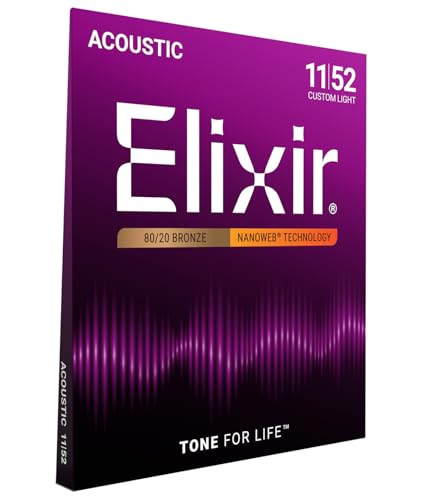
Features: Longest-lasting tone with 80/20 bronze wrap and NANOWEB protection. Bright, focused tone with a smooth feel. Trusted by many players for consistency on stage, studio, or home practice. Stable and resistant to sweat, corrosion, humidity, and rust, helping maintain initial tone longer. Best for players who want durable strings with bright projection and minimal finger noise. Caution: price is higher than standard uncoated sets, which may be a consideration for budget-conscious players.
D’Addario EJ11-3D 80/20 Bronze Acoustic Guitar Strings, Light 12-53

Features: Precision wound over a hexagonal high carbon steel core; bold, bright sound with crisp projection. The 80/20 bronze wrap provides classic acoustic brightness. This is a staple choice for players seeking a traditional, bright acoustic voice. Best for those who value a strong, cutting tone for blues, country, and rock rhythm parts. Limitation: the brighter wrap can require more careful handling to avoid excessive glare in some mic setups.
D’Addario EJ13-3D 80/20 Bronze Acoustic Guitar Strings, Custom Light 11-52
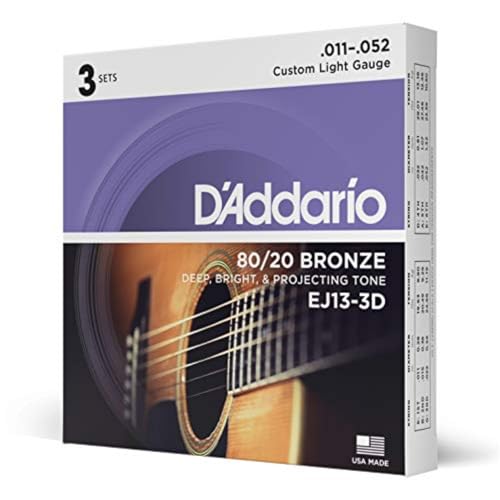
Features: Precision wound over hexagonal high carbon steel core with bold, bright projection. The 80/20 bronze wrap was originated in the 1930s and remains a classic choice for acoustic players seeking a lively, crystalline tone. Best for players who want maximum brightness and strong midrange clarity. Caution: Long-term bright tone can feel brittle on very soft-playing styles or delicate fingerpicking if not balanced with technique.
D’Addario EJ15 Phosphor Bronze Acoustic Guitar Strings, Extra Light 10-47

Features: Phosphor bronze wrap wire on a hexagonal high-carbon steel core; warm, balanced tone across genres. Phosphor bronze strings are known for a mellower, more complex warmth compared to 80/20 bronze. Best for players who want a bit more warmth and a traditional folk, bluegrass, or singer-songwriter voice. Limitation: less snap and brightness than 80/20 sets, which may reduce perceived projection in small rooms or crowded live mixes.
Buying Guide
What’s the core difference between phosphor bronze and 80/20 bronze?
Phosphor bronze strings typically offer a warmer, more balanced tone with strong midrange and a smoother top end. They are favored by many folk and bluegrass players for fingerpicking. 80/20 bronze strings emphasize brightness and projection, delivering a crisp attack with more overture and spark, which suits strumming, rhythm parts, and singing over the guitar.
How does playing feel differ?
Phosphor bronze often feels a touch softer under the fingers and may sound mellower at first, smoothing out with playing. 80/20 strings tend to feel brighter and can sound a bit stiffer initially but open up quickly as they settle in. Gauge affects feel significantly; lighter gauges reduce finger fatigue but may break sooner under aggressive picking.
How should you pick based on guitar and genre?
- Acoustic folk, fingerstyle, and warm vocal accompaniment: consider phosphor bronze like EJ15 for warmth and balance.
- Bluegrass, flat-picking, or bright stage presence: 80/20 sets such as EJ11-3D or Elixir NANOWEB for brightness and projection.
Durability and maintenance considerations
Coated options (like Elixir NANOWEB) tend to resist corrosion and maintain tone longer but cost more. Plain-brass wrapped sets (80/20) offer classic brightness but may require more frequent changes in humid conditions. Regular cleaning helps extend string life for all types.
Which set is best for beginners?
Beginners often prefer lighter gauges that are easy on the fingers. Extra-light phosphor bronze such as EJ15 or lighter 80/20 sets like EJ11-3D can reduce finger fatigue while maintaining sufficient tone for learning chords and strumming patterns.
Quick recommendation table
| Goal | Best Choice |
|---|---|
| Bright, cutting tone for live gigs | 80/20 sets (Elixir NANOWEB or EJ11-3D) |
| Warm, balanced voice for fingerstyle | EJ15 Phosphor Bronze |
| Long-lasting tone with corrosion resistance | Elixir NANOWEB 80/20 |
FAQs
- What’s the main tonal difference between phosphor bronze and 80/20 bronze?
Phosphor bronze tends to be warmer and more balanced; 80/20 bronze is brighter and more projecting. - Which strings are best for fingerstyle playing?
Phosphor bronze sets often suit fingerstyle better due to their warmth and balance, such as EJ15. - Are coated strings worth the extra cost?
Coated strings last longer and resist corrosion, but they can feel slick at first and may cost more. - Do gauge changes affect tone significantly?
Yes. Lighter gauges are easier to play but produce less volume and brightness; heavier gauges offer more projection but require more finger strength. - Which brand tends to last longest in humid climates?
Coated options like Elixir NANOWEB typically resist humidity better than uncoated sets. - Can I mix phosphor bronze and 80/20 on the same guitar?
Mixing is possible but will produce an uneven overall tone across strings, so it’s generally not recommended for beginners.