Best Piezo Pickups for Acoustic Guitars: Transparent Tone and Easy Installation
Answering the most common buyer question: which piezo pickup best preserves your guitar’s natural tone while offering simple installation and reliable performance? This guide highlights five well-suited options for various players—from hobbyists to stage performers—focusing on tone transparency, ease of use, and installation flexibility. The top picks span passive under-saddle, contact, stick-on, and multi-element designs to suit a range of guitars and play styles.
| Product | Type | Best For |
|---|---|---|
| Journey Instruments Passive Piezo Acoustic Pickup – EP001K | Passive Elem./Ceramic | Players seeking German-made quality and a transparent, battery-free signal |
| PAGOW Pickups Piezo Transducer 3-in-1 | 3-in-1 Transducer | Multitool players wanting multiple instrument compatibility |
| Kamonda Soft Strip Sonicore Under Saddle | Under-Saddle Piezo | Electrics-ready, EQ control with under-saddle placement |
| GOGHOST Piezo Contact Pickup | Contact/Surface Mount | Easy install, no drilling, quick upgrade |
| KNA UP-2 Universal Stick-On Piezo | Stick-On/Surface Mount | Low-effort installation on nearly any acoustic |
Journey Instruments Passive Piezo Acoustic Pickup – EP001K
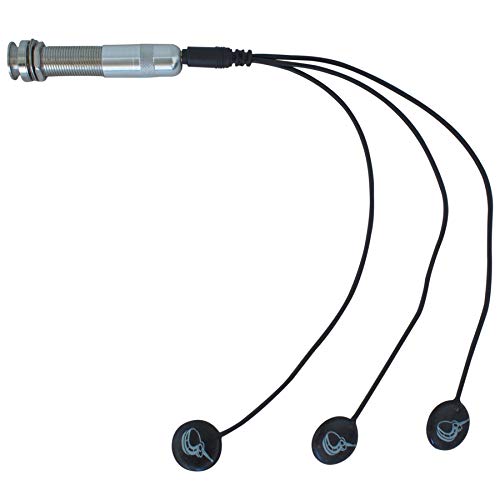
Best for: Players who want a battery-free, transparent tone with German-made components. This 3-element arrangement aims to deliver a balanced, natural acoustic response with a wide frequency range (22 Hz–18 kHz). Installation is described as easy and upgradeable, making it suitable for DIY upgrades without complex wiring. Caution: as a passive, ceramic-piezo design, the output may require proper preamp or impedance matching for optimal amplification on some amps.
PAGOW Piezo Transducer 3-in-1
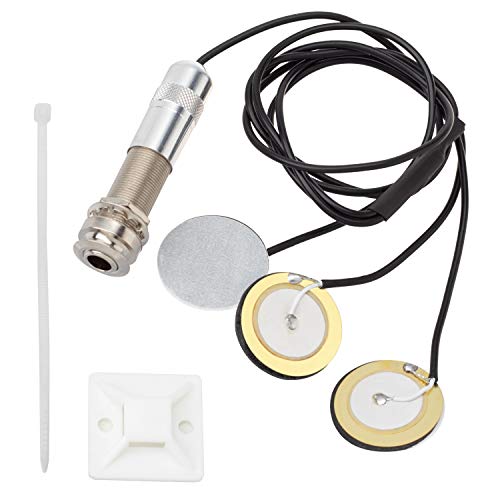
Best for: Musicians who want a versatile, compact pickup system that can be used across multiple instruments. It includes three piezo elements in a single package and comes with a self-adhesive design for quick placement. Limitation: small components and connections may require careful handling, especially on instruments with curved bodies or delicate finishes.
Kamonda Soft Strip Sonicore Under Saddle

Best for: Players looking for an under-saddle option with EQ potential. The Sonicore under-saddle design is 80 mm long with a 2 mm diameter and can be mounted beneath arched bridges. Caution: saddle placement and guitar body construction can influence tone, so careful installation is advised to avoid unwanted buzzing or intonation changes.
GOGHOST Piezo Contact Pickup

Best for: Players seeking a compact, surface-mount solution with a long cable (10.7 ft) for flexible placement. It installs quickly and requires no batteries or permanent modifications, turning any acoustic instrument into an amplified performer. Limitation: surface-m mount systems may pick up body vibrations differently depending on placement and guitar construction.
KNA UP-2 Universal Stick-On Piezo

Best for: Players who want a simple, no-modification solution with onboard volume control. The stick-on piezo design captures the natural tone while keeping aesthetics minimal. Caution: stick-on adhesives may vary in durability across finishes or sensitive finishes; ensure clean application and test before permanent use.
Buying Guide: Piezo Pickups For Acoustic Guitars
- What’s your installation style? Under-saddle pickups require some guitar modification, while stick-on and contact pickups offer non-permanent options. Choose based on whether you want a permanent upgrade or a temporary setup.
- How transparent should the tone be? Passive ceramic piezos generally preserve natural acoustic vibes better, but may need a preamp for sufficient output. Active preamps can shape tone more aggressively but add battery needs.
- What instruments will you amplify? If you play multiple stringed instruments, a 3-in-1 system can be advantageous; otherwise, a dedicated guitar pickup may provide cleaner impedance matching.
- How important is EQ control? Under-saddle and preamp-equipped systems offer EQ controls to tailor bass, midrange, and treble. If you perform live, consider built-in volume or EQ to minimize external gear.
- Is installation durability a concern? Non-permanent options (stick-on, contact) are easy to remove or reposition but may be less secure under heavy playing or on certain finishes. Permanent options can provide stable performance but are harder to revert.
- Output and impedance considerations? Piezo outputs vary; some require a buffer or preamp to prevent treble loss or boomy bass. Plan for proper amplification and impedance matching with your amp or DI box.
Frequently Asked Questions
- Do piezo pickups require batteries? Most passive piezo pickups do not require batteries; active systems rely on built-in preamps or external power.
- Will a piezo pickup change my guitar’s action? Under-saddle installations can slightly affect string height if installation shifts the saddle or bridge components. Choose a non-permanent option if you want to avoid alterations.
- Can piezo pickups be used on both acoustic guitars and other instruments? Some designs are versatile (3-in-1 transducers) and can be used on multiple instruments, but performance varies by instrument construction and body resonance.
- What should I consider when mounting a stick-on pickup? Clean surfaces, proper alignment, and careful test placements minimize feedback and tone changes while preserving the guitar’s finish.
- Do piezo pickups require preamps? Not always, but a preamp or DI with impedance matching often improves signal quality and tone consistency across different amps and PA systems.
- Which option is best for beginners? Non-permanent solutions like contact or stick-on pickups are typically easiest for first-time setups and offer quick, reversible amplification.