
Finding The Right Platform affects bass clarity, reduces vibration, and improves overall speaker imaging. Below is a quick comparison table of the most relevant speaker platforms and isolation options selected for common home studio, home theater, and desktop setups.
| Product | Type | Best For |
|---|---|---|
| Sound Addicted VibeBoss P10 | Subwoofer Isolation Platform | 8–10″ Subwoofers |
| AlloverPower 2-Pack 3-Layer Pads | Speaker/Sub Isolation Pads | Studio Monitors 8–10″ |
| Sound Addicted VibeBoss P5 (2Pcs) | Desktop/Monitor Isolation Pads | 5″ Studio Monitors |
| Pyle Sound Dampening Riser PSI15 | Universal Speaker Riser | Large Monitors & Subwoofers |
| PERLESMITH Universal Speaker Stands PSSS2 | Floor Speaker Stand | Bookshelf/Satellite Speakers |
Sound Addicted VibeBoss P10 – 8–10″ Subwoofer Platform
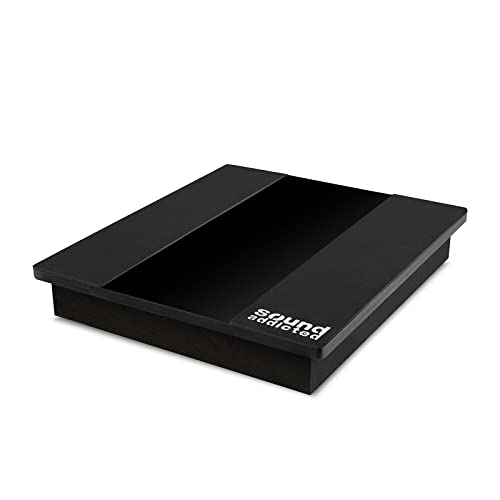
This platform is designed as a subwoofer isolation riser. The construction combines high-density foam, EVA material, and an MDF board to isolate bass energy from the floor and structure. Its dimensions (13.7″ x 15.7″ x 2.5″) suit most 8–10 inch subwoofers, helping to reduce vibration transmission and deliver cleaner low-frequency response. The pad is intended for placement under the subwoofer to dampen cabinet-to-floor coupling and reduce muddy bass in living rooms or small studios.
2-Pack 8”–10” Studio Monitor Noise Isolation Pads – AlloverPower

The AlloverPower set is a 3-layer acoustic stand combining shock-absorbent foam, a non-slip fibreboard base, and an anti-vibration top layer. Sized at approximately 15.5″ x 13″, these pads are marketed for 8–10 inch studio monitors and subwoofers. The design focuses on reducing desk- or floor-borne vibration and increasing clarity by isolating the speaker from the supporting surface. Includes two pads for stereo setups or dual subs.
Sound Addicted VibeBoss P5 – 5″ Speaker Isolation Pads (2Pcs)

Designed for 5 inch studio monitors, this two-pack provides thick sound-dampening foam combined with a small MDF board for stability. The pads aim to eliminate vibrations that travel into the desk or shelf, improving midrange clarity and imaging for nearfield monitoring. Their compact footprint makes them suitable for tight desktop workspaces and small home studios.
Pyle Sound Dampening Speaker Riser PSI15 (15″ x 15″)

The Pyle riser is a universal platform made from high-density engineered foam and a rubber base pad. At 15″ x 15″ x 1.8″, it accommodates larger monitors, shelf speakers, and small subwoofers. Its engineering targets reduction of unwanted resonance and improved bass clarity by creating a decoupling layer between speaker and supporting surface. The design emphasizes durability and broad compatibility across brands and models.
PERLESMITH Universal Floor Speaker Stands PSSS2

These adjustable floor stands extend from 33.3″ to 45.1″ and support bookshelf and satellite speakers up to 11 lbs. The stands include an adjustable width (4.5″–9″) for mounting rectangular enclosures, a twist-lock for quick height changes, and non-slip foot pads for floor protection and stability. Use these stands to position speakers at ear level for improved soundstage and imaging in living rooms and home theaters.
Buying Guide: How To Choose The Best Platform For Your Speaker
Choosing the proper platform depends on speaker size, placement, room type, and the specific acoustic problem you want to solve.
- Speaker Size And Weight: Match pad or stand capacity to your speaker’s dimensions and mass. Subwoofers and larger monitors require thicker, denser platforms; small nearfield monitors can use compact foam pads or clamp stands.
- Isolation vs. Decoupling: Isolation pads (foam + rubber) absorb cabinet vibrations; decoupling platforms (MDF or rubber with foam) lift the speaker to prevent structural transmission. Subwoofers benefit most from decoupling to reduce floor-borne vibration.
- Material And Density: High-density foam, EVA, or engineered foam gives measurable vibration damping. MDF or rigid top layers improve stability and prevent sagging under weight.
- Surface Contact And Non-Slip Features: Look for non-slip bases or rubber pads to keep the speaker in place and prevent movement during playback.
- Adjustability And Height: For imaging and listening position, stands with height adjustment let you place tweeters at ear level. For desktops, clamp or short stands save space while offering isolation.
- Footprint And Room Placement: Consider platform size relative to shelf or desk depth. Large pads can fit multiple cabinet sizes; smaller pads are better for tight setups.
- Stereo Pairing: Use matched pads or stands for both speakers in a stereo setup to preserve tonal balance and imaging.
- Vibration Load And Subwoofers: Subwoofers generate more energy; choose platforms designed specifically for subs or thicker, multi-layer pads to avoid energy transfer to the room structure.
- Durability And Build Quality: Long-term performance requires materials that don’t compress excessively over time. MDF cores or reinforced foam maintain isolation characteristics longer.
- Room Acoustics Considerations: Isolation helps with structure-borne vibration but won’t replace room treatment. Combine platforms with bass traps and absorption for better low-frequency control.
Comparison Perspectives
- Subwoofer-Focused: Choose platforms with thick multi-layer construction and rigid cores (e.g., sub-specific isolation pads) to decouple heavy bass from floors.
- Nearfield Studio Monitors: Opt for compact foam pads sized to the monitor footprint that reduce desk vibrations and angle the speaker for proper toe-in.
- Floor-Standing Or Bookshelf Optimization: Use adjustable floor stands when height and placement relative to the listener matter more than simple decoupling.
- Budget vs. Performance: Basic foam pads provide audible improvements for low cost; higher-end platforms and stands add adjustability, durability, and often better isolation under load.