
Best Podcast Headset With Microphone for Clear Recordings
Answering the search intent directly, this guide highlights five podcast-friendly headsets and mics that balance clear voice capture with comfort. It helps for beginner podcasters, streamers, and remote interviewers who need reliable audio without complex setup. Each pick is explained with who it suits, why it’s chosen, and a practical caveat. A quick comparison table lists the essentials to help you decide at a glance.
Comparison Table
| Product | Best For | Connectivity | Key Benefit | Notable Limitation |
|---|---|---|---|---|
| Audio-Technica BPHS1 Broadcast Stereo Headset | Voice-focused podcasts | 3.5mm/USB (via adapter) | Closed-back design with clear vocal reproduction | Bulkier for mobile use |
| MAONO AU-A04H USB Mic Kit | Studio-quality voice with minimal setup | USB | High-resolution 192kHz/24bit sound | Requires USB-powered device |
| Zoom ZDM-1 Podcast Mic Pack | Out-of-the-box podcasting | XLR microphone, headphones | Dynamic mic tailored for voice | Requires audio interface or mixer |
| talomen Studio Monitor Headphones | Critical listening and monitoring | Wired | Detachable boom mic for voice capture | Not a standalone USB mic |
| Logitech H390 | Remote interviews and calls | USB-A | Rotating noise-canceling mic and inline controls | Built-in mic quality may lag premium mics |
Audio-Technica BPHS1 Broadcast Headset

The BPHS1 is designed for voice-forward recordings with a dynamic cardioid boom mic. It uses closed-back circumaural ear cups to minimize background noise, making it suitable for quiet home studios or field work where crowd noise may be present. Neodymium magnets support high output and detailed sound reproduction for clear voice intelligibility.
Best for: podcasters who need strong vocal clarity in semi-noisy environments and a durable build. It is a strong choice when you want a single solution for monitoring and speaking.
Limitations: It is bulkier than compact USB mics and may feel cumbersome for long mobile sessions.
MAONO AU-A04H USB Microphone Kit
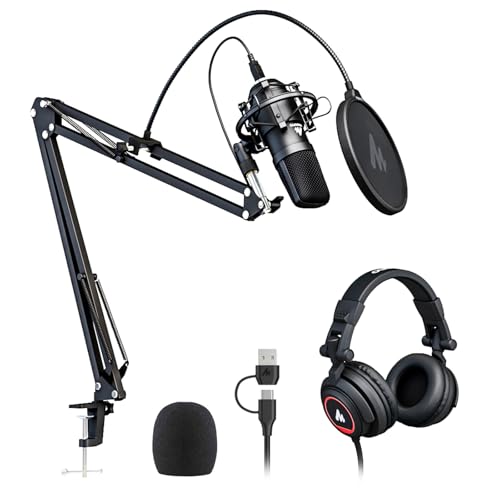
This kit pairs a 16mm condenser mic with an included USB interface, offering 192kHz/24-bit recording with a broad 30Hz-16kHz frequency range. It provides a plug-and-play experience with no extra drivers, plus double-shielding on the USB cable to reduce interference. It suits newcomers and solo creators who want crisp vocals with minimal setup.
Best for: podcasters and streamers who want a compact, all-in-one USB solution with good vocal fidelity.
Limitations: USB-only setup means it may not integrate easily into XLR-based studio rigs or advanced multi-mic configurations.
Zoom ZDM-1 Podcast Mic Pack
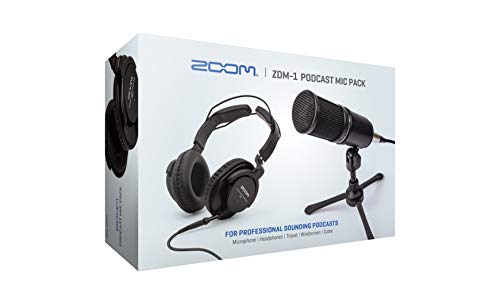
This bundle includes a dynamic microphone, closed-back headphones, a tabletop stand, windscreen, and an XLR cable. The dynamic mic is optimized for voice, making it suitable for podcasters and streamers who want a ready-to-record package. The headphones enable clear monitoring of recordings.
Best for: podcasters who want an all-in-one starter kit with a dedicated recording path and clean voice capture.
Limitations: The setup relies on an external audio interface or mixer for full XLR usage, which adds to the learning curve and cost.
talomen Studio Monitor Headphones
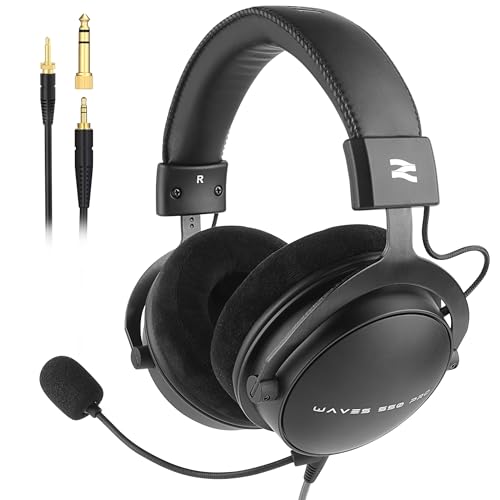
These wired over-ear headphones are engineered for accurate monitoring with clear mids and balanced highs. The detachable boom microphone adds voice capture for podcasts, broadcasts, and streaming. They are a practical choice for those who need professional monitoring along with a voice mic in a single package.
Best for: creators who require precise listening and an integrated microphone option for recording and commentary.
Limitations: The boom mic is detachable, which can reduce convenience for quick, hands-free use when not recording.
Logitech H390 Wired Headset

This USB-A headset emphasizes clear calls with a rotating noise-canceling mic and inline controls for volume and mute. The digital stereo drivers support music and voice, making it versatile for remote interviews, meetings, and casual podcasting. It is a straightforward, affordable option for entry-level setups.
Best for: budget-conscious podcasters who want plug-and-play USB compatibility and simple controls.
Limitations: The mic quality may be less robust for professional voice work compared with dedicated broadcast mics.
Buying Guide
What type of microphone suits your podcast style? Consider dynamic mics for strong voice isolation in untreated rooms, or condenser mics for richer nuance if your space is well treated.
What connectivity fits your workflow? USB mics are easiest for beginners. XLR mics require an audio interface or mixer but offer greater flexibility and upgrade paths.
Do you need monitoring? Headphones with a dedicated mic or a detachable boom can help you monitor levels and avoid feedback during editing and live sessions.
How portable is your setup? For on-the-go recording, compact USB mics or headset bundles are generally more practical than bulky broadcast headsets.
What’s your budget and expansion plan? Start with a complete kit if you want minimal setup, or pick individual components that you can upgrade over time as your needs grow.
Frequently Asked Questions
- What is the difference between a dynamic and a condenser microphone for podcasting?
Dynamic mics tend to be more forgiving in untreated rooms and emphasize the voice. Condenser mics capture more detail and range but require better room treatment.
- Is a USB microphone better than an XLR microphone for beginners?
Yes for beginners. USB mics plug into a computer with minimal setup, while XLR mics require an interface but offer higher quality and flexibility.
- Should I use headphones while recording a podcast?
Yes. Monitoring with headphones helps you hear plosives, levels, and background noise, improving recording quality.
- Can I start a podcast with any headset?
Headsets with good voice reproduction and a reliable mic work best. For higher quality, pair a separate mic with closed-back headphones.
- What should I consider when choosing a mic setup for interviews?
Look for a headset or mic with clear voice transmission, minimal handling noise, and the ability to isolate sound in shared spaces.