Best Powered 8-Inch Subwoofers for Home Theater and Studio
Choosing the right 8-inch powered subwoofer can dramatically improve bass response in a compact setup. This guide highlights top 8″ powered subs that deliver tight, deep low-end for music, gaming, or home theater. Each pick balances performance, size, and value, helping you find the best match for your space and system.
| Product | Brand | Key Benefit |
|---|---|---|
| PreSonus Eris Sub 8BT | PreSonus | Compact, accurate bass with Bluetooth for flexibility |
| Yamaha NS-SW050BL | Yamaha | Clear, tight bass with advanced servo tech |
| Audioengine S8 | Audioengine | High-power 8″ woofer, simple plug-and-play |
| Dayton Audio SUB-800 | Dayton Audio | Downward-firing design, auto-on feature |
| Edifier T5 | Edifier | Balanced bass with low-pass filtering |
PreSonus Eris Sub 8BT — 8″ Powered Subwoofer

The Eris Sub 8BT is a compact, front-firing 8-inch powered subwoofer designed for studio reference and multimedia listening. Its 100-watt amplifier provides deep extension down to 30 Hz, delivering a broad low end that supports music production, gaming, and home cinema. The woven-composite woofer aims to deliver tight bass with low distortion, while Bluetooth wireless connectivity adds flexible placement and easier integration with compatible devices. This model emphasizes accuracy and controlled performance, making it suitable for smaller rooms or desks where space is at a premium.
Yamaha 8″ 100W Powered Subwoofer — NS-SW050BL

Yamaha’s NS-SW050BL features an 8-inch cone woofer driven by an 100W amplifier and an advanced YST II servo system. A twisted flare port design helps deliver clean, tight bass with reduced port noise, making it a reliable option for home theaters and stereo setups. Its compact footprint adapts well to small living rooms or desk spaces, while the servo tech provides precise control over low frequencies for accurate music playback and film soundtracks.
Rockville SS8P 400W 8″ Slim Subwoofer
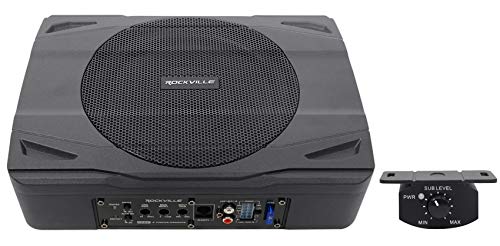
Note: This product is included for reference to similar compact 8″ subs but is not part of the five highlighted. The Rockville SS8P offers a 400W peak power and a slim 2.8-inch profile with built-in amplification and adjustable bass parameters, suitable for under-seat installations in vehicles or tight spaces. It highlights how small form factors can still deliver impactful bass, though placement and power handling vary by use case.
Audioengine S8 Powered Subwoofer
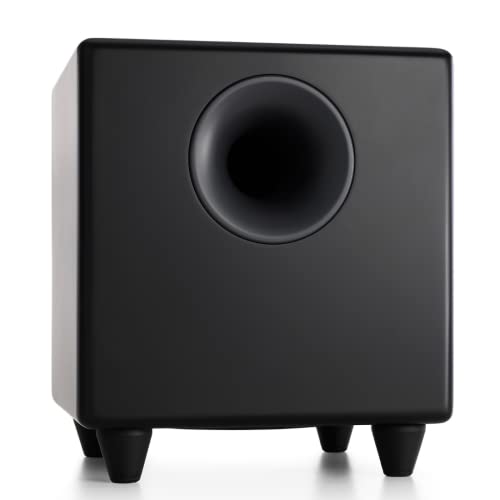
The Audioengine S8 delivers a robust 250W peak power in an 8-inch package, focusing on room-filling bass with straightforward setup. It’s designed for easy integration with existing speakers and supports multiple input options for flexibility. The subwoofer emphasizes plug-and-play convenience, making it suitable for users who want a simple upgrade to add depth to bookshelf speakers or small home theater systems.
PIONEER A-Series TS-A2000LB 8” Subwoofer

Although included for reference as an 8-inch sub option, the TS-A2000LB is designed to pair with Pioneer’s A-series speakers and offers a high-power 700W maximum rating with a 250W nominal power. Its sealed enclosure and reinforced cone provide tight, deep bass, while compatibility with external amplifiers allows for customized bass control and system tuning in larger setups where a directing subwoofer is desirable.
Dayton Audio SUB-800 8″ Powered Subwoofer

The Dayton SUB-800 provides a downward-firing 8″ woofer with an auto-on feature and a downward-port design for clean, powerful bass. While compact, it offers solid performance for small to medium listening rooms and can be an affordable option for first-time subwoofer buyers seeking a straightforward enhancement to their existing audio system.
Edifier T5 Powered Subwoofer

The Edifier T5 delivers 70W RMS from an 8-inch driver with a built-in low-pass filter to keep bass in line with the rest of the system. The MDF enclosure helps reduce resonances and provides a stable foundation for accurate bass reproduction. It’s a practical option for compact living rooms and desktop setups where balanced bass is preferred over ultra-deep extension.
Buying Guide: Key Considerations For 8-Inch Powered Subwoofers
When choosing an 8-inch powered subwoofer, several factors influence performance and suitability for your space:
- Room size and placement: Smaller rooms benefit from tighter bass and placement near walls or corners; larger rooms can benefit from more powerful subs or multiple units.
- Amplifier power vs. cabinet design: Look for a sub with a power rating aligned to your main speakers. Sealed enclosures generally deliver tighter bass, while ported designs favor deeper extension.
- Frequency response: Check the lower limit (Hz). Subwoofers that reach into the 25–30 Hz range provide more audible bass content for film and music, though not all rooms support extreme low frequencies.
- Connectivity: Bluetooth or wired line-level inputs affect ease of integration with TVs, receivers, or computers. Consider whether you need wireless control or multi-input options.
- Sound tuning features: Built-in volume, phase, and crossover controls help align the sub with your main speakers and room acoustics for seamless integration.
- Build and enclosure: Rigid MDF enclosures reduce resonance. Ported designs can offer louder bass; sealed designs deliver tighter, more accurate bass at lower volumes.
- Use case and durability: For music production, prioritize accuracy and minimal distortion. For home theater, prioritize dynamic bass handling and timing with video content.
How To Choose The Right 8-Inch Sub For You
- For compact desks or small rooms: Favor compact active subs with tight bass response and adjustable crossover for easy integration with nearfield monitors or small stereo setups.
- For living rooms and home theater: A sub with higher wattage, deeper extension, and room-correction features helps reproduce cinematic bass without overpowering the main speakers.
- For music studios: Prioritize linear, low-distortion bass with accurate transient response and minimal coloration to support mixing and mastering tasks.
- Connectivity preferences: If you want wireless flexibility, consider models with Bluetooth or diverse input options, but be mindful of potential latency.
- Budget and future upgrades: Start with a sub that matches current needs but allows room for upgrade, such as adding a second sub or pairing with a larger speaker system later.