Best Powered Speaker Amplifier Modules for DIY Audio Projects
Powered speaker amplifier modules offer compact, flexible ways to upgrade home audio, DIY speakers, or tiny home theater setups. This guide highlights five highly capable options, detailing inputs, power output, and notable features to help you pick the right module for your project. All selections emphasize Bluetooth 5.0, reliable Class D efficiency, and ease of integration with common speaker impedance ranges.
| Product | Brand | Power Output (Stereo) | Inputs | Key Perks |
|---|---|---|---|---|
| ZK-1002T | ARRAROWN | 100W+100W | Bluetooth 5.0, AUX | Independent treble/bass controls; robust audio processing |
| ZK-1002L | ARRAROWN | 100W+100W | Bluetooth 5.0, AUX | AM interference suppression; compact design |
| TDA7498E (Hosyond) | Hosyond | 160W×2 + 220W (sub) | AUX, Bluetooth, USB | 2.1-channel immersion; versatile power range |
| ZK-TB21 | ARRAROWN | 50W+50W+100W | Bluetooth 5.0, AUX | 3-way output with subwoofer; dial-based controls |
| ZK-1602T | ARRAROWN | 160W+160W | USB, AUX, Bluetooth | Two TDA7498E chips; improved hi-fi clarity |
The following sections present five selected products in detail. Each entry explains how the module can fit into common DIY speaker projects, what to consider when pairing with drivers and enclosures, and how its controls and inputs influence daily use.
ZK-1002T 2.0 Channel AMP With Bluetooth And Bass/Treble Control

The ARRAROWN ZK-1002T provides a 2.0-channel stereo output with a total of 200W, split as 100W per channel. It supports Bluetooth 5.0 for wireless source connections and includes AUX input for wired devices. Independent treble and bass controls let you tailor brightness and warmth directly on the board, reducing reliance on the connected audio source. The design emphasizes low-noise performance and features shielding and interference suppression to deliver clean sound with minimal front-end distortion. Ideal for DIY bookshelf or compact sub/sat systems where space is a premium.
ZK-1002 Bluetooth 5.0 Amp Board, 100W×2, Tiny Yet Mighty
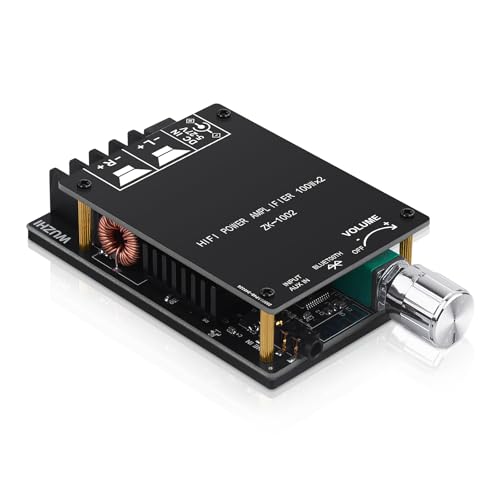
This compact 2.0-channel board uses dual processors and TPA3116D2-based architecture to deliver about 100W per channel into 4–8 ohm loads. It supports Bluetooth 5.0 with low-latency AAC decoding and AUX input for flexible connections. A noteworthy feature is its small physical footprint, making it suitable for compact speaker builds, wall-mount projects, or portable Bluetooth-enabled audio systems. The module’s focus on minimal distortion makes it a solid choice for mid-sized DIY projects that still demand solid dynamic range.
TDA7498E 160W×2 + 220W Subwoofer Board

This 2.1-channel board leverages the TDA7498E chipset to deliver 160W per stereo channel and up to 220W for the subwoofer, enabling a compelling home theater or music system with strong bass extension. It offers AUX, Bluetooth, and USB inputs with a dial-based control scheme for selecting inputs and shifting tunes. The configuration supports a broad DC input range (15–36V) and undervoltage protection, making it adaptable to various power supplies and enclosure designs. It suits medium-to-large DIY projects where powerful, punchy bass is a priority.
ZK-TB21 2.1CH With Treble/Bass, BT5.0& AUX

The ZK-TB21 combines 50W+50W for the left and right channels with a 100W sub, forming a 2.1-channel configuration. It includes Bluetooth 5.0 and AUX inputs, with independent treble and bass controls for direct tone shaping on the module. This layout is favorable for compact tower or bookshelf builds that require a strong midrange and a decisive low-end presence, without sacrificing soundstage or imaging. The board emphasizes straightforward integration and a responsive user interface for on-the-fly adjustments.
ZK-1602T 160W+160W Hi-Fi Power Amplifier Board

The ZK-1602T features two high-power channels driven by a pair of TDA7498E chips, delivering 160W per channel plus a clear 160W stereo experience, with a dedicated sub-bass path available through the design. It includes Treble and Bass controls for on-board tone shaping and supports USB, AUX, and Bluetooth inputs. The board’s robust power handling makes it suitable for larger DIY speakers or compact floor-standing builds where clean, loud playback is required. It emphasizes low noise and refined filtering to minimize distortion across the audible range.
Buying Guide
Choosing a powered amplifier module depends on your speaker system goals and practical constraints. Here are key considerations and how they compare across the options above.
- Power and headroom: For bookshelf or small floor-standing speakers, aim for 50–100W per channel with comfortable headroom. For subwoofers or integrated 2.1 setups, 160W+ per main channel with a strong subwoofer channel provides more dynamic range for movies and larger rooms.
- Number of channels and configuration: 2.0 modules are ideal for stereo builds, while 2.1 or multi-input boards with a dedicated sub can handle home theater or music-with-bass needs. The TDA7498E-based boards excel in 2.1 configurations due to dual chips and sub-channel support.
- Inputs and source flexibility: Bluetooth 5.0 offers robust wireless streaming with low latency, while AUX and USB expand wired options. If you anticipate streaming from phones or tablets, prioritize Bluetooth and easy pairing.
- Tone control and accessibility: On-board treble and bass controls enable quick tonal adjustments for different genres or room acoustics without requiring software or a dedicated preamp.
- Voltage and power supply: Many boards operate within 5–36V ranges, with some models supporting 7–24V or 12–36V. Ensure your enclosure and power supply match the module’s requirements to avoid noise or clipping.
- Filtration and noise performance: Look for boards with shielding, low-noise front-end stages, and dedicated filtering to minimize hiss and high-frequency interference in compact enclosures.
- Integration considerations: The dial wheel or knob-based controls on several modules simplify daily use, while others emphasize app control and TWS pairing for multi-room or synchronized playback.
When selecting among these modules, map your target speaker impedance (typically 4–8 ohms), expected listening levels, room size, and whether you need simple stereo playback or a full 2.1 system with a sub. For beginners, a compact 2.0 or 2.1 board with Bluetooth and straightforward tone controls provides a forgiving path to solid, room-filling sound. For enthusiasts seeking the cleanest possible signal with high headroom, boards using dual TDA7498E chips and robust filtering offer the best long-term performance in varied listening environments.