
Best Powered Subwoofer With Speaker Output for Home Theater
Answering the need for deep, controllable bass with a dedicated speaker output, this guide highlights five powered subwoofers that are suitable for home theaters, music setups, and multimedia rooms. Each option is evaluated for who it’s best for, from movie lovers to music producers. The products below emphasize clear low-end, adjustable controls, and reliable integration with other speakers. Use this overview to compare size, power, and connectivity before you buy.
| Product | Best For | Key Benefit |
|---|---|---|
| Rockville Rock Shaker 10″ | Movie buffs and gaming setups | 600W peak / 300W RMS for punchy bass |
| Edifier T5s Powered Subwoofer | Compact home theaters and desktops | 8″ woofer, 35Hz deep bass, slim profile |
| PreSonus Eris Sub 8BT | Music production and hi-fi listening | 100W, Bluetooth, front-firing |
| ALTO TS18S 2500W | PA systems and larger rooms | 18″ driver, DSP modes, phase control |
| ALTO TS12S 2500W | Professional setups with compact footprint | 12″ driver, portable design |
Rockville Rock Shaker 10″ Powered Subwoofer

Best for: movie enthusiasts and gaming setups that require tight, thumpy low end. The 10″ woofer delivers a 600W peak / 300W RMS output, producing substantial bass without excessive distortion. The built-in Class-D amplifier is matched to the woofer and enclosure to maintain clean sound across programs. Adjustable volume, crossover frequency, and phase controls let you tailor bass to room acoustics and personal taste. A potential limitation is that some users may want more than 10″ of excursion for very large rooms.
Edifier T5s Powered Subwoofer
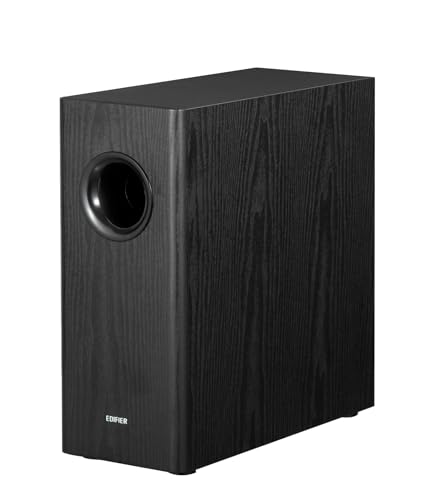
Best for: compact spaces where space-saving design matters. The 8″ woofer provides 35Hz deep bass with 70W RMS, driven by a Class-D amplifier. It includes adjustable low-pass filtering (30Hz–160Hz) and a phase selector (0°/180°) to align with existing speakers. A note: the slim cabinet minimizes resonance but may cap extreme bass impact in very large rooms.
Edifier R1280DBs Active Bluetooth Bookshelf Speakers
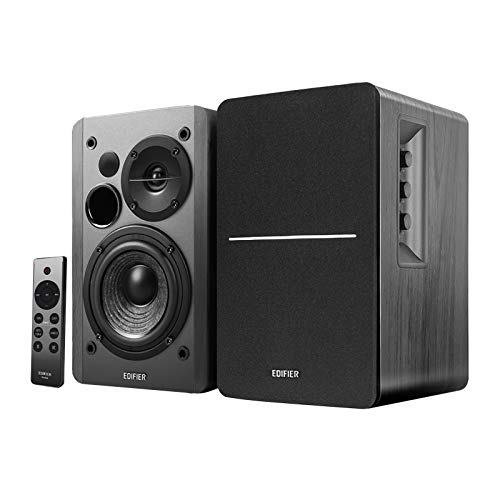
Best for: users seeking integrated wireless stereo with a dedicated sub-out. These 42W continuous power bookshelf speakers include Bluetooth 5.0 and optical/coaxial inputs, plus a subwoofer line-out for add-on bass. This setup helps you expand from two-channel audio to a fuller system by adding a powered sub. Limitation: the primary focus is on stereo sound, so the sub integration depends on using the dedicated sub-out and proper crossover setup.
PreSonus Eris Sub 8BT

Best for: studio musicians and home studios needing accurate, tight bass with wireless convenience. The 8″ front-firing woofer and 100W output deliver precise low end down to 30 Hz. Bluetooth adds flexible listening options, while a compact footprint helps in smaller rooms. Caution: Bluetooth connectivity is versatile but may introduce minor latency in some configurations; prefer wired connections for critical monitoring.
ALTO TS18S 2500W 18″ Powered Subwoofer

Best for: professional PA systems and large rooms needing deep extension. The 18″ driver with a high-efficiency Class D amplifier delivers 2500W active power, with DSP-based DSP EQ modes (Off, Live, DJ) and phase alignment controls. This model excels in musical accuracy across venues but is bulkier and may be overkill for compact spaces. Choose this if you prioritize robust, room-filling bass with responsive sonic adjustment.
ALTO TS12S 2500W 12″ Powered Subwoofer

Best for: scalable PA setups where a balance of performance and portability matters. The 12″ driver with a 2500W class D amplifier delivers strong low-end response, with DSP modes and phase alignment to offset cancellation. It’s easier to transport than the 18″ model and suitable for gigs or bigger rooms that still require robust bass. Limitation: it occupies more space than a compact 8″ or 10″ sub in small rooms.
Buying Guide: Key Purchase Considerations
What should you consider when selecting a powered subwoofer with speaker output?
- Room size and listening goals: Larger rooms benefit from higher-wattage subs and bigger drivers (12″–18″), while compact rooms can work well with 8″–10″ models.
- Power and headroom: Look for a sub with enough wattage to deliver clean bass at your typical listening levels without distortion.
- Frequency range and crossover: A low-pass filter and adjustable crossover help align the sub with satellite or bookshelf speakers for a cohesive sound.
- Input/outputs: Sub-out, LFE, and optional Bluetooth provide flexible integration with TVs, receivers, and active speakers.
- Placement and phase control: Positioning and phase alignment help minimize cancellation and optimize bass impact in your room.
- Build and cabinet design: Front-firing woofers reduce boundary reflections; floor-standing or compact enclosures suit different spaces.
How to wire and set up
Connect the subwoofer’s LFE or sub-out to your receiver’s sub input. If you’re using bookshelf or satellite speakers, set your receiver’s bass management and choose the correct crossover frequency. Start with a mid-range setting and adjust the volume to blend with the main speakers without overpowering them.
Which setup type is best for you
Home theater enthusiasts often prioritize a sub with strong cinema bass and robust low-end extension. Musicians and producers may prefer a sub with flat, accurate bass and low distortion, plus Bluetooth or wired options for monitoring. For portable venues, a compact sub with DSP modes and easy transport is ideal.
FAQ
- Do I need a separate subwoofer if I already have powered speakers? If your speakers have a strong mid and high range but lack deep bass, a dedicated sub can enhance overall balance and extend bass range.
- Is Bluetooth on a subwoofer useful for home theater? Bluetooth is convenient for wireless playback, but wired connections often provide lower latency and more reliable audio in critical listening.
- Can I use a sub without a dedicated sub-out? Some subs accept speaker-level inputs or can be driven by the speaker outputs of an amplifier, but proper bass management is easier with a dedicated sub-out.
- What size sub should I buy for a small room? An 8″ to 10″ model with adjustable crossover typically works well in small to medium rooms without overwhelming space.
- Will a larger sub always sound better? Not necessarily. Size affects bass extension and output, but room coupling, placement, and crossover settings determine perceived quality more than driver size alone.