
Best Preamp Guitar Pedal: Top Picks for Studio and Stage Use
Finding the right preamp guitar pedal can transform your tone for recording, live performance, or practice. This guide highlights five well-rounded options that cover classic amp simulations, DI capabilities, and flexible EQ and drive controls. Each selection targets a distinct player: from gigging performers needing direct-to-PA options, to home engineers chasing studio-grade tone without a full amp setup, to bassists seeking transparent DI and cab simulation. The table below compares core features to help you choose quickly.
| Product | Best For | Key Feature | Notes |
|---|---|---|---|
| JOYO American Tube Amp Simulator & Preamp (JF-14) | Live and studio, direct to PA | Built-in cab sim | Scooped cleans to mid-forward overdrive |
| SONICAKE Acoustic Guitar Effects Pedal | Acooustic and hybrid tones | Analog preamp with digital reverb | XLR balanced output |
| BOSS BP-1W Booster/Preamp | Studio and stage boost | Three-mode analog boost/preamp | Premium Waza Craft feel |
| JOYO MONOMYTH R-26 Bass Preamp & DI | Bass players needing DI | 6-band EQ + XLR DI | Ground lift and cab sim |
| JOYO TIDAL WAVE R-30 Bass Preamp & DI | Flexible bass tone shaping | Blend, mid/bass shift, DI out | Cab sim for DI signal |
JOYO American Tube Amp Simulator & Preamp
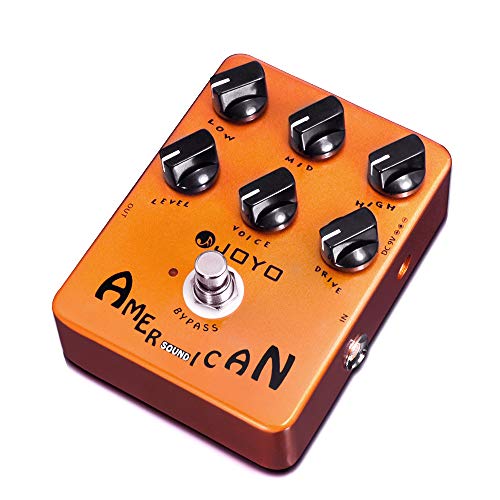
The JOYO American Sound aims to replicate classic American tube amp tones with a versatile 6-knob control layout: Level, Drive, Low, Mid, High, and Voice. This combination lets players sculpt clean, mid-forward, or overdriven textures, and the Voice control adds a wide range from scooped cleans to thicker mid-range crunch. The built-in cabinet simulation enables direct connection to a PA, audio interface, or mixer, supporting silent practice and straightforward direct recording. This is best for players who frequently perform direct-to-PA, or need a reliable backup amp tone for studio work.
Best for: players who want a single pedal that covers classic American tones and direct-recording capabilities without a full amp setup. The cabinet sim simplifies live and studio routing, reducing the need for additional miking or processing. Limitation: some users may prefer a dedicated external cab or more extensive gain options for extreme high-gain styles.
SONICAKE Acoustic Guitar Effects Pedal

This unit focuses on acoustic guitar tones with an analog preamp and built-in digital reverb, plus a notch filter and mute with gain and frequency adjustments to tame feedback or whites noise. The high-impedance input and XLR balanced output enable direct-to-PA or interfaces with clean, faithful signal transfer. It’s a practical choice for players who perform with acoustic-electric guitars and need a compact pedal that preserves natural acoustic dynamics while offering room reverberation and compact DI output.
Best for: acoustic players seeking hardware-based preamp and reverb in one stomp with easy DI routing. Caution: some players may miss more aggressive electric guitar gain options, as this unit leans toward acoustic voicings.
BOSS BP-1W Booster/Preamp

The BP-1W offers premium booster and preamp tones with analog circuitry derived from renowned BOSS/ROLAND effects. It features three modes to adapt to different tonal goals, making it versatile for boosting solos, driving an amp, or shaping a clean foundation for layered effects. This pedal suits players who want a compact, high-quality analog boost with straightforward control and reliable performance on stage or in the studio.
Best for: players who need a flexible, high-quality booster with simple switching and robust build. Limitation: while very capable, it focuses on boost and preamp functions rather than a full suite of drive options found in multi-effect units.
JOYO MONOMYTH R-26 Bass Preamp & DI

The MONOMYTH R-26 provides a bass-oriented preamp with a 6-band graphic EQ and a dedicated XLR DI output with ground lift. The blend, voice, level, and drive controls allow precise shaping of blended clean and overdriven bass signals, while the two independent boost switches add treble and gain boosts for edge and aggression. It’s ideal for stage rigs or studio work that requires direct DI to front-of-house with flexible mid and treble shaping.
Best for: bass players seeking studio-grade DI and a thorough EQ toolbox in one pedal. Better for: players who value direct PA compatibility and balanced DI without carrying separate DI boxes. Limitation: the emphasis on bass may not provide full-range guitar tonal options for players who want electric guitar voicings from a single unit.
JOYO TIDAL WAVE R-30 Bass Preamp & DI

The TIDAL WAVE combines a blend control with drive to deliver classic 90s bass tones plus modern flexibility. The MID SHIFT and BASS SHIFT toggles allow precise frequency adjustments for mid presence and deep low-end shaping. The built-in DI with XLR output, cab simulation, and ground lift supports direct connection to PA systems while maintaining tonal integrity. A dedicated pad is available for high-output pickups, and the 6.35mm output remains uncolored by cabinet simulation. Best for: bassists needing versatile tone shaping plus reliable DI routing for live or studio work.
Caution: Cab sim is active on the XLR DI output only, so you may prefer separate cabinet after the preamp if you want consistent cab tone across outputs. Limitation: more complex controls may require a learning period to dial in the perfect settings.
Buying Guide
What should you consider when choosing a preamp pedal?
- Signal routing: Do you need direct-to-PA/DI capability, or will you use a traditional amp and mic?
- Tone shaping: Do you want a broad amp-sim palette, or surgical EQ with dedicated drive controls?
- Impedance and outputs: Choose units with high-impedance inputs for guitars and XLR DI outputs for PA or interfaces.
- Cabinet simulation: Is built-in cab IR essential for your live or recording setup?
- Power and reliability: Consider power requirements and build quality for stage use.
For live players, a pedal with strong DI and cabinet simulation can simplify front-of-house needs. For studio work, an analog preamp with clear gain staging and an adjustable EQ offers flexibility. Bassists may prioritize dedicated DI, extra EQ bands, and blend controls to preserve low-end while adding harmonic content. Acoustic players often benefit from built-in reverb and notch filters to manage feedback and sustain. Always test with your actual rig to confirm how the pedal interacts with your amp model, guitar pickups, and effects chain.
FAQ
- What is a preamp pedal best used for?
Preamp pedals shape gain and tone before amplification or DI, providing amp-like drive, EQ control, and sometimes cab simulation for direct recording or live sound.
- Do I need cab simulation?
Cab simulation helps reproduce mic’d speaker tone when connecting directly to a PA or interface, useful for silent rehearsals and direct-recording workflows.
- Can bass players use guitar preamps?
Yes, many bass preamps include 6-band EQ, blend controls, and DI outputs tailored for bass frequency response and front-of-house compatibility.
- Is DI output always balanced?
Balanced DI outputs (XLR) reduce hum and noise when sending signal to PA systems or interfaces.
- What should I consider before buying?
Consider your instrument type, whether you need direct-to-PA, the complexity of tone control, and how you’ll integrate with your existing rig.
- Are these pedals suitable for acoustic guitars?
Some models support acoustic signals with preamps and notch filters; verify input impedance and built-in features for your instrument type.