
Best Preamps With 48V Phantom Power for Condenser Mics
Answering the question: which 48V phantom power solutions and mic preamps deliver clean power and reliable gain for condenser mics? This guide highlights five solid options suited for home studios, podcasters, live setups, and field recording. Each pick supports 48V phantom power, with clear pros, limits, and ideal user profiles to help you decide quickly.
Quick comparison table of selected products
| Product | Type | Best For | Key Benefit |
|---|---|---|---|
| Neewer 1-Channel 48V Phantom Power | Phantom power supply | Home studios and beginners | Compact, universal XLR; includes cable |
| Xvive P1 Phantom Power Supply | Rechargeable phantom power | Mobile setups and remote recording | Up to 40 hours; battery powered |
| Fotoconic 1-Channel 48V Phantom Power | Phantom power supply | Stage and studio use | LED indicator; includes adapter |
| Mackie M48 48V Phantom Power | Phantom power supply | Stable studio rigs | Transparent, noise-free operation |
| Bolanle NK1 In-Line Mic Preamp | Inline mic preamp | Low-output dynamic mics | 28dB gain; 48V compatible |
Neewer 1-Channel 48V Phantom Power Supply

Features: Delivers reliable 48V phantom power for condenser microphones and transfers sound to the sound card in a compact plastic housing. Universal XLR input and output compatible with most recording gear. Includes one XLR cable with high-quality connectors. A single-channel unit with balanced inputs and outputs to connect between mic and mixer.
Best for: Beginners or small home studios needing a straightforward, budget-friendly phantom power source. The included cable simplifies initial setup.
Why selected: Simple, compact, and compatible with a wide range of gear. The single-channel design reduces complexity for users who only need one mic in their workflow.
Caution: Build is plastic; handle with care in rugged environments to avoid wear over time.
Xvive P1 Phantom Power Supply 48V/12V
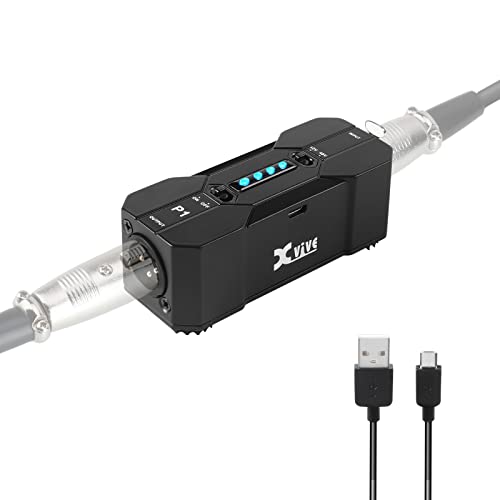
Features: Rechargeable phantom power with up to 40 hours of use. Portable and compact (1.7” x 1.3” x 4.1”). Supports 12V and 48V operations. Quick charge time around 2.5–3 hours. Designed for home studios, podcasts, streaming, and field work.
Best for: Remote recording, travel-friendly setups, and situations where mains power isn’t readily available.
Why selected: Battery-powered operation adds flexibility for mobile recording without sacrificing phantom power compatibility.
Caution: Battery life may vary with high-current condenser mics; carry a charger or spare battery when on the move.
Microphone Preamp, 48V Power XLR Output

Features: High gain with 20 dB gain, 48V power for both dynamic and condenser mics, low-noise balanced circuitry to minimize coloration. This preamp is designed to boost low-output mics before the interface stage.
Best for: Creators using low-output dynamic mics or noisier interfaces who need a clean preamp before routing to a mixer or recorder.
Why selected: The dedicated preamp approach helps in achieving clearer signal when your mic or interface is not delivering enough level.
Caution: Not all mics require external 48V power; ensure your mic type matches the unit’s intended use to avoid over amplification.
Mackie M48 48V Phantom Power Supply

Features: XLR input and output with transparent, noise-free operation. Powered by an included AC adapter or a 9V battery for flexibility in different setups.
Best for: Small studios or live setups where a robust, stable phantom power source is needed and battery option is helpful for field use.
Why selected: Mackie’s reputation for studio gear and the option to operate off battery power can be advantageous in on-location sessions.
Caution: Battery operation requires careful power management to ensure uninterrupted sessions.
Fotoconic 1-Channel 48V Phantom Power Supply

Features: Delivers reliable 48V phantom power for condenser microphones with a compact housing. Universal XLR interface input and output. Includes one XLR cable. Newer power switch with LED indicator for easy operation. Suited for stage and studio use.
Best for: Users needing a dependable, no-frills phantom power solution for both stage and studio environments.
Why selected: The combination of a straightforward design, included accessories, and a modern switch/LED indicator makes it practical for frequent use.
Caution: As with many budget units, build quality varies; ensure careful handling in travel scenarios.
Bolanle NK1 In-Line Mic Preamp

Features: 28dB gain with a Class A transistor amplification circuit to boost low-sensitivity microphones while reducing noise. XLR interface with gold-plated pins for stable transmission. Fully compatible with 48V phantom power supplies and mixers.
Best for: Users working with dynamic mics that need a decisive gain boost without introducing excess noise.
Why selected: Inline design and clear gain improvement make it a practical add-on when the mic’s signal is weak at the source.
Caution: It is primarily intended for dynamic mics; confirm compatibility with your condenser mic if needed and understand phantom power requirements.
Buying Guide: Key Considerations for 48V Phantom Power Preamps
- Fulfill your power needs: Decide between a dedicated phantom power supply and a preamp with integrated phantom power. If your mic requires clean, noise-free power, prioritize units that advertise low-noise operation.
- Portability vs. studio stability: Battery-powered options like the Xvive P1 are ideal for mobile use, while wall-powered devices excel in fixed home studios.
- Gain requirements: High-gain preamps help with low-output mics; be wary of overgain on sensitive condensers. Check the listed gain range and compatibility with your mic type.
- Impedance and connectivity: Look for XLR interfaces with balanced outputs to minimize noise over long runs. Some units offer additional outputs for direct monitoring.
- Ease of use: LED indicators, simple switches, and included cables can reduce setup time and confusion in live sessions or quick podcasts.
- Build and durability: Plastic housings are light and affordable but may wear with frequent transport. Metal enclosures typically offer greater resilience for road use.
FAQ
- What is phantom power for mics? Phantom power supplies provide a DC 48V (or similar) to condenser mics through the microphone cable to power internal electronics.
- Do I need a separate mic preamp if I have a phantom power supply? Not always. If your interface’s preamps are adequate, a dedicated phantom power supply may suffice. A stand-alone mic preamp can improve gain and noise performance for low-output mics.
- Can I use these with dynamic mics? Some preamps explicitly support dynamic mics with 48V phantom power; others emphasize compatibility with condenser mics. Check product notes for guidance.
- Will phantom power damage my microphone? Typically no for standard condenser mics designed to accept 48V. Always verify the mic’s official specifications before powering it remotely.
- Is portable phantom power better than plug-in units? Portable options offer mobility and battery operation but may have limited run time and higher noise if not well designed. Choose based on your recording environment.
- What should I consider when choosing between a preamp and a dedicated phantom power supply? If your primary need is signal gain and noise reduction for quiet mics, a preamp is beneficial. If you mainly need to power a condenser mic, a phantom power supply suffices.