
Best Preamps With ADAT Output for Home Studio Setups
Answering the search query directly: these preamps provide ADAT output to expand your digital interface while preserving clean, high-quality mic preamps. They’re ideal for multi-mic recording, drum kits, and project studios needing scalable analog-to-digital conversion. The top picks below target different budgets and workflows, from compact expanders to multi-channel interfaces suitable for full-band recording rigs.
| Product | Best For |
|---|---|
| Behringer ADA8200 Audiophile 8 In/8 Out ADAT | Budget-friendly ADAT expansion with reliable Midas mic preamps |
| Focusrite Clarett+ OctoPre 8-In/8-Out ADAT | Premium preamps and classic Focusrite sound in ADAT rack |
| Focusrite Scarlett OctoPre 8-In/8-Out ADAT | Entry-to-midlevel ADAT expansion with Scarlett mic preamps |
| Focusrite Scarlett 16i16 4th Gen | Standalone USB-C interface with ADAT I/O expansion |
| Focusrite Scarlett 18i20 4th Gen | Comprehensive I/O with ADAT for mid-to-large setups |
Behringer ADA8200 Audiophile 8 In/8 Out ADAT

The ADA8200 provides eight mic preamps and 24-bit ADAT optical output. It functions as an ADAT expander to a compatible audio interface, expanding input capability while preserving signal integrity. The preamps are designed for general-purpose recording and are suitable for small studios or home projects requiring additional channels without a large investment.
Best for: Budget-conscious home studios needing reliable ADAT expansion. Why selected: It offers a straightforward path to add eight mic channels through ADAT, compatible with many mainstream interfaces.
Caution: No built-in USB audio interface on its own; requires a compatible host interface with ADAT input to record.
Focusrite Clarett+ OctoPre 8-In/8-Out ADAT

The Clarett+ OctoPre brings eight premium Clarett⁺ mic preamps to an ADAT expander, preserving Focusrite’s low-noise, high-headroom signature. It includes analogue Air and high-frequency boosts to help vocal tracks cut through a mix. It’s ideal for expanding a Focusrite-based setup and capturing detailed performances with minimal noise and distortion.
Best for: Users seeking high-quality preamps with the classic Focusrite sound in an ADAT format. Why selected: It combines the Clarett+ preamps with robust ADAT capabilities for scalable recording workflows.
Caution: Requires an ADAT-enabled primary interface to utilize all eight mic preamps via ADAT channels.
Focusrite Scarlett OctoPre 8-In/8-Out ADAT
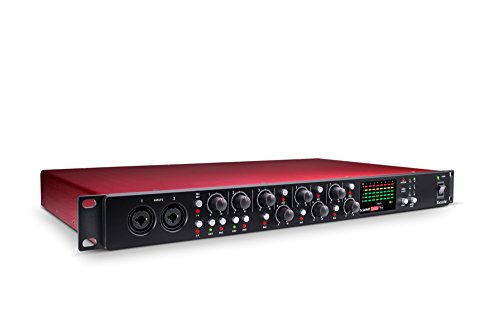
Scarlett OctoPre adds eight natural-sounding Scarlett mic preamps and eight balanced line inputs, with 192 kHz A-D conversion for detailed capture. This model is a practical upgrade path for existing Scarlett users who need more preamps and ADAT expansion without migrating to a larger interface.
Best for: Scarlett users requiring more mic preamps in ADAT without a full new interface. Why selected: It integrates well with Scarlett ecosystems and maintains familiar preamp behavior.
Caution: The ADAT bandwidth is shared with other ADAT-equipped devices; ensure your clocking and workflow accommodate expansion channels.
Focusrite Scarlett 16i16 4th Gen

The Scarlett 16i16 combines 16 inputs and 16 outputs, with two mic preamps, Hi-Z, line inputs, ADAT, S/PDIF, and MIDI I/O. It uses 24-bit, 192kHz converters offering high dynamic range for detailed recordings. This model suits mid-sized studios needing ample I/O plus ADAT expansion potential.
Best for: Teams or solo engineers needing a robust multi-input interface with ADAT-ready expansion. Why selected: It provides a versatile, scalable platform with Focusrite’s reputation for clean preamps and reliable performance.
Caution: The value hinges on pairing with a capable ADAT-capable mic preamp or expander for true expansion.
Focusrite Scarlett 18i20 4th Gen

The Scarlett 18i20 offers 18 inputs and 20 outputs with eight mic preamps. It includes ADAT I/O, Word Clock, and MIDI, enabling a flexible setup for larger project studios. The 4th generation preamps deliver substantial gain with low noise, making this a solid backbone for expanding through ADAT.
Best for: Mid-to-large projects needing multiple preamps and flexible routing. Why selected: It balances high I/O capacity with reliable Clarett-based preamps and ADAT expansion options.
Caution: Larger footprint and cost considerations; plan cabling and clocking carefully to avoid ADAT timing issues.
Buying Guide: Preamps With ADAT Output
What is ADAT and why expand with it?
ADAT optical allows multiple channels of digital audio to travel over a single light-based connection. It’s ideal for expanding mic preamps without chasing a bigger USB or Thunderbolt interface. Choose this path when you need extra inputs for drums, choirs, or live tracking sessions.
Key considerations for selecting an ADAT preamp expander
- Preamplifier quality: Look for low noise, adequate headroom, and a clean signal path, especially if you record loud sources or multiple mics simultaneously.
- Number of channels: Align available ADAT channels with your current interface’s ADAT input count to avoid over- or under-provisioning.
- Clocking and synchronization: Ensure your master interface and ADAT expander share reliable clocking to minimize jitter and latency issues.
- Compatibility: Confirm your primary audio interface supports ADAT input and that the expansion will integrate with your DAW and monitoring workflow.
- Power and form factor: Rack-mount units with 8 channels are common; verify power requirements and space in your studio rack.
Comparison snapshot
- Budget option: Behringer ADA8200 offers 8 preamps with ADAT out at a lower cost.
- Premium option: Focusrite Clarett+ OctoPre, with high-headroom Clarett⁺ preamps and ADAT expansion.
- Scarlett family options: Scarlett OctoPre and Scarlett 16i16/18i20 provide ADAT I/O with familiar interfaces and robust software support.
What to expect in use
Expect clean, reliable ADAT expansion that preserves the character of your primary preamps. Setup typically involves connecting ADAT Out from the expander to the host interface’s ADAT In, setting clocking, and configuring routing in your DAW. Some users may need to adjust gain staging across devices to maintain headroom and avoid digital clipping.
FAQ
- Q: Do I need an AGND or clocking upgrade when adding an ADAT expander? A: Yes, consistent clocking between devices minimizes jitter and ensures coherent multi-channel recordings.
- Q: Can I use ADAT with any USB audio interface? A: Only if the interface has an ADAT input and compatible clocking; otherwise you may be limited to USB-only operation.
- Q: Is 24-bit/192 kHz sufficient for professional projects? A: It provides high resolution and dynamic range suitable for most professional applications, though sample-rate requirements depend on your project.
- Q: Are ADAT expanders hot-swappable? A: It depends on the model; most can be connected and disconnected between sessions, but always power down before changes.
- Q: Which setup is best for drums? A: A large ADAT expander with multiple mic preamps paired to a capable interface can provide the necessary channel count with clear separation.
- Q: Do ADAT expanders affect my DAW latency? A: Latency is primarily determined by the interface and buffer settings; ADAT expansion itself typically does not add substantial additional latency.
Attribution note: All product details referenced come from the provided product lines and their listed features. This article presents an objective comparison focused on ADAT expansion capabilities and practical buyer considerations.